Table of Contents
Report

Author(s):
- Elise Lesage-Baur
- Jule Nähring
- Julia Hechtl
- Leevi Oksanen
- Lucas László
- Siebe Van de Voorde
Acknowledgement
Glossary
| Abbreviation | Description |
|---|---|
| EPS | European Project Semester |
| ISEP | Instituto Superior de Engenharia do Porto |
| EL | Elise Lesage-Baur |
| JH | Julia Hechtl |
| JN | Jule Nähring |
| LL | Lucas László |
| LO | Leevi Oksanen |
| SV | Siebe Van de Voorde |
| DLP | Digital Light Processing |
| LCD | Liquid Crystal Display |
| LCOS | Liquid Crystal on Silicon |
| ANSI | American National Standards Institute |
| IOS | The International Organisation for Standardisation |
| NSPE | National Society of Professional Engineers |
| HD | High Definition |
| 4K | Resolution with approximately 4000 pixels horizontally |
| USB | Universal Serial Bus |
| SWOT | Strengths Weaknesses Opportunities Threats |
| AI | Artificial Intelligence |
| ISO | The International Organisation for Standardisation |
| PESTEL | Political Economic Social Technological Environmental Legal |
| 3D | 3 Dimensions |
| 2D | 2 Dimensions |
| Ar | Augmented reality |
| Vr | Virtual reality |
| WBS | Work Breakdown Structure |
| LED | Light Emitting Diode |
| NFT | Non-fungible token |
| CAGR | Compound Annual Growth Rate |
| PDCA | Plan Do Check Act |
| LCA | Life Cycle Analysis |
| LoFi | Low Fidelity |
| SCL | Serial Clock Pin |
| SDA | Serial Data Pin |
| VIN | Voltage In |
| GND | Ground |
| FEM | Finite-Element-Method |
| FEA | Finite-Element-Analysis |
| FOS | Factor of Safety |
| UV | Ultra Violet |
1. Introduction
Team 3 embarked on the ArtSy(nc) project with the ambition of radically transforming the world of digital art. ArtSy(nc) embodies an innovative platform designed to bridge the gap between digital artists, art enthusiasts, and public space managers, providing a vibrant space for creativity, engagement, and appreciation.
In this first chapter, various aspects of the ArtSy(nc) project will be explored, including the composition of the team, motivations, problem statement, objectives, and requirements. The approach aims to provide insights into the vision, objectives, and implementation strategies of the project.
The report begins with a presentation of the team, with each member bringing unique skills, backgrounds, and motivations to the project. Table 2 is giving an overview of the team. The personal motivations behind participating in the European Semester Project (EPS) and the specific choice of the ArtSy(nc) project are then delved into. Understanding these individual motivations provides essential insight into shared aspirations and goals.
The problem statement is then addressed, highlighting the challenges digital artists face in presenting their work to a wider audience as well as the logistical obstacles associated with displaying digital art in public spaces. Through ArtSy(nc), these challenges are addressed by developing a platform that allows artists to share their creations and facilitates the selection of works for public display.
In summary, this report provides an overview of the ArtSy(nc) project, highlighting the team's motivations, objectives, approach, and progress towards the vision of shining a light on the digital art world. Readers are invited to join in this adventure and read this report.
1.1 Presentation
Team 3 consist of 6 students with different study backgrounds and nationalities. The field of studies is shown in Table 2 and the team is shown in Figure 1.
| Name | Field of Studies | Location |
|---|---|---|
| Elise Lesage-Baur | Packaging Engineering | France |
| Jule Nähring | Mechanical Engineering | Germany |
| Julia Hechtl | Creative Computing | Austria |
| Leevi Oksanen | Computer Sciences | Finland |
| Lucas László | Applied Mathematics | Netherlands |
| Siebe Van de Voorde | Software and Web development | Belgium |

1.2 Motivation
Personal Motivation:
- Elise: Why did I choose the EPS program? The EPS Program offers an enriching international experience, enabling you to explore new cultures, deepen your academic knowledge, perfect your language skills and develop valuable intercultural competencies. For me, this is an essential part of my academic career and indispensable for my future.
- Jule: I chose the European Project Semester because I thought it would be interesting to work in a multidisciplinary and international group. I think it is a great opportunity to broaden my personal horizon and learn more about other cultures and their way of working. Moreover, I want to improve my English skills and make new friends all over the world.
- Julia: I love connecting with people from all over the world and working on a bigger project with an international team coming from different universities was really attractive to me. It is inspiring to learn from each other and to broaden my horizons. Porto seemed like the perfect location to do this!
- Leevi: I wanted to break away from my everyday life and step outside my comfort zone. My career goal is to work with international companies and to work abroad. EPS is an excellent opportunity for me to learn how to operate within a group composed of individuals with diverse backgrounds.
- Lucas: My motivation to work on the EPS course is due to my interest in working in international environment and on the topic of innovation. Also, I think Porto is a nice city with a lot to offer, culturally wise and surfing-wise. The combination of working on a real problem in an international group and exploring the city of Porto motivated me to go here.
- Siebe: I’m here to experience a different approach to my studies in a multi-cultural environment.
Motivation for choosing this topic:
- Elise: Why digital art? As an enthusiast of various forms of artistic expression, from music and photography to dance and museum visits, I found digital art a captivating means of expression. Its versatility and potential for innovation particularly appeal to me. What's more, I feel that my studies in packaging engineering can intersect with the art world, offering unique perspectives and points of view.
- Jule: My motivation to choose this topic is because it is a really broad topic and we can include all the skills of every group member. I also love local artists in the city and think it is a great opportunity to give them a chance to show their art and to be seen.
- Julia: I love consuming and creating art. I get passionate about drawing and whenever I am on holiday, I love to visit art museums to get inspired for future projects. Digital art directly stood out to me and is the perfect topic to come up with a creative project as a group.
- Leevi: My studies focus on creating visual materials, such as 3D modeling, UX design (user experience design), visual effects and various forms of visual content creation. Because of this, digital arts was a very natural and enjoyable subject for me.
- Lucas: My motivation to choose this topic comes from my love of museums and art. Especially when it comes to digital art, I believe it is a broad topic that has a lot to offer. Also, the city of Porto has a lot of urban street art and my mind was firing ideas about what we could do with it. Therefore, I thought this topic might suit me and my enthusiasm.
- Siebe: This project reflects my passion for pushing the boundaries of collaborative artistry and creating a space where diverse talents can seamlessly intertwine.
1.3 Problem
In today's digitalised world, there are many artists, including a growing number of digital artists. Despite their great commitment, their talents often remain undiscovered. Digital artists, in particular, face many challenges in presenting their artwork to a wide audience. Platforms such as Instagram and other popular social media sites provide opportunities for artists, but usually they tend to favour artists who already have substantial recognition. Furthermore, showcasing digital art presents additional technical and logistical challenges. Artists often struggle with a lack of visibility in physical venues due to a lack of specialised equipment to display their creations in public spaces. Here is where ArtSy(nc) comes in.
The problem ArtSy(nc) tries to solve is the lack of visibility and recognition for digital artist.
To solve this problem, ArtSy(nc) wants to develop a platform where digital artists can upload their art. Art lovers can vote democratically for the art they like the most to be displayed in public spaces. ArtSy(nc) will use projectors to showcase the art in the city environment. There will also be a weatherproof, lockable box equipped with the necessary technology to ensure that the projectors are safe and art can be displayed properly.
Technology plays an important role here, as does the selection of suitable projection locations and the planning of the installation. Another point to consider is the safety of the projectors. Not only do they need to be weatherproof to withstand the challenges of the public space environment, but they also need to be protected against vandalism. To prevent this, protective devices and the environment are needed.
1.4 Objectives
In the realm of contemporary art, the digital medium has emerged as a dynamic frontier, offering artists unprecedented avenues for expression and engagement. In response to this evolving landscape, ArtSy(nc) was born, an innovative platform that converges digital art with community interaction, redefining the boundaries of artistic appreciation.
How does ArtSy(nc) make this objective possible?
ArtSy(nc) is purpose-built to address a fundamental challenge: how to bring digital art to a broader audience while fostering meaningful connections between creators and enthusiasts. At its core, the platform serves as a conduit for artists to showcase their work and for users to engage with, appreciate, and contribute to the vibrant world of digital creativity.
The primary objective of ArtSy(nc) is twofold: to provide artists with a platform for exposure and recognition and to offer users an immersive experience that transcends traditional boundaries of art appreciation. Through a seamless interface, artists can upload their digital creations to the platform, inviting feedback and evaluation from a diverse community of peers and enthusiasts.
What distinguishes ArtSy(nc) from conventional art platforms is its innovative approach to audience engagement. ArtSy(nc) integrates a dynamic projection system, allowing the selection of artworks to be displayed in public spaces, thereby blurring the lines between digital and physical artistry.
Navigating the ArtSy(nc) ecosystem is intuitive and user-friendly. Users can explore a map feature to locate nearby projectors, enriching their surroundings with digital art installations. Artist profiles are easily accessible through a comprehensive search function, enabling users to discover new talent and explore diverse artistic styles.
Central to the ArtSy(nc) experience is the interactive swiping mechanism, which facilitates effortless engagement with a vast array of digital artworks. This feature not only empowers users to express their preferences but also fosters a sense of community participation and dialogue.
In summary, ArtSy(nc) represents a pioneering initiative in the realm of digital art appreciation, offering a harmonious blend of accessibility, innovation, and community engagement. Through its multifaceted approach, ArtSy(nc) endeavours to elevate digital art to new heights of visibility and appreciation, enriching the cultural landscape for artists and audiences alike.
1.5 Requirements
General Requirements
- Use or reuse low cost hardware solutions
- Use open source software
- Adopt the International System of Units (NIST International Guide for the use of the International System of Units)
- Comply with the EMCD, LVD, MD, RED, ROHS EU Directives.
Budget Requirements
- Maximum 100 €
User Requirements
- As an artist I want a way to upload art so it can be showcased in public spaces.
- As an artist I want a box that is long-lasting and visually appealing to represent my art in an efficient way.
- As a consumer of art I want the packaging design to be as sustainable as possible to respect the planet and save resources.
- As the curator I want the box to be durable and long-lasting to be able to use it for multiple years without having to replace it.
- As the curator I want the pricing of the box to be as affordable as possible to operate cost-effectively.
- As an artist I want clear guidelines and information on the projector to know how to provide my art.
- As a consumer of art I want to know more about digital art to be more educated and learn more about it.
- As an artist I would like the packaging design to be appealing and simple to not take away the focus from the actual work displayed.
App Requirements
- Use of open source software and technologies
- User-centered design
- Ease of use
- Error prevention
- Aspect of security to protect user data
Sustainability Requirements
- Use of sustainable materials
- Reduce waste and use recycling material whenever possible
- Use energy-saving technologies during the production process
- Keep the carbon footprint as minimal as possible
1.6 Functional Tests
A prototype must be created that visualises the final product as well as possible. This must be subjected to several tests so that it can be clearly demonstrated that the product meets the requirements.
In this case, the app must be tested for all its functionalities. Those are divided into three parts:
- For the artists, it is important that they can upload their art.
- For the art lover, the art should be divided into categories. Additionally, the app shall have a swiping mechanism.
- For the art sponsor, it is important that they can easily connect with the local artists.
Effortless registration is important for all groups.
Also the hardware has to be tested. The box is tested for stability. For this, stress analyses in SolidWorks is used to test if the material can withstand the force. Our prototype is made out of wood instead stainless steel thats why it is impossible to test if it is weatherresistent.
The ventilationsystem is controlled by a temperature sensor. The sensor is tested for different temperatures to see if the fans start working to cool the system down. The ventilators are tested for durability by testing multiple durations of ventilating.
1.7 Project Planning
For this project, having a solid plan is important. It guides the team through all the steps that need to be taken as a team. With a good plan, everyone knows what is done within the group, when it is done, and who's responsible for what. This helps with staying organised and working together smoothly towards the goals.
Working with an agile workflow and using Jira helps with managing tasks. Jira is like a virtual task board where the group lists out all the things that need to be done, assigns them to team members, and keeps track of progress. It's a great tool for staying on top of things and making sure everyone knows what they should be working on.
Scrum is a way of working that's all about being flexible and collaborative. It helps break the work into smaller chunks, the weekly sprints. During the sprints, daily stand-up meetings are incorporated. These are quick catch-ups where the group talks about what was done yesterday, what everyone will be doing today, and if there's anything getting in the way. It's a way to stay connected and help others if someone's stuck with their work. Figure 2 is visualising the concept of scrum.
At the end of each sprint, a sprint retrospective is done. This is where the team takes a step back and reflects on how things went during the sprint. Everyone talks about what went well, what didn't go so well, and what the group can do to improve next time. It's a chance for every group member to learn from their experiences and keep getting better. Having a good plan and using agile methods like Scrum and Jira helps with staying organised, working together effectively, and keeping improving.

1.8 Report Structure
This report is divided into eight chapters. They are described in Table 3 to give an overview of each topic. The next chapter is introducing the State of the Art, exploring the existing market and diving deeper into the topic of digital art.
| Task | Description | |
|---|---|---|
| 1. | Introduction | Short introduction into the topic and presentation of the team and the motivation of each member as well as a little summary of the problem which should be solved, the objectives and the requirements. |
| 2. | State of the Art | Research and analysis on products which are already exists on the market. |
| 3. | Project Management | Overview of the applied methods of project management in the team and the time management. |
| 4. | Marketing Plan | Marketing analysis with identifying the target audience and the competitors and presenting the market strategy the team can use to introduce the product in the market. |
| 5. | Eco-efficiency Measures for Sustainability | Possibilities and measures to make the product as sustainable as possible according to environmental, economic and social aspects. |
| 6. | Ethical and Deontological Concerns | Presentation of the importance of ethics in the project according to engineering, marketing & sales and environmental ethics. |
| 7. | Project Development | Process and evolution of the product with different concepts, sketches and the final product. |
| 8. | Conclusions | Summary of the report and possible future visions. |
2. State of the Art
The team has chosen to focus efforts on the topic of “Digital Art”. The aim is to increase the visibility of digital art in public spaces and bring people closer together through art. The goal is to create a digital platform for local artists to share their art through the application. Using projectors, the art shared on the platform will be displayed in urban spaces.
During the decision-making process for the project’s final goal, all desired features were discussed and compared with the team's skills and knowledge. Besides programming and design, the project requires an understanding of digital art and its presentation in public spaces.
This chapter aims to introduce digital art and examine the various styles it encompasses. It also presents existing platforms that operate on similar principles and explores methods for maintaining a projector in outdoor settings.
2.1 Digital Art
Digital art is a creative and exciting way for artists to express themselves using computers and modern technology. Instead of traditional tools like brushes, paint, and canvas, digital artists use software and various devices to create their art. Due to the rapid development of digitalisation, digital art has a lot to offer artists in this field. The artworks can be experienced online, in galleries, or even through virtual reality. In this chapter, the aim is to get a better understanding of what digital art is and what it includes [Adobe, 2024].
Digital art refers to any artwork created using digital technology, whether it's on a computer, tablet, or other digital devices. This broad category encompasses various forms of visual art, including digital painting, 3D modeling, animation, and graphic design. Unlike traditional art forms that use physical materials like paint or clay, digital art relies on software programmes and electronic tools.
In the early 1980s, the term “digital art” emerged alongside the development of a paint program by computer engineers. This pioneering software found its first application in the hands of Harold Cohen, a leading figure in digital art. Named AARON, this program birthed a robotic machine capable of creating large-scale drawings on paper laid out on the floor. In more common use, digital art started in the middle of the 20th century, when people began to experiment with using computers for making graphics and art. Digital art has been growing enormously since personal computers and software became popular. Artists then started using digital tools to make art that was totally different from traditional art [ART TERM, 2024].
Digital art has created a new way for artists to create art, with lots of opportunities and different styles of working. Websites and social media are a great way to showcase digital art, bringing artists together and letting them interact with their supporters. Also, new technologies like virtual reality, augmented reality, and artificial intelligence are creating exciting new ways for people to experience digital art in a more immersive and interactive way [Gabs Art Tips, 2024].
From digital painting and illustration to 3D modeling, animation, and generative art, the range of mediums and techniques within digital art is vast and continually evolving. Artists use an array of software tools and technologies, from industry-standard programs like Adobe Photoshop and Blender to experimental platforms and custom-coded algorithms. Digital art can mix old and new ways of creating art, resulting in innovative and captivating results. In Figure 3, there is a 3D environment of a bedroom created by using Blender, and in Figure 4, there is a digital drawing created using Adobe Photoshop.


As digital technologies continue to evolve at a rapid pace, the future of digital art holds limitless potential. Emerging technologies such as blockchain and non-fungible tokens (NFTs) are revolutionising the way artists create, distribute, and monetise their work, while advancements in AI promise to redefine the creative process itself. NFT is a type of digital asset that represents ownership of a unique item or piece of content using blockchain technology. Each NFT is one-of-a-kind and cannot be replaced with something else of equal value. NFTs are often used to buy and sell digital art, collectibles, music, videos, and other digital creations, providing a way to verify authenticity and ownership in the digital world [Coursera Staff, 2023].
Figure 5 is an example of a NFT.

In an increasingly digitised world, digital art stands as a testament to the boundless creativity of human imagination. From its beginnings to its current state of innovation and experimentation, digital art continues to push the boundaries of modern art. Looking to the future, one thing is certain: the journey of digital art is far from over, and its evolution promises to shape the landscape of artistic expression for generations to come.
2.2 Platforms for Digital Art
In today's digital age, artists have unprecedented opportunities to showcase their work and connect with global and local audiences through various digital platforms. This chapter explores the landscape of digital art platforms, highlighting popular websites, apps, and social media platforms that empower artists to exhibit their art digitally. In this chapter, the discussion will cover what these platforms provide for artists and what should be included in this project.
Platforms for digital art have evolved from basic online galleries to sophisticated ecosystems that cater to artists, collectors, and enthusiasts alike. Initially serving as repositories for images, these platforms now integrate multimedia formats, interactive features, and social networking elements. They have become vital tools for artists seeking visibility and recognition in an increasingly competitive art market.
One of the prominent trends in digital art platforms is the deep integration of social media functionalities. Platforms like Instagram, Pinterest, and TikTok have become essential tools for artists to share their work, connect with followers, and build their brands. Social media's visual-centric nature complements art presentation, fostering direct engagement and real-time feedback from audiences.
Popular Digital Art Platforms
- Instagram: Instagram is one of the biggest social media platforms in the world. It is also a leading platform for visual artists to showcase their portfolios through posts and stories. Artists utilise Instagram's visual nature to captivate audiences, share their creative processes, and connect with fellow artists and art enthusiasts globally [Instagram, 2024].
- Behance: Behance is a professional platform where artists and designers can showcase their portfolios and projects. Artists benefit from Behance's exposure to industry professionals, potential clients, and collaborators, facilitating networking and career growth. Behance is part of the Adobe Creative Cloud [Behance, 2024].
- ArtStation: ArtStation is a specialised platform for digital artists, featuring portfolios of concept art, illustrations, and 3D works. It provides a dedicated space for artists to share their digital creations and connect with like-minded professionals in the entertainment and gaming industries [ArtStation, 2024].
- DeviantArt: DeviantArt is a vibrant online community for artists of all backgrounds to exhibit their art, participate in challenges, and engage in critiques. Artists can gain visibility and feedback from a diverse global audience on DeviantArt's platform [DeviantArt, 2024].
In Figure 6 are all the logos of the platforms mentioned before:

These platforms are popular for good reasons. Below are listed features that the team consider strengths of the mentioned platforms and features that ArtSy(nc) wants to incorporate into the project.
What platforms provide for artists:
- Exposure in Social Media: By leveraging digital platforms, artists can showcase their work to a global audience of art enthusiasts, including followers, local audiences, collectors, and potential buyers, transcending traditional physical exhibition constraints.
- Community Engagement: Artists can actively engage with their audience through comments, likes, and direct messages on digital platforms, fostering meaningful connections and cultivating a loyal following.
- Portfolio Showcasing: Artists can create comprehensive portfolios showcasing their artwork and design projects. Artists can organise their work into projects, add descriptions, and highlight key details to present a professional and curated portfolio.
- Feedback and New Ideas: Forums enable artists to receive constructive feedback and critiques from peers and industry professionals, fostering growth and improvement in artistic skills.
Table 4 is a comparison between the platforms:
| Platform | Popularity | Showcasing Outdoors | Local Visibility | Content types | Monetisation Options | Mobile App Usability | Privacy and Copyright Protection |
|---|---|---|---|---|---|---|---|
| Extremely popular globally, over 1 billion monthly active users | Primarily digital, but can integrate with outdoor events through hashtags and promotions | High local visibility through geotags and location-based hashtags | Photos, videos, stories, reels | Sponsored posts, Affiliate links, Product sales | Excellent, User-friendly interface, Frequent updates | Moderate, DMCA takedown process available | |
| Behance | Popular among creative professionals, part of the Adobe Creative Cloud ecosystem | Portfolio integration into professional showcases and exhibitions | Moderate local visibility, mostly professional and global audience | Professional portfolios, Project showcases | Opportunities through client work | Good, Seamless integration with Adobe Creative Cloud | High, Clear copyright settings and controls |
| ArtStation | Popular in the digital art community, especially for game, film, and media industries | Focused on digital presence and professional networking | Low to moderate local visibility | High-quality digital art, 3D models | Print sales, Commissions, Marketplace | Good, User-friendly app | High, Strong protection and watermark options |
| DeviantArt | Long-standing art community platform, diverse user base but less mainstream than Instagram | Some opportunities for outdoor showcases through community events and local groups | Moderate local visibility, community-oriented with local groups and events | Illustrations, Fan art, Animations | Print sales, Subscriptions | Good, Community features integrated | High, Strong community support for copyright issues |
The evolving landscape of digital art platforms empowers artists to share their creativity, expand their audience reach, and engage with global communities in unprecedented ways. By leveraging innovative features and embracing technological advancements, artists can navigate the digital realm to promote their work, foster connections, and contribute to the vibrant and dynamic world of digital art. As these platforms continue to evolve, artists will benefit from new opportunities for exposure, collaboration, and artistic expression in the digital sphere.
2.3 The Placement of Projectors in Urban Spaces
The uploaded art on the platform is to be shown in urban spaces. However, what exactly constitutes urban spaces?
Urban spaces are made for all citizens of a city, regardless of income or personal background. They should serve the public good and lead to social cohesion. In urban spaces, people should meet, interact, do sports, and have fun. They are frequently used for public celebrations and gatherings. It is essential for every city to provide secure urban spaces, as they play an important role in social community and inclusion [saferspaces, 2014].
This chapter will have an introduction to the essential specifications required for the projectors ArtSy(nc) intends to use.
Projectors are needed to showcase the uploaded art on the platform in urban spaces. Projectors are used to project an image onto a screen. To do this, a lamp generates light inside the projector. The lens focuses the light and directs it onto the projection surface, and an image is created when the light hits the projection surface.
Nowadays, there are many different types of projectors. The most important thing to consider is whether it will be used for indoor or outdoor shows. Outdoor projectors need to be much brighter so that they can produce a colourful image even in daylight. The brightness of projectors is specified in ANSI lumens. For indoor projectors, approximately 3000 ANSI lumens are sufficient, whereas for outdoor projectors, approximately 6000 ANSI lumens must be available. In terms of image quality, a distinction is now made between HD (1280 x 720 pixels), Full HD (1920 x 1080 pixels), and 4K (3840 x 2160 pixels) [visunext, 2022].
However, different technologies are also used to project a good image. The best-known technologies are Digital Light Processing (DLP), Liquid Crystal Display (LCD), and Liquid Crystal on Silicon (LCOS) technology. While DLP technology uses a chip with millions of micro mirrors to direct the light onto the projection surface, LCD technology uses a chip with liquid crystals to control the light. LCOS technology is a combination of the two. The chip consists of liquid crystals and silicon, resulting in very good image quality with good brightness and contrast [Heimkinoraum, 2023].
Because the projectors are to be used in urban spaces, they need to be protected in many ways. Among other things, they stand outside and must therefore be weatherproof and resistant to other possible disruptors. Boxes of this type are made of weather-resistant materials that are, above all, waterproof but also do not rust. This is why metals such as stainless steel or aluminium are used. In addition, the box must be equipped with a ventilation system so that it does not get too hot inside the box, which could otherwise lead to condensation. Due to its use in public spaces, it is necessary to equip the box with a lock so that unauthorised persons cannot operate the projector. In addition, it must be equipped with a simple cable management system, and the appropriate electrical connections must be fitted. These, in turn, need to be fitted with seals to prevent water from entering the box. The placement of the projector must be at a safe distance from people in public.
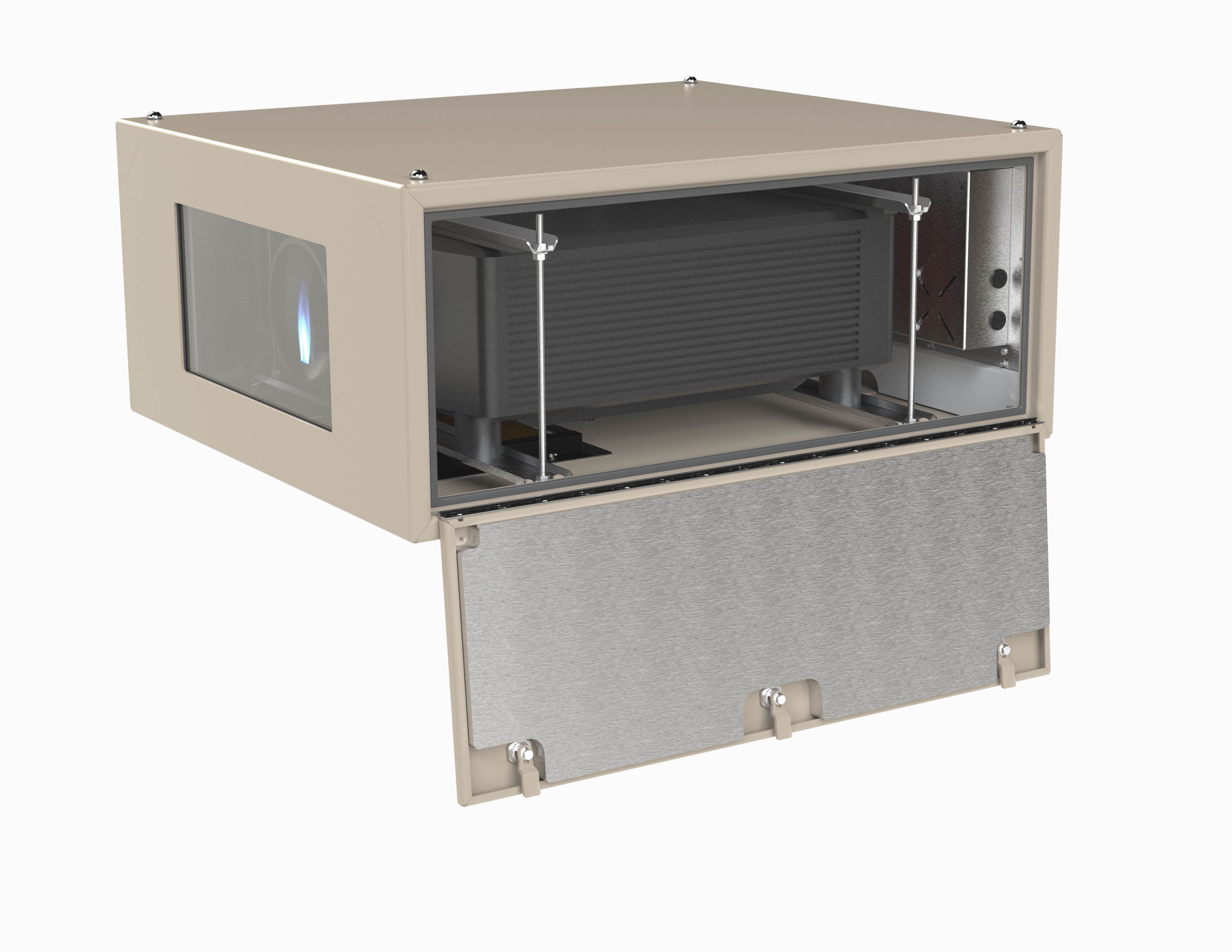
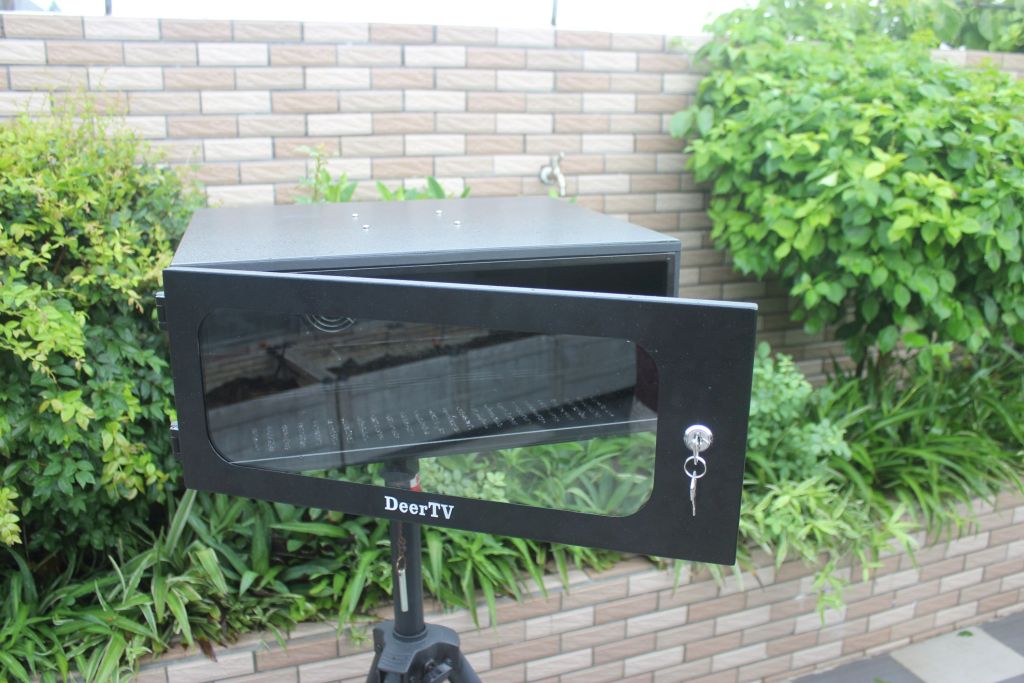
There are already boxes that are designed for outdoor projections. These can be opened to the side (Figure 7) or from the front (Figure 8). They either have a bracket to screw it to a ceiling or a simple base as a stand. The boxes are made of aluminium or stainless steel and are often of welded construction. The windows are made of Plexiglas and are glued on. The boxes are protected against water up to a watertight protection class of IP54 and are also fitted with rubber seals [Kinytech, 2024]. The project will follow these long-lasting solutions.
2.4 Conclusion
After analysing the state of the art, the team has identified a direction to create a project that is guided by the categories stated above. The topics the team has chosen lay a solid foundation for the project and provide the team with a clear direction to develop the project in the desired direction. In a nutshell, the features are the following:
1. Digital art: The most clear topic in the project is digital art. Understanding the topic of the whole project is essential for the development process towards the final goal of the team.
2. Platforms for Digital Arts: The project is based on a platform to showcase the digital art of local artists. The team aims to make a working platform for different user types (artist, art lover, art exhibitor) to ensure a smooth user experience while connecting all the people related to digital art. By researching similar existing platforms, the team gains more information about what should be included in the project.
3. The Placement of Projectors in Urban Spaces: The art shared through the
platform is planned to be showcased in public spaces using projectors to boost the artistic image of the city. The team aims to create a sustainable solution to ensure an ethical and long-lasting lifetime for the projector.
The team has all the required skills to create working results for the project. By combining different backgrounds and educational knowledge within the team, the team will be able to create the desired outcome.
In the next chapter, chapter 3, the team's project management is described. The general guidelines are defined. Furthermore, the sprints are further evaluated, and how the tasks were managed within the group.
3. Project Management
In the upcoming sections, each aspect of project management will be delved deeper into. The scope definition will be outlined to keep goals clear and focused. Timelines will be discussed to ensure timely completion of tasks and efficient resource utilisation. Additionally, stakeholder identification and engagement, effective communication channels, risk analysis, procurement procedures, and detailed project planning will be covered.
3.1 Scope
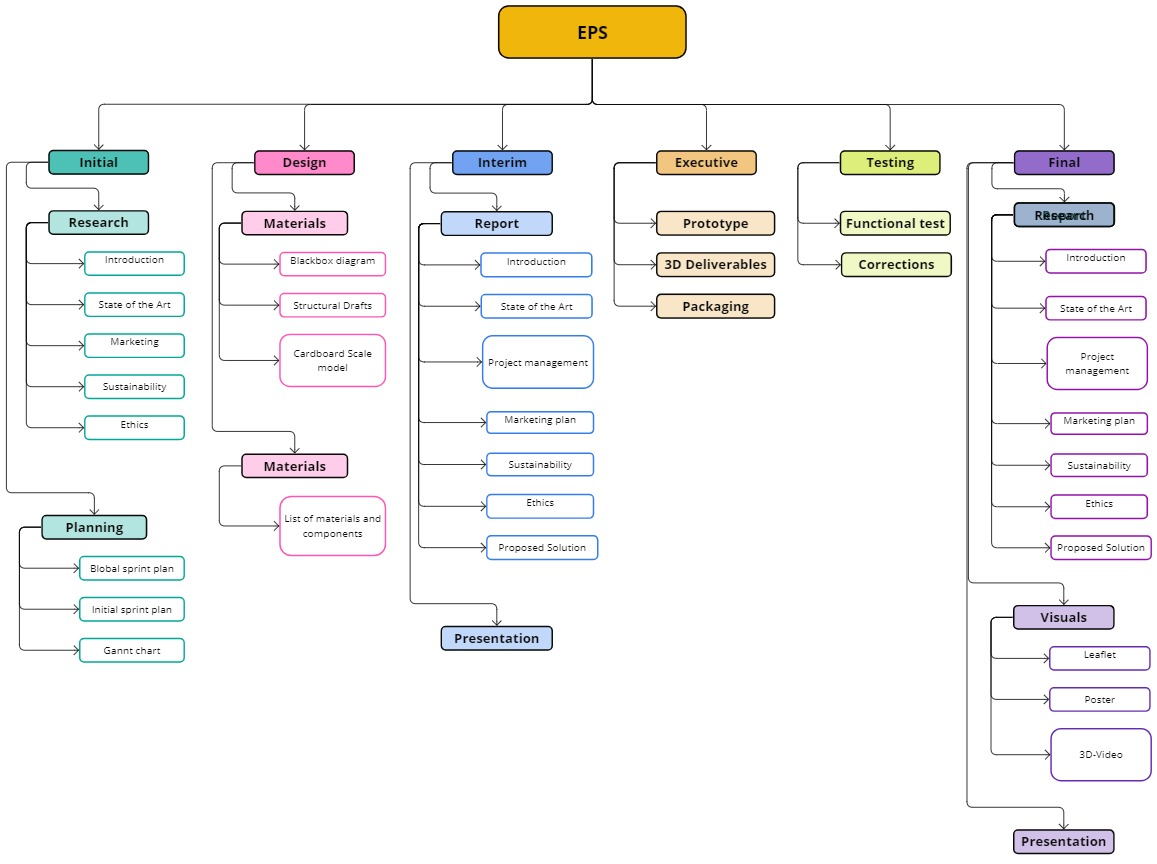
The scope of the project is useful for both defining its boundaries and specifying its focus. The topic of digital arts is a broad one, which is why there need to be limitations to prevent scope creep. From artworks featuring moving LEDs to NFTs in the metaverse, the project requires a clear description to define what will be included in the prototype and what will not. This project scope serves as a foundational framework for defining parameters, objectives, and outcomes. It states the overarching goals and outlines the inclusions and exclusions of the project. Divided into two sections by using the work breakdown structure (wbs), the scope addresses both the objectives and deliverables for understanding and evaluating the project (as illustrated in Figure 9), as well as the specifications necessary for constructing the prototype (as depicted in Figure 10).
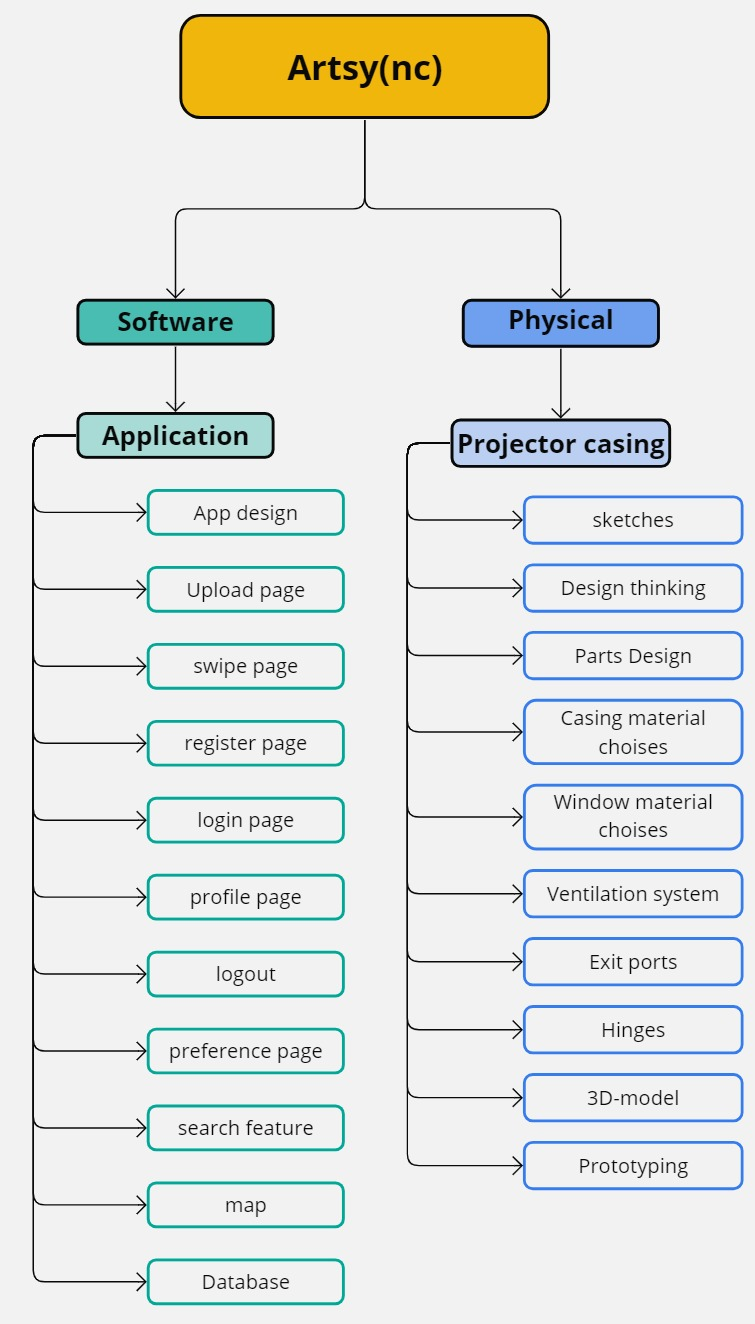
Since it is a prototype, the project will not incorporate actual sponsorships to roll out the platform. There will be no sort of payment system on the platform for the art. In this prototype, the idea of building actual NFTs on the platform will not be incorporated. For the prototype, there will be no engagement with the government to place the product outside for usage. So what will take place for the prototype is building an initial prototype version of the Projector Casing and a prototype mobile application. The projector casing is a casing that allows the projector to be placed in a changeable urban environment. The app needs to be able to log in and upload art so people can vote for the art they most like.
3.2 Time
During the project, time and deadlines are the engines that keep everything moving forward smoothly. Time is precious, and deadlines give clear goals to work toward. They help to stay focused, accountable, and efficient. Meeting deadlines shows that a team is dependable and committed to the project's success. Good time management not only helps to use resources wisely but also reduces risks and boosts productivity. By respecting time and sticking to deadlines, trust is built with everyone involved, and the project stays on track towards its goals.
- 2024-02-24 Choose a project proposal and send your choice via email to epsatisep@gmail.com
- 2024-03-06 Upload the “black box” System Diagrams & Structural Drafts to the wiki
- 2024-03-08 Define the Project Backlog (what must be done and key deliverables - every member should preferably participate in every task), Global Sprint Plan, Initial Sprint Plan (which tasks should be included, who does what) and Release Gantt Chart of the project and insert them on the wiki (planning) *
- 2024-03-13 Upload the List of Components and Materials (what & quantity) to the wiki
- 2024-03-20 Upload the detailed System Schematics & Structural Drawings to the wiki and do the cardboard scale model of the structure
- 2024-04-07 Upload the Interim Report and Presentation to the wiki. The report must contain the the following chapters: Introduction, Project Management, State of the Art, Marketing Plan, Eco-efficiency Measures for Sustainability, Ethical and Deontological Concerns, Proposed Solution and Bibliography. In particular, the Project Management chapter includes the updated project progress register, the sprint report for completed sprints (tasks that were included, statuses, assignees, allocations) and the updated release Gantt chart
- 2024-04-11 Interim Presentation, Discussion and Peer, Teacher and Supervisor Feedbacks
- 2024-04-17 Upload 3D model video to the wiki
- 2024-04-23 Upload the final List of Materials (local providers & price, including VAT and transportation)
- 2024-04-30 Upload refined Interim Report (based on Teacher & Supervisor Feedback)
- 2024-05-15 Upload packaging solution to Deliverables and Report
- 2024-05-28 Upload the results of the Functional Tests to the wiki
- 2024-06-16 Upload the Final Report, Presentation, Video, Paper, Poster and Manual
- 2024-06-20 Final Presentation, Individual Discussion and Assessment (reserve the whole day)
- 2024-06-25:
- Update the wiki, report, paper with all suggested corrections
- Place in the files section of the MS Teams channel of your team a folder with the refined deliverables (source + PDF) together with all code and drawings produced
- Hand in to the EPS coordinator a printed copy of the refined report and poster
- 2024-06-27:
- Hand in the prototype and user manual to the client
- Receive the EPS@ISEP certificate
- Bring typical food from your country
3.3 Cost
This chapter provides a detailed breakdown of the estimated costs for the project. Following this, the actual expenses used for the prototype will be addressed.
3.3.1 Estimated Cost of the Project
Estimating the total cost of the project involves considering various elements, such as team wages, hardware costs, marketing expenses, and costs related to the platform. This chapter provides a detailed breakdown of the estimated costs required to bring the project to fruition.
Team Wages
The project team consists of six members, and the estimated wages are 1500 euros per month for each member. The project duration is 5 months. Therefore, the total cost for team wages is calculated as follows:
- Monthly wage per member: 1500 €
- Number of members: 6
- Project duration: 5 months
Total Wages = 45 000 €
Projector Costs
To showcase the art, there is a need for projectors. The team plans to acquire high-quality projectors that can produce clear images and withstand outdoor conditions. The estimated cost for each projector is 1000 euros.
Sustainable Box for Projector
The projectors will be housed in sustainable boxes that can protect them from weather elements and vandalism. The estimated costs for each component of the box are as follows:
- Weather-resistant casing: 800 € per box
- Ventilation system: 100 € per box
- Locking mechanism: 50 € per box
- Installation hardware and miscellaneous materials: 50 € per box
Total cost per box = 1000 €
Marketing Plan
A robust marketing plan is essential to ensure the success of the application and attract local artists and audiences. The estimated costs for the marketing plan include:
- Social Media and Physical Advertising: 3000 €
- Local Event Sponsorships and Collaborations: 4000 €
- Flyers and Posters: 500 €
- Press Releases and Media Coverage: 500 €
Total Marketing Cost = 8000 €
Platform Cost
The cost of developing the platform will include several components: the development and design of the app itself. The estimated costs for the platform is 4500 euros. In the Table 5 is more precise estimated cost of building the platform.
| Service category | Service type | Custom name | Region | Description | Estimated monthly cost | Estimated upfront cost |
|---|---|---|---|---|---|---|
| Compute | App Service | West Europe | Standard Tier; 1 S1 (1 Core(s), 1.75 GB RAM, 50 GB Storage) x 1 Month; Windows OS; 0 SNI SSL Connections; 0 IP SSL Connections; 0 Custom Domains; 0 Standard SLL Certificates; 0 Wildcard SSL Certificates | 67.41 € | 0.00 € | |
| Databases | Azure Database for MySQL | West Europe | Flexible Server Deployment, General Purpose Tier, 1 D2AS v4 (2 vCores), 1 year reserved, 16384 GB Storage with ZRS redundancy, 0 Additional IOPS, 0 GB Additional Backup storage with LRS, with High availability | 4307.40 € | 0.00 € | |
| Support | 0.00 € | 0.00 € | ||||
| Total | 4374.81 € | 0.00 € |
Summary of Estimated Costs of the Project
To summarise, the total estimated cost of the project is calculated by adding the costs of wages, projectors, boxes, marketing, and the platform:
- Total Wages: 45 000 €
- Total Projector Cost: 1000 €
- Total Box Cost: 1000 €
- Total Marketing Cost: 8000 €
- Total Platform Cost: 4500 €
Total Estimated Cost = 59 500 €
The total estimated cost of the project is 59 500 euros. This budget will cover the team’s wages, the acquisition and protection of projectors, and a comprehensive marketing plan to ensure the successful launch and operation of the application.
3.3.2 Cost of the Prototype
For the prototype, the budget was 100 euros. Only 10 euros were used from this budget. The team got most of the materials from ISEP, which is why there was no need to use more of the budget. This substantial support allowed for minimising costs while successfully and sustainably developing and testing the prototype. Table 6 is a list of the components used in the prototype.
| Component | Quantity | Price with VAT | Supplier | Link to the store |
|---|---|---|---|---|
| 2 zinc iron hinges | 1 (includes 2 hinges) | 2.49 € | Leroy Merlin | Link to the store |
| Plywood board 1200X600X5MM | 1 | 7.49 € | Leroy Merlin | Link to the store |
| Screws | 24 | 0 € | ISEP | - |
| Stand for the box | 1 | 0 € | ISEP | - |
| Projector | 1 | 0 € | ISEP | - |
| Ventilator | 2 | 0 € | ISEP | - |
3.4 Quality
To make the project and product a success, there needs to be a high quality of work and product. The quality of work is essential for building the prototype and making the report. A high standard of work quality ensures that the team members work efficiently together in a productive and safe environment to pursue their goals. The quality of the product is also of utmost importance. It is a standard to set a high bar for a product that is not only functional but also fulfils the needs of the consumer by being intuitive and giving a sense of value and satisfaction to the user. Poor quality can lead to rework, dissatisfaction by consumers, miscommunication, and failure to meet expectations. Therefore, the quality of work and product need to be set high to reduce risk, increase customer satisfaction, and achieve overall success.
Quality of work: To set high standards for the quality of work, multiple topics are important. Communication is key. To have a clear understanding of what is going on and what someone is saying, there needs to be good communication. This will be further explained in the chapter on communication. Set clear deliverables that are within reach. To maintain a good workflow, the deliverables need to be realistic and aligned with the project's objectives and timeline. This will provide clear direction off work so members won’t feel lost and have to redo work. Resource allocation: in order to have a sense of the manpower for time allocation during a sprint or the full project, there needs to be an overview of time and budget. Otherwise, it can lead to rushed or not-completed work.
Quality of the product: The product's quality is of high importance. In order for people to use the platform, there will be a need to deliver an application that is intuitive, feels of high quality, and reflects the goal. For the urban projector casing, there is a need for a design to integrate the product with the urban environment and also the people who will be looking at it. Having high standards of product quality will also lead to customer loyalty, which generates advantages in long-term competitiveness with other businesses [Rosmelia Yusof, et al., 2023].
To have high-quality standards, there needs to be a focus on intuitive UX/UI (user experience/user interface) on the platform, as with the monitor, to create user satisfaction and adaptation. Focusing on UX/UI enhances the overall user experience but also generates long-term loyalty, which contributes to the success and sustainability of the product.
Integration with the urban environment is essential. It serves the dual purpose of showcasing the product effectively and capturing attention. At the same time, it displays the platform's message and generates engagement with the audience. Here, the high quality of urban environment design will generate user engagement, which is vital for the platform.
3.5 People
As in any project, there are multiple stakeholders with different levels of importance. In order to make this project succeed, there is a need for a clear understanding of who is involved in the project and who is not. In the project, there are several stakeholders. Firstly, there's the project team responsible for building the prototype and driving the project forward. Secondly, the teachers from EPS give feedback and providing a budget. Additionally, there are the consumers and the sponsors of the product. These stakeholders all have a different level of importance in the project and need to be held in good relation to bring the project to success.
3.6 Communications
The inner communication of a team is very important to have a clear understanding of what someone is saying, the goals, work progress, and more. The team is a group of six different members with different nationalities, of whom English is not the native language. Therefore, there is a need to be patient and give each other room to explain what they are saying. Hereby, there will be clear communication, so the ideas, information, and feedback will be explained better. Also, there is a need for digital communication; the current platform for checking up on deliverables and sprints is Jira, and there will also be communication through WhatsApp. Hereby, there are clear channels of communication to check what people are working on and what struggles they come across. This will lead to a smoother workflow. All communication mediums and processes are stated in Table 7.
| Method/system | What for? | Type |
|---|---|---|
| Jira | It is a backlog system helps divide and keep track of work that needs to be done in order to achieve the goals. | Digital |
| WhatsApp/Microsoft Teams | Method for digital communication if necessary Teams can be used for meetings and sharing documents. WhatsApp will be used for sharing quick correspondence. | Digital |
| Daily standups | To keep track what team members did the day before, problems they have encountered, plan for the day and problems they might face. | Physical |
| General meetings | Weekly meetings to make sure everybody is on the same page, problems that need more thinking, brainstorm sessions and team communication. | Physical |
| Supervisor meetings | Weekly meetings with the supervisors in order to ask for feedback on the project. | Physical |
| Agendas | 24 hours before the supervisor meetings there needs to be an agenda made by the team so every participant can prepare in advance. | Digital |
The way of communicating is also important; the team strives to create an environment where there is room for critical thought while also learning from each other. For example, feedback is essential; in order to generate high-quality feedback, the team members need to be honest and critical of their own work and the work of others. The team members need to be able to give constructive feedback so the other person can learn from it. This will lead to a higher standard of workflow, accountability, learning, and positive behaviour within the team.
3.7 Risk
Risk analysis involves the systematic identification, assessment, and prioritisation of potential risks that may affect the success of the project [TechTarget, 2023]. This process typically includes:
1. Identify the risk:
- Identifying and cataloging potential risks that could impact project objectives. Including internal and external factors, known and unknown risks. This process can be made through brainstorming, reviewing, SWOT Analysis, expert judgment.
2. Analyse the possible impact of the risk:
- To analyse the potential impact of risk, it can be solved in various ways. Assessing the potential consequences on the project objectives, budget, timeline, and overall success. Quantifying the impact, considering financial, schedule and resource factors.
3. Evaluate and prioritise the risk:
- Evaluate and prioritise risks based on their likelihood and potential impact to focus on addressing high-priority risks first for effective risk management.
4. Respond to the risk:
- Respond to risks by developing proactive strategies, implementing contingency plans, and continuously monitoring and adjusting response efforts as needed.
5. Monitor the results of the risk:
- Monitor risk outcomes to assess effectiveness and adapt strategies accordingly. Ensuring alignment with project objectives and stakeholder expectations.
The goal of risk analysis is to prevent and minimise the impact of risks.
In Table 8 is a list of the most important risks and how the team are going to manage them.
| Risk | Probability (1 to 10) | Detection | Impact (1 to 10) | Consequences | How to prevent |
|---|---|---|---|---|---|
| Communication issues and language barrier | 6 | Misunderstandings | 8 | Might lead to poor coordination and bad decision-making | The team has to be honest if someone doesn't understand what is going on and talk until everything is clear |
| Skill gaps and difference in study fields | 7 | Tasks that only one or two has skills for | 5 | High workload and struggles for certain people | Teach each other what is known already and help others when needed |
| Leadership and role clarity | 5 | Problems to get the project going | 9 | The project doesn't have good progress | The team has to define roles for each other and keep a clear vision of what is going on |
| Technical challenges | 6 | Might need expertise over the teams skills | 8 | The team could not reach the target goal | Figure out what kind of knowledge the project requires before doing it |
| Copyright and legal issues | 7 | Possible sanctions | 6 | The team might have to reconsider the goals of the project | The team must do research about the legal issues regarding to the project |
| User engagement | 4 | Challenges to gather users for the application | 9 | Not enough of visibility to the project | The team must market the project the right way for people to get excited about it |
| Projection locations and permissions | 5 | Bad places to show the art | 8 | The team might struggle to find the right places for the projectors | The team must have clear negotiations where to place the projectors |
| Funding | 5 | No progress without funding | 10 | Impossible to complete the project if the team doesn't have enough of money | The team must find the right funders and have a working deal with them |
| Technology reliability | 7 | The materials the team uses must be the correct ones to see-trough the project | 7 | Bad materials will set back the team and fight against the requirements of the project | The team must do research for the right materials for the project |
3.8 Procurement
Procurement is a very important point in any organisation. This is where essential items are carefully identified and analysed, drawing on external sources. Once the list is complete, the procurement of these supplies begins, which includes everything from sourcing to closing the deal, right through to payment for the goods and services required. Well-organised purchasing management is crucial to the smooth running of a new concept. It ensures that whatever is needed from outside the organisation is there when required. For this specific project, all suppliers must be local. There is a very clear vision of what is wanted: an end product that not only meets specific requirements but is also sustainable and local. To achieve this, materials must be chosen intelligently, considering their impact on the environment and ensuring a minimal footprint on the planet.
But that's not all. A simpler, more efficient system for suppliers is also needed. Clear communication and well-defined objectives on both sides are essential, with information shared and regularly updated.
In short, procurement is much more than just a business transaction. It is a process that ensures needs are met in the most efficient and ethical way possible.
When choosing suppliers, one very important factor to consider is lead time. Simply put, lead time is the time it takes a supplier to get everything ready to go. This includes the time it takes to order and receive raw materials, manufacture and ship products, and finally deliver them. Delays can make or break a process in the blink of an eye. Deadlines that are pushed back can not only cause delays but also shift an entire schedule.
At ArtSy(nc), supporting local businesses is very important. Great care has been taken to select local suppliers for procurement needs. This supports the local economy and reduces transport costs, keeping expenses as low as possible. After much discussion and reflection, the following companies have been chosen:
- Leroy Merlin
- Farnell
Working with as few suppliers as possible facilitates communication and reduces costs and the environmental impact of delivering raw materials and the different components of the box.
3.9 Stakeholders Management
Defining the stakeholders is a vital part to generate an overview and understand of the different parties involved in the project. By knowing who the stakeholders are and their needs the project goals and priorities can be determined, resources can be allocated and the user's needs can be identified. This helps with the quality of work and quality of product by defining the needs of the stakeholders. The definition of the stakeholder is as stated by the ISO (The International Organization for Standardization) [International Organization for Standardization, 2010]: “Individual or group that has an interest in any decision or activity of an organization.” In Table 9 the stakeholders, their function, interests and influence is determined.
| Stakeholder | Function | interest (1-5) | influence (1-5) |
|---|---|---|---|
| Project team | Developers | 5 | 5 |
| Teachers/supervisors | Controllers | 5 | 3 |
| EPS | Budget | 4 | 3 |
| Consumers | Using the product | 4 | 3 |
| Competitors | Competition | 3 | 2 |
| Sponsors, donors and supporters | Providing financial aid | 4 | 4 |
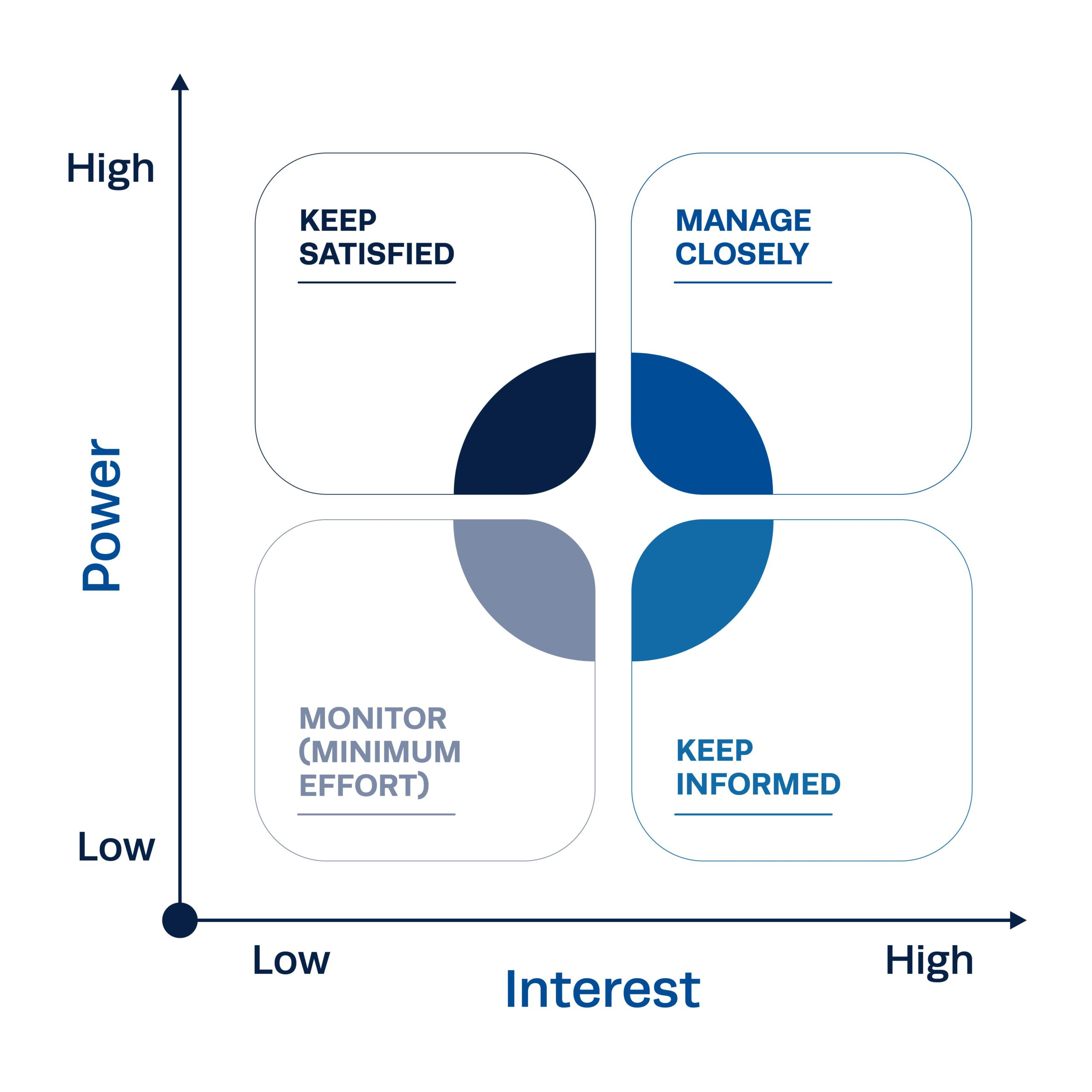
The interest and influence is derived from the Institute of Project Management in order to create insights into the type of attention each stakeholder needs. In Figure 11 the stakeholder needs are visualized based on the interest and influence (power) of each. The scaling of interest and influence is shown in Table 9. With 1 meaning low and 5 meaning high.
3.10 Project Plan
The global sprint plan for this project consists of 1-week sprints, and it is available here for reference in 10.
| Sprint | Start | Finish | Status |
|---|---|---|---|
| 1 | 29/2/2024 | 07/3/2024 | Finished |
| 2 | 07/3/2024 | 14/3/2024 | Finished |
| 3 | 14/3/2024 | 21/3/2024 | Finished |
| 4 | 21/3/2024 | 04/4/2024 | Finished |
| 5 | 04/4/2024 | 11/4/2024 | Finished |
| 6 | 11/4/2024 | 18/4/2024 | Finished |
| 7 | 18/4/2024 | 25/4/2024 | Finished |
| 8 | 25/4/2024 | 02/5/2024 | Finished |
| 9 | 02/5/2024 | 09/5/2024 | Finished |
| 10 | 09/5/2024 | 16/5/2024 | Finished |
| 11 | 16/5/2024 | 23/5/2024 | Finished |
| 12 | 23/5/2024 | 30/5/2024 | Finished |
| 13 | 30/5/2024 | 06/6/2024 | Finished |
| 14 | 06/6/2024 | 13/6/2024 | Finished |
| 15 | 13/6/2024 | 20/6/2024 | Finished |
| 16 | 20/6/2024 | 27/6/2024 | To do |
At the beginning of the project a Project Backlog (Table 11) was created. Every task is listed here to get a clear overview what the team has to do.
| PBI | Title | Status |
|---|---|---|
| A | Define Project | Done |
| B | System Diagrams & Structural Drafts | Done |
| C | Project Backlog | Done |
| D | Global Sprint Plan | Done |
| E | Gantt Chart | Done |
| F | State of the Art | Done |
| G | First list of componentes and materials | Done |
| H | System Schematics & Structural Drawings | Done |
| I | Cardboard scale model | Done |
| J | Interim Report and Presentation | Done |
| K | Marketing Plan | Done |
| L | Eco-efficiency Measures for Sustainability | Done |
| M | Ethical and Deontological Concerns | Done |
| N | Proposed Solution and Bibliography | Done |
| O | Video of the 3D Model | Done |
| P | List of Materials | Done |
| Q | Packaging Solution/Building Plan | Done |
| R | Functional Test | Done |
| S | Final Report | Done |
| T | Presentation | Done |
| U | Paper | Done |
| V | Poster | Done |
| W | Manual | Done |
| X | Final Delivery | To do |
To organise every sprint a sprint plan, shown in Table 12, was created. Before every sprint the team writes down which tasks have to be finished during the next sprint, and who is responsible and involved.
| Sprint | Task | Duration (d) | Responsible | Involved |
|---|---|---|---|---|
| 1 | A | 7 | Everyone | Everyone |
| 1 | B | 7 | LL | LL, SV |
| 1 | C | 7 | SV | Everyone |
| 2 | D | 7 | LL | Everyone |
| 2 | E | 7 | JN | JN |
| 2 | F | 7 | JN, LO | JN, LO |
| 2 | G | 7 | EL | EL, JN, SV |
| 2 | K | 7 | LL | LL, SV |
| 2 | M | 7 | LL | EL, JN, LL, LO |
| 3 | H | 7 | JH | EL, JH |
| 3 | I | 7 | JH | EL, JH |
| 3 | L | 7 | EL | EL, JN, SV |
After each sprint the status of every task in the project pregress register (Table 13) is updated.
| Sprint | PBI | Responsible | Involved | Status |
|---|---|---|---|---|
| 1 | A | Everyone | Everyone | Done |
| 1 | B | LL | LL, SV | Done |
| 1 | C | SV | Everyone | Done |
| 2 | D | LL | Everyone | Done |
| 2 | E | JN | JN | Done |
| 2 | F | JN, LO | JN, LO | Done |
| 2 | G | EL, JN, SV | EL, JN, SV | Done |
| 2 | K | LL | LL, SV | Done |
| 2 | M | LL | EL, LL, JN, LO | Done |
| 3 | H | JH | JH, EL | Done |
| 3 | I | JH | EL, JN, SV | Done |
| 3 | L | EL, JN, SV | EL, JN, SV | Done |
| 4, 5 | N | Everyone | Everyone | In progress |
| 6 | J | Everyone | Everyone | In progress |
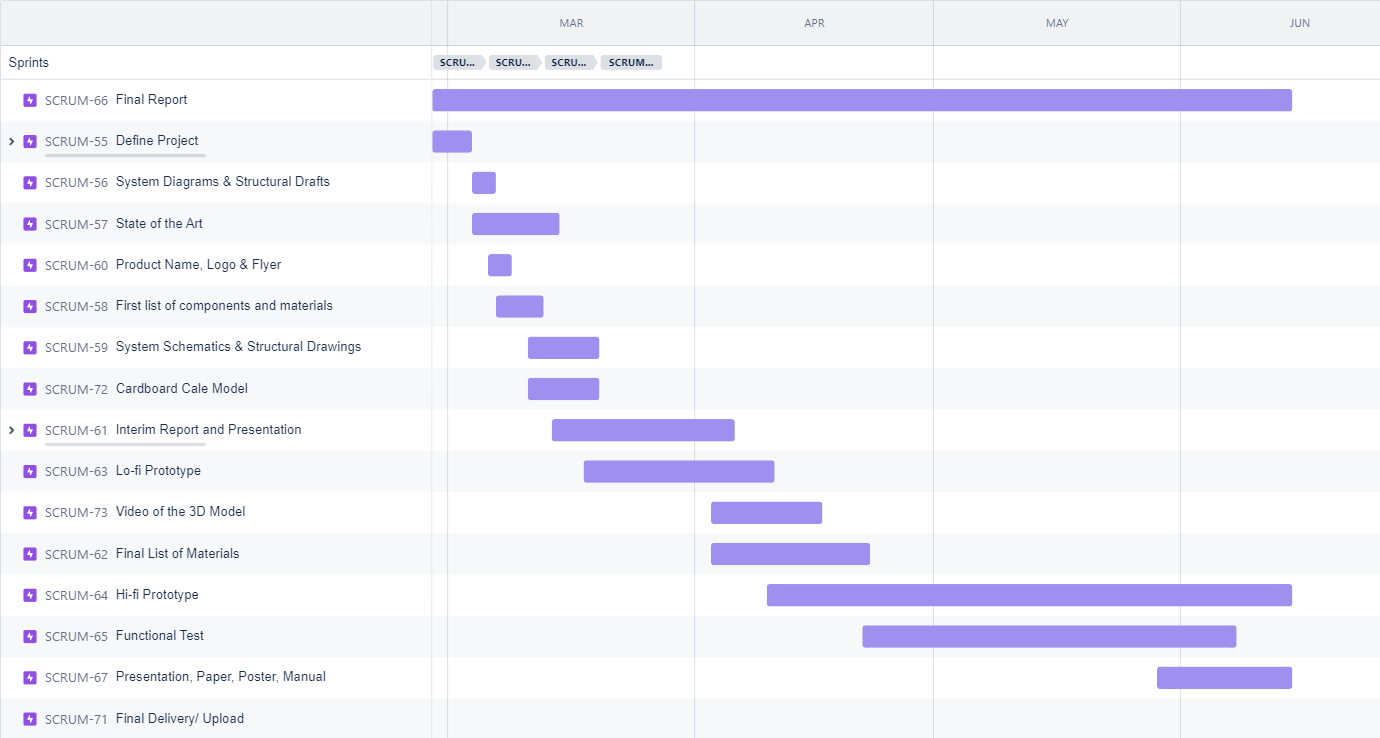
The Gantt Chart (Figure 12) is used to get an overview of all the milestones. It shows the timeline of the task, when the team starts working on and when the team has to finish them.
3.11 Sprint Outcomes
During each sprint review, the sprint outcomes are discussed, including the sprint backlog, completion status, and planned capacity versus achieved velocity. The completed tasks from the sprint backlog, highlighting pending items or challenges encountered during the sprint are reviewed. The completion status was assessed to determine if all planned work was finished and any unfinished tasks were identified for future sprints.
Additionally, the planned capacity is compared, which includes estimated effort for all planned tasks, with the achieved velocity, representing the actual amount of work completed during the sprint. This comparison provides insights into the team's efficiency and helps identifying areas for improvement.
Overall, sprint reviews provides valuable opportunities for the team to reflect on the teams progress, identify areas of growth and make adjustments to the processes to enhance performance in future sprints.
The sprint outcomes are shown in the Tables from 14 to 29.
| Sprint | Task | Planned duration (h) | Real duration (h) | Involved Members | Status |
|---|---|---|---|---|---|
| 1 | Classes | 25 | 25 | Everyone | Done |
| Define project | 6 | 6 | Everyone | Done | |
| System diagrams & structural drafts | 2 | 2 | LL, SV | Done | |
| Project backlog | 4 | 5 | Everyone | Done |
| Sprint | Task | Planned duration (h) | Real duration (h) | Involved Members | Status | |
|---|---|---|---|---|---|---|
| 2 | Classes | 18 | 18 | Everyone | Done | |
| Global sprint plan | 4 | 6 | Everyone | Done | ||
| Gantt chart | 2 | 2 | JN | Done | ||
| State of the art | 6 | 7 | JN, LO | Done | ||
| First list of components and materials | 4 | 4 | EL, JN, SV | Done | ||
| Marketing plan | 4 | 7 | LL,SV | Done | ||
| Ethical and deontological concerns | 5 | 1 | JN, LL, LO | Done | ||
| Flyer and logo | 4 | 3 | EL, JH | Done |
| Sprint | Task | Planned duration (h) | Real duration (h) | Involved Members | Status |
|---|---|---|---|---|---|
| 3 | Classes | 16 | 16 | Everyone | Done |
| System schematics & structural drawings | 4 | 4 | EL, JN, JH | Done | |
| Cardboard scale model | 3 | 1 | EL, JN | Done | |
| Eco-effeciency measures for sustainibility | 3 | 4,5 | EL | Done | |
| Redo state of the art | 4 | 6 | LO, JN | Done | |
| Ethical and deontological concerns | 6 | 10,25 | LL, JN | Done | |
| LoFi wireframes of app | 8 | 11 | JH | Done |
| Sprint | Task | Planned duration (h) | Real duration (h) | Involved Members | Status |
|---|---|---|---|---|---|
| 4 | Classes | 6 | 6 | Everyone | Done |
| Project management | 6 | 7,25 | EL, LL, LO | Done | |
| Marketing analysis | 16,5 | 19,5 | LL, LO | Done | |
| Ethical and deontological concerns | 3 | 2,5 | JN | Done |
| Sprint | Task | Planned duration (h) | Real duration (h) | Involved Members | Status |
|---|---|---|---|---|---|
| 5 | Classes | 6,5 | 6,5 | Everyone | Done |
| Interim presentation | 7 | 7 | Everyone | Done | |
| 3D-model | 10 | 10 | JN | Done | |
| Final material list | 1 | 1 | JN, EL | Done |
| Sprint | Task | Planned duration (h) | Real duration (h) | Involved Members | Status |
|---|---|---|---|---|---|
| 6 | Classes | 10 | 10 | Everyone | Done |
| Improve box design | 2 | 2 | EL | Done | |
| State of the art improvement | 3 | 4 | LO | Done | |
| App registration and login | 10 | 12 | SV | Done | |
| LoFi wireframe improvement | 2 | 2 | JH | Done |
| Sprint | Task | Planned duration (h) | Real duration (h) | Involved Members | Status |
|---|---|---|---|---|---|
| 7 | Classes | 7 | 7 | Everyone | Done |
| Ability to add content to platform | 5 | 5 | SV | Done | |
| Working with feedback on the report | 2 | 3 | Everyone | Done | |
| Marketing chapter | 4 | 4 | LL, LO | Done | |
| HiFi prototype | 3 | 5 | JH | Done |
| Sprint | Task | Planned duration (h) | Real duration (h) | Involved Members | Status |
|---|---|---|---|---|---|
| 8 | Classes | 0 | 0 | Everyone | Done |
| Packaging design | 3 | 3 | EL | Done | |
| Spelling and grammar improvements | 3 | 3 | Everyone | Done | |
| Project management | 4 | 5 | LL, LO | Done | |
| HiFi prototype | 3 | 3 | JH | Done | |
| Rating functionality for the platform | 7 | 8 | SV | Done |
| Sprint | Task | Planned duration (h) | Real duration (h) | Involved Members | Status |
|---|---|---|---|---|---|
| 9 | Classes | 2 | 2 | Everyone | Done |
| Overleaf document | 5 | 5 | LL | Done | |
| Improved 3D-video | 3 | 3 | JN | Done | |
| Leaflet | 5 | 5 | JH | Done | |
| Website wireframes | 4 | 4 | JH | Done | |
| Website programming | 7 | 9 | SV | Done | |
| Marketing chapter | 3 | 4 | LL, LO | Done |
| Sprint | Task | Planned duration (h) | Real duration (h) | Involved Members | Status |
|---|---|---|---|---|---|
| 10 | Classes | 4 | 4 | Everyone | Done |
| Final material list | 3 | 4 | EL, JN | Done | |
| Testing preparation | 2 | 2 | Everyone | Done | |
| State of the art | 2 | 1 | LO | Done | |
| Website programming | 4 | 4 | SV | Done | |
| Marketing plan | 4 | 4 | LL | Done |
| Sprint | Task | Planned duration (h) | Real duration (h) | Involved Members | Status |
|---|---|---|---|---|---|
| 11 | Classes | 12 | 12 | Everyone | Done |
| Working with the wiki based on feedback | 5 | 5 | Everyone | Done | |
| Temperature sensor | 9 | 9 | LL | Done | |
| Fem stress analysis | 16 | 16 | JN | Done | |
| Overleaf | 5 | 5 | LL | Done | |
| Video of the project | 7 | 7 | JH | Done | |
| Prototype building | 7 | 7 | LO, EL, JN | Done | |
| Website programming | 4 | 4 | SV | Done |
| Sprint | Task | Planned duration (h) | Real duration (h) | Involved Members | Status |
|---|---|---|---|---|---|
| 12 | Classes | 6 | 6 | Everyone | Done |
| Manual and technical poster | 5 | 3 | JH | Done | |
| Prototype building | 7 | 7 | LO, EL, JN | Done | |
| Overleaf | 5 | 5 | LL | Done | |
| Bug fixing | 8 | 8 | SV | Done | |
| Video of the project | 4 | 4 | JH | Done |
| Sprint | Task | Planned duration (h) | Real duration (h) | Involved Members | Status |
|---|---|---|---|---|---|
| 13 | Classes | 6 | 6 | Everyone | Done |
| Building final presentation | 4 | 4 | Everyone | Done | |
| Finalising the report | 5 | 5 | Everyone | Done | |
| Overleaf | 5 | 6 | LL | Done | |
| Final video editing | 4 | 4 | JH | Done |
| Sprint | Task | Planned duration (h) | Real duration (h) | Involved Members | Status |
|---|---|---|---|---|---|
| 14 | Classes | 4 | 4 | Everyone | Done |
| Final presentation practise | 4 | 4 | Everyone | Done | |
| Final presentation slides | 1 | 1 | Everyone | Done | |
| Check final deliverables | 1 | 1 | Everyone | Done | |
| Final check on the report | 8 | 8 | Everyone | Done | |
| Final check on the overleaf | 4 | 4 | LL | Done |
| Sprint | Task | Planned duration (h) | Real duration (h) | Involved Members | Status |
|---|---|---|---|---|---|
| 15 | Define Project |
| Sprint | Task | Planned duration (h) | Real duration (h) | Involved Members | Status |
|---|---|---|---|---|---|
| 16 | Define Project |
3.12 Sprint Evaluations
At each sprint retrospective, the team reviewed the results of the previous sprint and discussed ways of improving (Table 30). The team identified what had worked well, such as better communication, but also what was causing problems, such as unclear project requirements. To address these issues, the team took action. For example, the team introduced daily meetings to improve coordination and clarified work rules. These changes led to concrete improvements, such as faster delivery times and better quality of work. The sprint retrospectives were invaluable in enabling the team to continuously improve and contribute to the overall success of the project.
| Sprint | Positive | Negative | Start doing | Keep doing | Stop doing |
|---|---|---|---|---|---|
| 3 | Communication in time and working, organising tasks, feeling of reliability | Logging of the worktime, Trouble with predicting the amount of time spend on work, There were some different views of the project, so the team needs to discuss and get on the same page | Team needs to log directly after any work there time in the Jira, Creating more sub-tasks in order to estimate better time spend on a task, The team needs the general meeting ones a week, to see what everybody has been writing with a small stand up | Communication, keep talking about problems if there is need for help, to keep word and be reliable, organisation based on skills | Not logging time |
| 4 | Communication and workload balance good, Team working hard | Ranking the tasks, more attention to weekly report, more active working on Jira, make the agenda in time, better time estimation sprint tasks | More attention to the weekly report, agendas in time, more interaction in Jira, Better time estimation sprint tasks | Communication, workload balance | Nothing for now |
| 5 | The team did everything on time, task distribution | Preparation for interim presentation could be better, did not use the Jira sufficiently | Use the Jira after every task and put in the needed time, spend more time on preparation | Not logging tasks | Do everything in time and work ambitious |
| 6 | Communication good again | The team did not finish all the scrums, the team did not do the daily stand ups every day | More in time with the daily stand ups, better time management of the scrums | Saying to improve on the daily stand ups but not improve | Communication |
| 7 | Improvement in time logging, time estimations getting better, stand ups got more attention | The team didn't meet many times during the sprint | Continue improving with the stand ups | Time logging with the tasks, stand ups | Nothing for now |
| 8 | Good working attitude remains | Communication was not on a good level | Better communication | Keep up the good working attitude | Nothing for now |
| 9 | Reliable communication during working hours, Lots of work were finished, the team is in schedule | Less in person meetings due to vacation week | More physical meetings | Keeping up communication | Nothing for now |
| 10 | On schedule with the project, good feedback within the team | Absents due to travelling and sickness, the team didn't finish all tasks, lots of questions regarding the prototype | More communication with the teachers | Keep on working with the prototype | Schedule holidays in a way that doesn't harm the project |
| 11 | Back on track, lots of tasks were finished, good communication | Less meetings in person due to vacation week | More physical stand ups with the team | Keep on working hard with the project | Nothing for now |
| 12 | Everything is on schedule and the team is finishing up the project, teachers happy with the leaflet and poster | Hardware failure occurred delays | Wrap up the project | Communication better for the end of the project | Nothing for now |
| 13 | The team has finished almost everything, prototype is finished | No negative outcomes | Finish up the report and start working with the final presentation | Keep up the good team spirit | Nothing for now |
| 14 | Presentation went well, good clear communication and on time | None | Work on the feedback | Being on time and good communication | Nothing for now |
| 15 | |||||
| 16 |
3.13 Conclusion
The success of a project relies on effective project management. By balancing scope, time, and resources, it provides a logical approach to planning, executing, and completing projects. Collaboration and communication with stakeholders are crucial. The team manages risks, optimises resources, and meets goals within deadlines and budgets. Project management fosters teamwork and improves outcomes. In the next chapter, there will be a discussion of the vital role of marketing in project success. Marketing helps businesses attract customers and generate revenue by promoting their products and services.
The following chapter, chapter 4, will take a closer look at the marketing side of ArtSy(nc).
4. Marketing Plan
Chapter 4 will give insights into the market ArtSy(nc) wants to enter, the strengths and the weaknesses, and show possible opportunities and threats off the market. In general, it shows the strategic roadmap the platform will use in order to become a success.
Firstly, there will be a market analysis to view the size of the market and show macroeconomic factors. After this, there will be a SWOT analysis, and the strategy will show ArtSy(nc)’s objectives, audience’s and positioning in the market.
4.1 Market Analysis
To better understand the digital art market, a comprehensive analysis will be conducted. This includes exploring audience types, providing a market overview highlighting growth drivers and size, conducting a macroeconomic PESTEL analysis, and evaluating competitors. By examining these aspects, insights into market dynamics can be gained, opportunities identified, and refine the strategies for success.
4.1.1 Audience types
To achieve the goal of creating awareness among local digital artists, there are three key audience groups involved. Not all target groups can be clearly defined, as is the case with the product. There is a big subjective view of art, and there is no way to state with certainty who will like it or not. Also, it is not exclusively a collaboration between a producer and a customer. First of all, there are the local digital artists who produce the art that is to be shown. The platform is made specifically for them, and so they are the main target group, but to create a platform to showcase art so they achieve recognition, there also needs to be a focus on the art lovers and sponsors.
The local digital artists themselves are the content creators and essential participants in the process. Interaction with them is necessary to deliver art to the platform and produce the final product. For artists, it is hard to generate a reputation and recognition, to be seen in front of the general public, and therefore, ArtSy(nc) can provide them with a platform. Everybody can be an artist, and because there is no clear definition of art due to its broad interpretability, the platform will be looking for a wide audience. The main focus will be on local artists in the city where they live and want to become more visible. They need to be able to generate digital art and want to work on this theme of art. The age range can vary from young to old, rich to poor; it is an inclusive platform where everyone who needs a medium to showcase their art can have a chance.
Secondly, art lovers, which include museums, collectors, and the general public. They play a crucial role in promoting and sharing the work of local artists. They contribute to spreading the word about the artists and their creations, thereby increasing awareness within the community. This target group includes anyone who wants to watch art and helps the team with the curator process, regardless of age group, nation, or personal background. Income also plays no role for platform users because it is a freely accessible platform without any costs. The only requirement is that the person can only vote within the district where they are located at that specific moment.
Sponsors are of crucial importance and are therefore the third target group. They are especially relevant for the provision of financial support and resources for the presentation of artists' works in public spaces. These organisations contribute to the visibility and exposure of local artists while also benefiting from positive branding and community impact. The positive branding is generated due to the sponsor helping the city develop as a smart city. Currently, in the case of Porto, it is considered a smart city by the European Commission because of its sustainability goals. Now the sponsors can help the city and artists become smarter cities in the field of digital art. There are requirements for these organisations before they can collaborate with the platform; this will also be discussed in the ethical concerns. But the organisations can be any philanthropist, company, or government that shares the platform's values and vision.
These three audiences operate in a collaborative circle, with each group dependent on the others. The artists create the pieces, requiring interaction to produce the final product. Sponsors provide the necessary funding and resources to showcase the art in public spaces. The public audience then spreads the word about the created art, raising awareness for local artists.
In this cycle, everyone benefits from the platform, and it can be said that anyone can be part of one of the target groups. The platform is intended for everyone and involves anyone who shares the vision or just likes the concept.
4.1.2 Market overview
To sketch the market environment, a market overview can be a valuable tool. The overview provides some insights into possible opportunities, new business endeavours, the size of the market, and competition. To research the market, there first needs to be an idea of what the market contains. ArtSy(nc) is a provider of recognition and awareness of local digital artists. The method used is by using art lovers in the curator process through the voting platform to showcase the art in public spaces. This is a niche that contains multiple subgroups: digital art creation, art curating, and public exhibitions. These all fall under the banner of digital arts, and therefore the focus of the market overview will be on the digital arts market in general.
The global art market is a massive market, with a value estimated at USD 520.05 billion in 2023 and a compound annual growth rate (CAGR) of 6.15% for the period 2024–2032 [Straits Research, 2020]. Digital art is still a small portion of the total art market, with USD 4 billion [Coherent Market Insights, 2024]. Nevertheless, this might sound like a small portion, but it does have an estimated CAGR of 17.1% for the period 2023–2030 [Coherent Market Insights, 2024]. This shows that the art market has a lot of potential to grow big in the next 6 to 8 years, and digital arts will have massive growth opportunities. There is one problem, and that is that the digital art market does not have widespread acceptance yet. This could be helpful for ArtSy(nc) to jump in and raise more awareness for local artists and digital art.
In order to understand how the market moves, there is a need to understand the key drivers of the market.
There is an increase in accessibility. With the use of online platforms, the entry-level process of uploading and selling art, just like buying the art, is more accessible. Since there is no need for expensive materials for digital art, everyone can partake and upload their art. For art buyers, this is also a great opportunity to see and discover a bigger set of art that is way more accessible than the traditional art markets. This means that the digital market platforms can showcase more artworks for different prices, which creates big art galleries for all interested collectors of all income levels. Also, by using digital platforms, buyers and sellers don’t have to be in the same place but can be in different positions all over the world and still interact with each other. This creates even more accessibility on a global scale. The only problem these artists face is being seen through all the other digital works on the platform.
Digital art is the newest form of art at the moment. Here there is a crossing between the physical and digital realms where artists have the opportunity to create more and share more types of art. This can happen through different platforms and methods. Through advancements in technology, there are digital galleries like “The Collection Gallery,” “OpenSea” and “MakersPlace”. Art galleries, but also digital content platforms or social media platforms like “Instagram” and “DeviantArt”. The way of sharing can have borderless opportunities, which generates more involvement that is not based on a fixed location. Also, the methods of creating art are still developing in the digital art sector; there are 2D and 3D pictures and renders, the use of AR/VR, machine learning, and AI art. These are still in development and generating new types of art, which will keep advancing over the upcoming years. These methods and platforms create new ways for artists to share and generate new forms of art, which is a driver of the market.
4.1.3 PESTEL analysis
PESTEL analysis is a strategic tool used by organisations to assess and understand the external factors that may impact their business environment. The acronym stands for political, economic, social, technological, environmental, and legal factors. By examining these key elements, businesses can gain insights into the landscape in which they operate. This analysis helps organisations identify potential opportunities and threats to anticipate changes in the market and adapt their strategies accordingly. PESTEL analysis serves as a valuable framework for strategic planning, risk management, and decision-making processes, enabling businesses to stay agile and responsive in a changing business environment. [WSU Libraries, 2023]
Political:
In navigating Porto's political landscape for the art-sharing project, securing city permissions for displaying art and aligning the app's rules with regulations and cultural norms are key considerations. For example, there may be an established norm in Porto that city decision-making and politics should consider the views and needs of various stakeholders. The regulations must be clear to all the stakeholders. This approach ensures legal compliance while fostering a positive and culturally respectful user experience.
Economic:
In the project to promote art in Porto's urban spaces, economic factors are critical. Carefully consider market demand, operational costs, funding opportunities, tourism impact, competition, digital infrastructure, and economic trends to ensure financial viability and success. By addressing these aspects thoughtfully, the aim is to create a sustainable platform that enriches the city's cultural landscape.
Social:
The way of distributing the artwork and giving curatorship to art lovers is a completely new way of using digital art in a city to gain more visibility for the artist. This, in combination with the rise of digital arts on social media and online communities, can create high user engagement. However, ensuring diversity in the presented art and promoting user engagement through interactive features is crucial for long-term success. The platform also becomes a bridge, connecting the innovative world of digital art with public spaces.
Technological:
Because of the digital nature of the platform, there will be marketing opportunities with the projectors. It can be for promoting sponsors and local businesses in a new way by projecting brand names in public spaces or the app. In this platform structure, there is also a democratisation of the curation process. This is an innovative way of promoting and curating by using technology that can be explored further.
By using the platform, the public spaces will become the exhibition spots. When using multiple monitors in different public spaces, the city will indirectly become an exhibitor, which fosters a smart city. This is possible through the innovation of the projector system and the application.
There will be technological advancements in digital art. Currently, the digital art scene explores: AR/VR (augmented reality/virtual reality), machine learning, artificial intelligence, 2D/3D (two-dimensional and three-dimensional) pictures, and animations. In the upcoming years, these scenes will be explored even further and push technological innovation.
Due to technological advancements caused by competition, features of the product can become obsolete, which means there is a need for constant innovation.
Legal:
To develop an application for local artists in Porto to share their art and showcase it in urban places using projectors, several legal considerations must be addressed. Ensuring compliance with copyright laws and data protection regulations, obtaining necessary permits for public display, drafting clear contractual agreements, clarifying liability provisions, and adhering to consumer protection laws are imperative to mitigate legal risks and establish a legally sound foundation for the project.
Environment: To develop an application for local artists in Porto to share their art and showcase it in urban places using projectors, environmental considerations are following. Assessing energy consumption, waste management practices, outdoor exhibition spaces' ecological impact, transportation logistics' carbon emissions, and community engagement for environmental awareness. By prioritising sustainability initiatives and minimising environmental impact with the aim of promoting artistic expression while preserving Porto's urban and natural environments.
4.1.4 Competitive Marketing Analysis
The project aims to provide a platform for local artists in Porto to share their artwork digitally and have it showcased in urban spaces using projectors. To ensure the success of this project, it's vital to conduct a competitive marketing analysis. The project faces more indirect competition than actual direct competition. Here is an overview:
1. Competitors:
ArtFinder: ArtFinder is a global online marketplace for art where artists can sell their artwork directly to buyers. While it doesn't specifically focus on local artists in Porto, it represents a potential competitor due to its broad reach and artist-centric approach [ArtFinder, 2024].
ArtStation: ArtStation is a platform primarily used by digital artists to showcase their work. While it doesn't offer physical projection opportunities, it's a significant player in the digital art community, and may attract some of the same artists [ArtStation, 2024].
Street Art Project: This is an initiative that focuses on bringing art to urban spaces worldwide. While not a digital platform, it shares the goal of utilising urban spaces for art, which aligns with the proposed application's concept.
2. Strengths of Competitors:
Established user base: Competitors like ArtFinder and ArtStation already have a significant user base of artists and art enthusiasts.
Global reach: Platforms like ArtFinder and ArtStation cater to artists and art lovers worldwide, providing exposure beyond local markets.
Diverse offerings: Competitors may offer a wide range of art styles and mediums appealing to various tastes.
3. Weaknesses of Competitors:
Lack of focus on local artists: While competitors may have local artists on their platforms, they may not prioritise or specifically cater to them.
Limited physical presence: Digital platforms like ArtStation lack the capability to showcase artwork in physical urban spaces, potentially limiting their appeal to artists seeking exposure in such environments.
4. Opportunities for the Proposed Application:
Niche focus: By specifically targeting local artists in Porto, the application can fill a gap in the market and provide a dedicated platform for these artists to gain exposure.
Community engagement: The application can foster a sense of community among local artists and art enthusiasts in Porto, enhancing user engagement and unity.
Unique value proposition: The combination of digital art sharing and physical projection in urban spaces offers a unique and innovative way for artists to showcase their work, setting the application apart from competitors.
5. Threats to the Proposed Application:
Competition from established players: Competing with established platforms like ArtFinder and ArtStation may pose a challenge in terms of attracting users and artists.
Technological barriers: Implementing the projection aspect of the application requires technical infrastructure and partnerships with urban spaces, which may be challenging to establish and maintain.
Limited scalability: The application's focus on local artists in Porto may limit its scalability compared to global platforms like ArtFinder and ArtStation.
Conclusion:
While there are challenges and competition in the market, the proposed application has the potential to succeed by offering a unique value proposition tailored to the needs of local artists in Porto. By leveraging technology and community engagement, the application can carve out its niche in the art-sharing market and establish itself as a valuable platform for artists and art lovers alike. Figure 13 presents a visual comparison between ArtSy(nc) and the competitors via a positioning diagram.
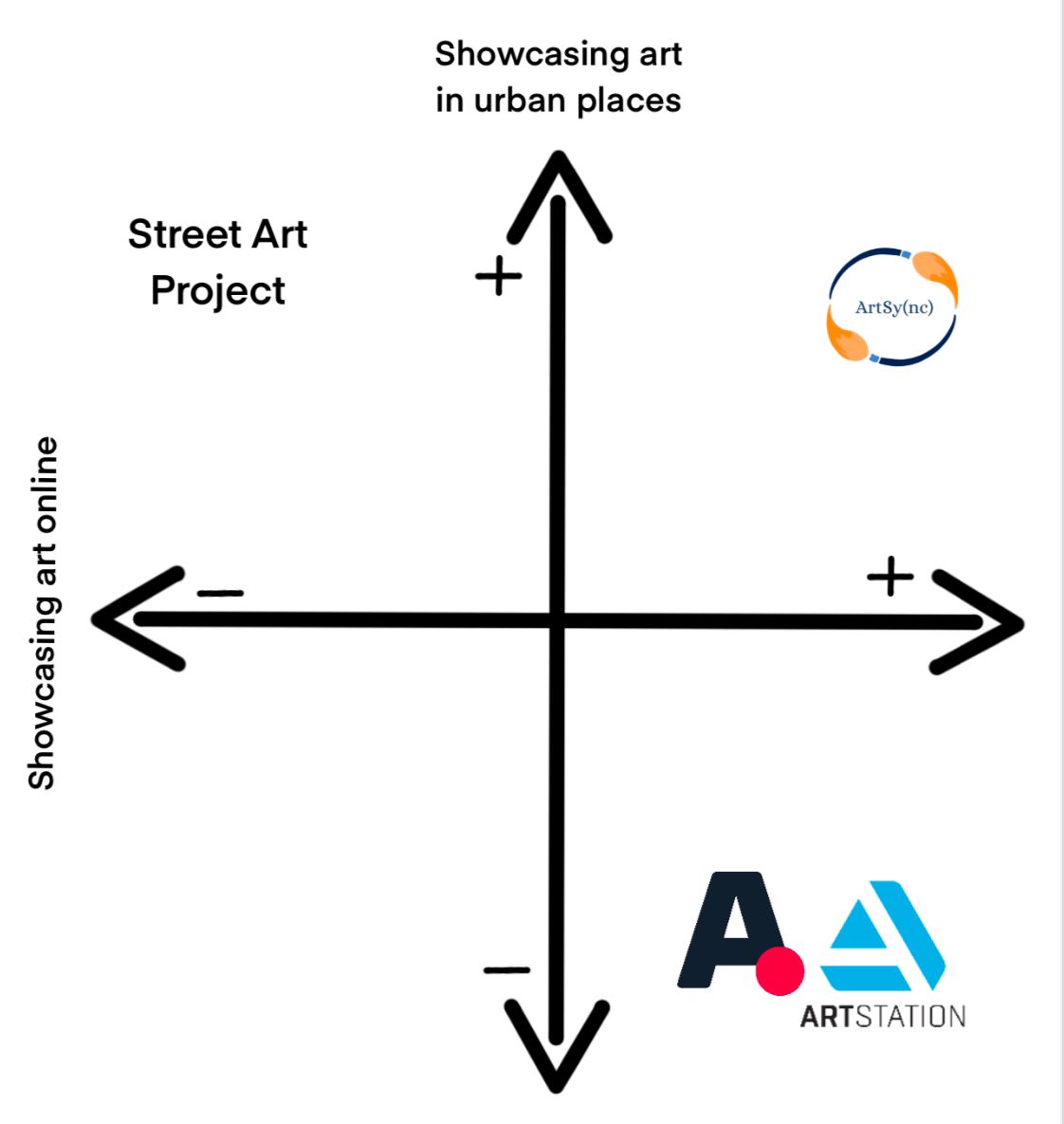
4.1.5 Competitor Cost Analysis
The project faces competition from established platforms such as ArtStation, ArtFinder, and street art projects. Understanding their pricing models and operational expenses is essential for positioning the application effectively and ensuring financial sustainability.
ArtStation
Overview: ArtStation is a widely recognised platform for digital artists, primarily in the entertainment industry. It serves as a portfolio site, job board and marketplace.
Cost Structure: 1. Subscription Plans:
- Free Tier: Basic portfolio showcasing.
- Pro Membership: 10 euros per month or 100 euros annually. Offers additional features such as custom domains, advanced analytics, and higher visibility in searches.
- Enterprise Solutions: Custom pricing for large teams or organisations needing enhanced features and support.
2. Marketplace Fees:
- ArtStation charges a 30% commission on sales made through their marketplace. This percentage covers transaction fees, hosting, and promotional efforts.
3. Additional Costs:
- Advertising: Costs for artists to promote their work can vary, depending on the desired visibility and target audience.
- Courses and Tutorials: Priced individually, with some reaching up to several hundred euros for comprehensive professional courses.
Operational Costs:
- Hosting and Maintenance: High due to the need for robust servers and data management.
- Development and Support: Significant ongoing costs for platform improvements and customer support.
- Marketing and Outreach: Continuous investment in global advertising and partnerships to maintain a strong user base.
ArtFinder
Overview: ArtFinder connects independent artists directly with buyers, emphasising original artworks rather than digital creations.
Cost Structure: 1. Subscription Plans:
- Basic Plan: No monthly fee, but higher commission rates on sales.
- Standard Plan: 12 euros per month with reduced commission rates.
- Professional Plan: 50 euros per month, offering the lowest commission rates and additional promotional tools.
2. Commission Fees:
- Basic Plan: 40% commission on sales.
- Standard Plan: 33% commission on sales.
- Professional Plan: 28% commission on sales.
3. Listing Fees:
- No upfront listing fees, but a commission is taken on each sale.
Operational Costs:
- Website and Mobile App Maintenance: Regular updates and user interface improvements.
- Customer Service: Providing support to both buyers and artists.
- Marketing and Sales Promotion: Efforts to increase platform visibility and attract more users.
Street Art Projects
Overview: Street art projects vary widely in their structure and funding, ranging from community-driven initiatives to large-scale festivals and city-sponsored events. These projects typically focus on public art installations rather than digital or marketplace interactions.
Cost Structure: 1. Project Funding:
- Sponsorships and Grants: Funding from local businesses, government arts grants, and non-profit organisations.
- Crowdfunding Campaigns: Community-driven fundraising efforts to support specific projects.
2. Artist Fees:
- Payment to artists varies greatly, often depending on the project's scale and the artist's notoriety. Fees can range from a few hundred dollars for small installations to tens of thousands for major murals or sculptures.
3. Equipment and Materials:
- Costs for paint, scaffolding, protective gear, and other materials required for creating large-scale art installations.
4. Permits and Insurance:
- Legal costs for obtaining necessary permits and insurance coverage for public art projects.
Operational Costs:
- Project Management: Coordination of artists, materials and, schedules.
- Marketing and Publicity: Promoting events to attract public attention and attendance.
- Maintenance and Preservation: Ensuring the longevity of artworks, especially those exposed to the elements.
Comparative Analysis
Understanding the cost structures of the competitors highlights several key points:
1. Subscription vs. Commission:
- ArtStation and ArtFinder primarily rely on a combination of subscription fees and sales commissions, creating a steady revenue stream.
- The application can consider a similar model, offering free basic access with paid premium features and a commission on sales or showcased art.
2. Operational Expenses:
- Significant costs in hosting, development, and marketing are common among digital platforms. For the application, ensuring efficient budget allocation to these areas will be crucial.
- Street art projects emphasise funding through sponsorships and grants, an approach that the team's initiative can leverage to cover operational costs and projector installations.
3. Sponsorship and Funding:
- Street art projects' reliance on sponsorships aligns with the team's strategy. Building strong relationships with local businesses and cultural organisations in Porto can provide the necessary funding for sustainable operations.
4. Value Proposition:
- The unique offering of projecting local artists' work in urban spaces differentiates the project from purely digital platforms like ArtStation and ArtFinder. This hybrid approach can attract both traditional sponsors and tech-savvy backers, balancing costs and revenue sources effectively.
Conclusion
A comprehensive understanding of the cost structures and operational expenses of competitors like ArtStation, ArtFinder, and street art projects provides valuable insights for the application's financial planning. By blending subscription models, commission fees, and strong sponsorships, the team can create a sustainable business model that supports local artists in Porto while enriching the city's cultural landscape through innovative art displays.
4.2 SWOT Analysis
To better understand the strengths and weaknesses of ArtSy(nc) the SWOT analysis could be used well. The SWOT analysis is a method for identifying strengths, weaknesses, opportunities, and threats. It is an effective tool used by many companies and project managers to identify the possible strengths and weaknesses of projects or businesses. [US Economic Development Administration, 2024]
Strengths:
- Innovative Concept: The integration of visual art in real-time is a unique and innovative concept, setting the platform apart in the digital art space.
- Engagement and Interaction: The real-time sync and collaborative aspects improve engagement, providing users with an interactive and dynamic experience.
- Smart city: The use of local artists to create digital art and showcase it on public displays, will foster a smart city. This integration improves the city's cultural identity. By promoting local talent and providing an innovative platform for local artistic expression, community engagement, and enhancing the city's reputation. The reputation will align with the city as a forward-thinking hub for creativity and culture to become a smarter city.
- Diverse Audience Reach: With the potential to showcase digital art in public spaces, the platform has the opportunity to reach a diverse audience beyond traditional art spaces, including tourists, commuters, and people who pass by.
- Collaborative Partnerships: Collaborating with local governments, businesses, and cultural institutions to showcase digital art in public spaces can lead to mutually beneficial partnerships and increased visibility for the platform.
- Collaborative Community Growth: The platform presents an opportunity to build a vibrant community of artists, improving collaboration, sharing, and cross-promotion.
- Replicating: The platform is easy to replicate in other cities and public spaces due to its robustness.
Weaknesses:
- Technical Challenges: Achieving seamless real-time synchronisation and ensuring a smooth user experience may pose technical challenges, requiring continuous development and optimisation.
- Learning Curve: Users may face a learning curve in mastering the platform's features and tools, potentially limiting initial user adoption.
- Content Moderation: Managing collaborative spaces may require effective content moderation to prevent misuse or inappropriate content from impacting the community.
- User Engagement: The platform's success hinges on active participation from a diverse range of local artists and engagement from the general audience. Currently, there may be a challenge in attracting and retaining a sufficient number of artists to diversify and celebrate their work effectively. Additionally, interaction with the general audience to generate feedback on preferred art styles and preferences is crucial for creating a vibrant and engaging platform. Without robust user engagement strategies in place, there's a risk of limited content variety and decreased user interest over time.
- Sponsor Dependency: The organisation, relies heavily on sponsorships to fund and maintain its operations. The platform's ability to showcase local digital art in public spaces is contingent upon securing consistent financial support from sponsors. However, reliance on sponsors introduces vulnerability to changes in funding availability, sponsorship preferences, or economic conditions, which may impact the platform's stability and growth potential.
Opportunities:
- Artist recognition: The platform presents an opportunity for artists who need and look for recognition for their work.
- Partnerships with Artists: : Established artists who want to help local artists become more recognised and enhance visibility can work together with the platform to reach a wider audience.
- Technological Innovation: Leveraging advancements in technology such as augmented reality (AR), virtual reality (VR), or blockchain could enhance the platform's features and user experience, attracting tech-savvy users and fostering greater engagement.
- Partnerships: People and organisations that want local artists to be more visible can help by sponsoring the platform.
- Smart cities: Cities whose goals are to become more digital and want to become smart cities could use the platform for their goals.
Threats:
- Competition: The digital art and collaboration space is competitive; staying ahead of or differentiating from similar platforms is crucial.
- Technological Advancements: Rapid technological advancements could make certain features obsolete or necessitate continuous updates to remain relevant.
- Adoption by the art world: The adoption of the platform by the traditional art world can be hard, particularly if it disrupts existing power structures or challenges entrenched notions of exclusivity. The art world has historically been resistant to change, and the platform's emphasis on democratisation and collaboration may be met with scepticism or resistance from certain quarters. Additionally, established institutions and gatekeepers within the art world may perceive the platform as a threat to their authority or control over the artistic narrative.
- Economic Instability: Changes in economic conditions, such as recessions or budget cuts, could impact sponsorships and funding for cultural initiatives, posing a threat to the platform's financial sustainability.
- Technological Risks: Dependence on technology for real-time collaboration, public display, and platform functionality introduces risks such as technical glitches, cybersecurity threats, or compatibility issues, which could disrupt operations or damage the platform's reputation.
- Regulatory Challenges: Compliance with local regulations, permits, and permissions for showcasing digital art in public spaces may pose logistical challenges and bureaucratic hurdles, potentially limiting the platform's ability to expand or innovate.
4.3 Strategy
In the pursuit of the objective to become a leading platform, a strategic roadmap is essential. The strategy is outlined by a series of clearly defined objectives, structured by the following criteria: Specific, Measurable, Achievable, Relevant, and Time-bound also referred to as SMART. These objectives, which encompass initiatives targeting Artist Engagement, Art Lover Engagement, Sponsorships, and Expansion, serve as fundamental pillars in guiding the trajectory towards growth and success.
4.3.1 Strategic Objectives
To achieve the goal of becoming a leading platform, there is a need for a set of strategic objectives with measurable targets. These objectives focus on four areas; Artist Engagement, Art Lover Engagement, Sponsorships and Expansion. These objectives are SMART this will help ensure continued growth and success.
For artists:
- Of all users, 10% to 15% must be artists by one year
- Get 1 to 2 artworks per artist every two weeks
- The platform is for all ages, but there is an emphasis on young to mid-aged users, who grew up in the digitally era. These Artist are between age 14 to 50.
For art lovers:
- Per enrolled city between 0.5% to 1% of the population engaging with the platform.
- The platform is for all ages, but just as the artist there is a emphasis on young to mid-aged users, who grew up in the digitally era. These art lovers are between age 14 to 50.
Sponsors:
- Get at least 2 – 4 local sponsors per city where the platform is deployed.
Expansion:
- Expand to 10 different cities in 5 years
- Have between 5 – 15 public spaces in use per city depending on its size
4.3.2 Segmentation and Targeting
In Chapter 4.2.1 there is already a general analysis of the target audience. In this chapter, there will be a more in-depth segmentation and targeting of these three audiences.
Segmentation:
Segmenting the audience, can generate a better overview of who ArtS(nc) is interested in. Therefore the three audience types need a more in depth description after which the targeting will be more precise.
Artists:
For artists, there is a focus for people who are between the ages of 14 and 50, even though ArtSy(nc) is open for every age as long as someone can make actual art they are welcome to join the platform. The artist must be local to the place they live in. There will be a preference to showcase artists who live in their own city instead of different cities than where the art will be showcased.
The style of the artist can be really broad as long as they incorporate digital art. They can be post-modern, Avant Garde or something else. As long as their art is combined with digital art. The artist can also be of every level, they can be beginner to advanced.
The upload frequency can be approximately 2-4 times a month. Artists are also allowed to help in the curating process as long as they follow the platform's guidelines.
Art Lovers:
The demographic of art lovers is quite brought. The ages can vary from 10 to 90, and ArtSy(nc) will be open for all these ages. As long as a person, local or tourist likes to watch art or wants to learn more about it, the person will be welcome to join the platform. The only requirement is that they have a basic sense of digital applications and want to learn, see and share art in order to use the platform. Therefore there will be a emphasis in marketing on people between age 14 to 50. For all these users it will be ArtSy(nc)'s job to make the platform as intuitive as possible to make it easy to use for most people.
There is a preference that the users and viewers will become regular users and not one-time engagement, they need to use the platform at least twice a week to swipe genuine 10 pieces of art each time. They can be identified as casual viewers up to art collectors. The art interest can be very brought as long as they like the combination of different types of digital art.
Sponsors:
For sponsors there is a preference for organisations that already work in, art projects or have a link with the platform. Think of tech companies, museums or socially aware companies. But this is not mandatory. They do not need to come from a specific industry as long as they share the views and beliefs of the platform they are welcome. The size of the sponsor is preferably a big company with budgets in order to sponsor fully or for a big part.
Targeting:
To specify the audience even more they will be addressed as the target audience and get a more specific and narrow description.
The primary target:
The primary target is the local digital artist between 15 to 90 years old. This person is passionate about their digital work but lacks the resources for more exposure. The platform provides them a place where they can showcase their work to be seen by art lovers to gain recognition.
The second target group:
The second target group is engaged art lovers between 10 to 90 years old. They need to be active on the platform and want to seek and discover new digital art. They want to spend time voting and viewing the artworks on the platform and at the local exhibitions.
Sponsors: Companies that already have worked with or are currently in the art, technological or digital art industry. And align with the norms, values and goals of ArtSy(nc) would be ideal partners.
4.3.3 Positioning
ArtSy(nc) stands out in the market as a unique platform dedicated to empowering local artists in Porto by providing them with a digital space to share their artwork and the opportunity to showcase it in urban places through innovative projection technology. Unlike generic art marketplaces or digital platforms, ArtSy(nc) focuses specifically on the vibrant artistic community of Porto offering a tailored solution to meet their needs.
Key Elements of Positioning:
Local Empowerment:
ArtSy(nc) prioritises the local artistic talent of Porto providing a dedicated platform for artists to gain exposure within their community and beyond. By focusing on local artists there will be a sense of belonging and support within the Porto art scene.
Innovative Projection Technology:
What sets ArtSy(nc) apart is its integration of projection technology to showcase artwork in urban spaces. This unique feature transforms ordinary cityscapes into dynamic art galleries providing artists with a captivating way to display their work and engage with audiences in public settings.
Community-Centric Approach:
Beyond being a mere platform ArtSy(nc) cultivates a thriving artistic community within Porto. Through features such as artist profiles, interactive discussions and local places the connections and collaboration among artists and art enthusiasts enriching the cultural landscape of the city.
Value Proposition:
By combining digital art sharing with physical urban projection ArtSy(nc) offers a one-of-a-kind experience for both artists and viewers. Artists benefit from increased visibility and opportunities for recognition while audiences are treated to an immersive art experience that transforms ordinary spaces into dynamic showcases of creativity.
Overall, ArtSy(nc) positions itself as not just a platform for art sharing but as a catalyst for artistic expression, community engagement and urban revitalisation in Porto. With its focus on local empowerment, innovative technology and vibrant community, ArtSy(nc) aims to redefine the way art is experienced and appreciated in the city.
4.3.4 Marketing-Mix
The marketing-mix is a tool for companies to promote their product on the market. Marketing-mix includes four P’s which are the following [Alexandra Twin, 2024]:
1. Product
The product is a digital platform that serves as a platform for local artists to share their art and for art lovers to discover and engage with diverse artworks. There is a focus on creating a user-friendly interface with intuitive features for art sharing and seamless integration with projectors for showcasing art in urban spaces.
2. Price
A goal is to create an application where registration would be free. There is an aim to sustain the business through various sponsorship funding.
3. Place
The app will be available for download on major app stores, ensuring accessibility to a wide audience of artists and art lovers in Porto. The projectors will take place all over the city of Porto. Additionally, there will be emphasis on promoting the app through online channels, social media platforms and local art communities to maximise visibility and user adoption.
4. Promotion
The app needs to be promoted through online channels, social media platforms and local art communities to maximise visibility and user adoption. Also, different collaborations with museums and public factors in the city would boost the business.
By carefully considering each element of the marketing mix the team aims to develop a comprehensive marketing strategy that effectively promotes local art, drives user engagement and fosters a sense of community around the app in Porto's urban spaces.
A primary goal is to promote local art and foster community engagement, with an aim to keep the app accessible to both artists and users. There is a free-to-use basic version of the app with optional premium features for artists seeking enhanced visibility or promotional opportunities.
4.3.5 Brand
The project name is called ArtSy(nc). The name refers to art, connection and unity which perfectly reflects the primary purpose of the project: bringing together artists and art lovers through digital art. The first part of the name “Art” refers to the content of the application which is art. The additional part “Sy(nc)” at the end completes the name and brings an idea of community and uniting the users. The true meaning of the name can be summed up in the phrase “Art syncs people together”.
The logo consists of two brushes. The tips of the brushes form an arrow-like shape and as the brush tips connect they create a synchronisation symbol representing unity. The mix of calm and popping colors creates a positive atmosphere around the logo.
4.4 Marketing Programs
A marketing program is a coordinated set of activities and strategies designed to achieve specific marketing objectives. These programs are designed to promote a product, service, or brand to a target audience. A marketing program can include various elements such as advertising, public relations, digital marketing, promotions, events, direct marketing, etc. The main objective of such a program is generally to attract the attention of consumers, convince them of the usefulness or value of the product or service, and ultimately encourage them to buy or use the product or service in question.
4.4.1 Programmes
Social Media Engagement:
TikTok and Instagram
ArtSy(nc) should utilise platforms like TikTok and Instagram to promote its application for several pivotal reasons. Firstly, these platforms are hugely popular among younger generations, who constitute a significant portion of the team's target audience. Leveraging TikTok and Instagram enables ArtSy(nc) to reach a broad audience rapidly, which is crucial for effectively promoting the app. Moreover, TikTok and Instagram are visually-driven platforms that align perfectly with promoting an application centered around digital art. Artists and art enthusiasts are often highly active on these platforms, sharing their creations and discovering new artistic content. By utilising TikTok and Instagram, ArtSy(nc) can create compelling content that showcases the unique features of the app, such as the ability for artists to share their digital works and project them within the city. Additionally, TikTok and Instagram offer powerful sharing capabilities, allowing the audience to quickly disseminate information about the app. Users can share stories, links, and videos on their profiles, enabling the app to gain visibility and reach new potential users.
Examples
For Artists:
- TikTok Challenges: Create engaging challenges where artists can showcase their digital artworks shared on the ArtSy(nc) app. For example, initiate a challenge inviting artists to create a time-lapse video of their digital painting process and use the hashtag #ArtSyChallenge.
- Artist Spotlight on Instagram: Highlight artists who use the ArtSy(nc) app on the Instagram account. For example, post their artworks accompanied by a brief biography and an interview about their creative process.
For Art Lovers:
- Urban Art Tours on TikTok: Create TikTok videos showcasing artistic installations projected throughout the city using the ArtSy(nc) app. Show different artworks, their locations, and provide practical tips for art enthusiasts on how to use the map feature to find these artworks. Use trending hashtags like #ArtSyCityTour.
- Art Hunts on Instagram: Organise interactive art hunts on Instagram where art enthusiasts can follow clues to discover hidden digital artworks in various locations.
- Artwork of the Day on Instagram: Share daily posts on Instagram featuring digital artworks available on the ArtSy(nc) app. Invite art enthusiasts to join and download the app.
These examples provide targeted approaches to engage both artists and art enthusiasts via TikTok and Instagram, leveraging the features of each platform to effectively promote and raise awareness of the ArtSy(nc) app.
Tourist websites, Travel Bloggers
ArtSy(nc) should collaborate with tourist websites, travel bloggers, and influencers in the tourism industry to promote its application. This ensures that when people search for attractions to visit in the city, the ArtSy(nc) app appears among the things to do, allowing them to use the map to discover digitally projected artworks throughout the city while also introducing them to the application and its innovative concept. By being present on these platforms, ArtSy(nc) can capture the attention of a wide range of individuals, regardless of their age. Many travelers seek unique cultural experiences when exploring a new destination, and the app can offer an innovative approach to discovering digital urban art and exploring the city simultaneously. By partnering with bloggers and influencers in the travel industry, ArtSy(nc) can leverage their credibility and engaged audience to showcase the app and encourage travelers to download it.
Examples
For Art Lovers :
- Collaboration with Tourist Sites: Include information about the ArtSy(nc) application in “Things to do” or “Attractions” sections of popular tourist sites like GetYourGuide or TripAdvisor.
- Influencer Collaboration: Collaborate with influential travel bloggers who write about unique cultural experiences in different destinations. Invite them to use the application on their next trip and share their experience on their blog and social networks.
Physical promotion
ArtSy(nc) should promote its application not only digitally but also physically through various methods such as flyers, leaflets, posters, travel guides, QR codes, and events. This physical promotion increases brand visibility in everyday spaces where people live, work, and socialise, leading to greater brand recognition and awareness among a diverse range of individuals. Flyers, posters, QR codes, and leaflets should be strategically placed in locations like tourist information points and local cafes to reach people interested in art and culture. This targeted approach increases the chances of reaching potential artists and art lovers who would appreciate the platform. It can also attract the attention of people who might not be actively searching for art experiences online, introducing a whole new audience to ArtSy(nc). These forms of promotion have the same goal but can be distributed at different locations. Flyers and leaflets can be in local shops, cafes, or other public spaces, while QR codes can be distributed throughout the city. Posters can be placed at bus stops and universities.
Examples
- A customer in a café sees flyers with the logo and QR code, prompting them to download the app.
- A person waiting for the bus notices ArtSy(nc)'s posters at bus stops, generating awareness about the brand and encouraging them to download the app.
- ArtSy(nc) distributes leaflets about the platform and events in shopping bags at stores.
Events: ArtSy(nc) should host a variety of events, including artist talks, workshops, and public art walks centered around projected artworks, to promote its application. These events create a community atmosphere for artists and art lovers and provide a platform to showcase the app's features and the artists it empowers. By inviting potential sponsors to these events, ArtSy(nc) can demonstrate the platform's value proposition and build mutually beneficial partnerships. Local events create a sense of local pride and ownership among community members, encouraging them to engage with the platform and support its growth.
One of the strong cases why these physical promotions will be local is that it can create a sense of local pride and ownership to the people in the community. People might be more interested in checking out the platform if they see it showcasing art in their city neighborhoods.
Sponsors
ArtSy(nc) should seek partnerships with public spaces and cultural institutions to promote its application. Collaborating with museums, art galleries, cultural centers, libraries, and public parks can offer increased visibility while enriching the cultural experience for their audience. Organising collaborative events where digital art is projected and inviting sponsors to participate in exchange for visibility can also be effective. Approach local businesses and brands interested in culture and art, such as technology companies, media companies, commercial art galleries, clothing or tourism brands, to discuss potential partnerships.
These marketing strategies and partnerships should be carefully planned and executed to effectively promote ArtSy(nc) and attract a diverse audience of artists, art lovers, travelers, and local communities. By leveraging digital and physical promotion channels, as well as strategic partnerships, ArtSy(nc) can increase brand awareness, engage its target audience, and drive downloads and usage of its application.
4.4.2 Budget
To effectively deliver the marketing program for ArtSy(nc) within the budgetary constraints of a small business, optimising the use of resources and harnessing in-house expertise is crucial. Here's a detailed breakdown of the budget: Table 31.
Engagement on social networks
- Content creation and advertising: Utilising in-house talent to create compelling content on TikTok and Instagram, including videos, graphics, and challenges. This approach avoids the need to hire a digital manager, resulting in an estimated cost of 0 euros.
Estimated cost 0 €
Tourist sites and travel bloggers
- Collaborations and Sponsored Content: Working with local travel bloggers and tourist sites to create sponsored publications and travel guides. Listing on platforms like TripAdvisor and GetYourGuide is free, but increasing visibility through offers can cost around 75 euros per month per site. Additionally, partnering with a travel blogger like Jonathan Bertin for a story and post about the concept would cost an estimated 2145 euros.
Estimated cost 2145 €
Physical promotion
- Printed materials: Designing and printing flyers, leaflets, posters, and QR codes using cost-effective printing services. Distributing these materials in strategic locations such as tourist information points, cafés, and bus stops would incur an estimated cost of 500 euros.
Estimated cost 500 €
- Organising events: Hosting low-cost events such as workshops in public spaces or collaborations with local cafés and libraries, with an estimated cost of 1000 euros.
Estimated cost 1000 €
- Merchandise: Creating small branded items such as stickers for distribution at events and in partnerships, with an estimated cost of 1000 euros.
Estimated cost 1000 €
Sponsorships
- Collaborative events: Organising collaborative events with sponsors, focusing on digital installations and live performances, with an estimated cost of 4000 euros.
Estimated cost 4000 €
Total estimated budget 7600 €
This budget allows ArtSy(nc) to comprehensively promote its application through various channels while respecting financial constraints. By leveraging in-house skills and maximising available resources, significant visibility and user engagement can be achieved. Strategic investments in social networks, partnerships, physical promotions, and continuous improvement position ArtSy(nc) well to achieve its marketing objectives.
| Income | Price (€) |
|---|---|
| Budget | 8500 |
| Expense | Price (€) |
| Tourist sites | 1800 |
| Travel blogger | 345 |
| Printed materials | 500 |
| Organising events | 1000 |
| Merchandise | 1000 |
| Collaborative events | 4000 |
4.4.3 Control
In order to check and control the marketing strategy ArtSy(nc) will use the Plan-Do -Check- Act (PDCA) approach. This is a method developed by W. Edwards Deming in order to ensure the effectiveness of a strategy and if it needs to be adjusted. It provides a cycle of continuous improvement. This cycle is made in four stages, the; Plan, Do, Check and Act stages. In the plan stage their will be thought about different ways to improve the current marketing strategy and determine goals for the process. This will lead to the Do stage where action is taken place to implement the changes. In the Check stage there will be evaluations of the new methods and improvements. Where the Act stage is meant for adjusting the strategy or process if the new method gives better results than the previous case. This cycle can be done multiple times a year in order for ArtSy(nc) to check if there are any improvements in the marketing program. [Lean Enterprise Institute, 2024]
To ensure control over the marketing strategy plan outlined in the marketing programs, there will be various measure implementations across different channels. In the marketing programs the PDCA Plan is constructed witch has to be implemented by the Do stage. To keep control off all these various implementations there must be guidelines for the Check stage:
Social media check
For the social media Check stage, there will be regular reviews and monitoring the content posted on the social media platforms. This ensures that the posts align with the brand image and messaging. To ensure the content is being seen by the target audience there is also need for engagement tracking. This helps to keep track of engagement metrics such as likes, shares, and comments to gauge the effectiveness of the social media campaigns. In order to have direct contact with the audience, maintain positive brand image and address any concerns or inquiries there is an need for response management.
Tourist websites and travel bloggers check
For the Tourist websites and travel bloggers Check stage, reviewing and approving any content featuring the ArtSy(nc) application on tourist and travel bloggers platforms will help ensure accuracy and consistency in promoting the platform. Also analysing the performance of the collaboration by tracking website traffic, app downloads and user engagement metrics. This can be helpful to determine to change the collaboration, continue or terminate. But also to see what type of advertisements work well and which don’t. There will also be a process to gather and incorporate feedback from both users and partner websites/bloggers. Analysing feedback gives a chance to continually improve the marketing efforts, refine partnerships, and ensure a positive user experience.
Physical promotion check
In order to over see the Physical promotion Check stage there must be oversight on the distribution of flyers, leaflets, posters, and QR codes to ensure they are placed in strategic locations. These locations need to be verified on the fact that they reach the target audience and adhere to the established branding guidelines. In addition, there is a need for coordinating and managing the events to achieve alignment with the brand values and objectives. This includes overseeing any sponsorships and partnerships associated with these events. Finally, to assess the effectiveness of the physical promotion efforts and make necessary adjustments, there is a need for establish a system to gather feedback from attendees and observers. By collecting the feedback and observations of the team and attendees there can be proper feedback session conducted to generate new insights in the effectiveness of the promotion plan.
Sponsorships check
To maximise the effectiveness of the sponsorships, there is a need to implement a multi-pronged approach. After carefully select partners, such as museums, cultural centers, and local businesses as part of the strategy plan. These partnerships need to be measured for the success of the sponsorships. The team needs to conduct periodic research about the collaboration performance and also periodic research about the partners values, brand image, coming through on contractual agreements and alignment with ArtSy(nc). Since this can change over time there is a need to keep track on the position of sponsors, their public image and willingness to sponsor. This can be done by feedback incorporation from the target audience, feedback from the sponsors and team observations. This selective approach fosters mutually beneficial partnerships.
Budget control check
In order to check the Budget there needs to be a periodic control on the resource allocation across the different marketing channels, based on their potential impact, relevance to the target audience. There is also need for periodic financial reports to track expenditures and assess the overall financial health of the marketing initiatives. This in combination with regularly monitor expenses and adjusting the budget as needed to optimise spending. Will help ArtSy(nc) to maintain a healthy situation for ArtSy(nc)’s marketing strategy.
These control measures ensure that the marketing strategy remains aligned with the objectives, maintains brand consistency, and delivers measurable results.
4.5 Conclusion
Based on this market/economic analysis, the team decided to create a mobile application, intended for local Artist and Art lovers/enthusiast in urban areas. Consequently, the team decided to create a product that shares the art uploaded by local artist on the application platform. Here the Art lovers can vote on the artworks which will be showcased in their local public environments. Consequently, the team decided to create the app with features that cater to these audiences, such as: Social media aspects for following artists and sharing artwork, Geolocation features to find and view projected digital art installations throughout the city and Tools for artists to upload and share their digital creations.
ArtSy(nc) occupies a unique space in the art world. With minimal direct competition, it has the potential to become a leading platform for showcasing and experiencing digital art. While other companies could develop similar functionalities, ArtSy(nc) enjoys a first-mover advantage, allowing it to establish itself as the go-to destination for both creators and consumers of digital art.
The core of ArtSy(nc)'s target audience and mission lies in local digital artists. The platform provides them with the tools and exposure they need to thrive. Art lovers are the other key demographic that ArtSy(nc) caters to. The app offers engaging ways to discover and interact with digital art. Sponsors are the third audience group that plays a vital role in ArtSy(nc)'s economic sustainability. By partnering with museums, cultural centers, and local businesses, ArtSy(nc) can create mutually beneficial relationships. Sponsors gain exposure to a targeted audience of art enthusiasts, while ArtSy(nc) secures the resources needed to maintain and develop the platform.
By transforming public spaces into open-air art galleries, ArtSy(nc) breathes new life into these areas, enhancing their visual appeal and cultural significance. This not only benefits the city's image but also creates a more vibrant and engaging experience for visitors. Local artists gain a valuable platform to showcase their work and reach a wider audience, fostering a thriving creative community within the city. Art lovers are introduced to exciting new forms of digital art, and the interactive features make the discovery process engaging and enjoyable.
Ultimately, ArtSy(nc) creates a win-win situation for everyone involved. Public areas become more visually stimulating and dynamic, artists gain exposure and recognition, the city attracts visitors, fosters a creative community and a more cultural appeal, and art lovers discover a whole new world of artistic expression. With this innovative approach and focus on distinct audience needs, ArtSy(nc) is poised to become a thriving ecosystem for digital art.
The next chapter explores how ArtSy(nc) can minimise its environmental impact. It will be about eco-friendly design considerations and explores strategies for reducing waste and energy consumption
5. Eco-efficiency Measures for Sustainability
This chapter delves into the specific measures to minimise the environmental footprint of ArtSy(nc). This will be done by exploring considerations for the design and production of the outdoor spotlight housing, strategies for reducing energy consumption and waste management, and methods to mitigate light pollution. Furthermore, it will be about the application itself, which is being developed with sustainability in mind, focusing on energy-efficient coding practices and user interface design that minimises unnecessary resource use. Finally, the chapter will explore how the application can be a tool for promoting environmentally conscious art and user behaviour.
5.1 Introduction
This chapter addresses the sustainable aspect of the project, beginning with an introduction featuring key definitions such as sustainable development and eco-efficiency. The three pillars of sustainability are then explored, and the chapter concludes with a life-cycle analysis of the product.
Throughout history, geological resources have served as crucial elements in providing food, shelter, and transportation for humans. However, excessive consumption has inflicted significant damage on the ecosystem, resulting in pollution and resource depletion. Sustainable engineering presents itself as a solution to this pressing issue, aiming to reconcile the demands of environmental preservation and economic growth. Sustainable engineering is rooted in the three pillars of sustainable development (illustrated in Figure 14): the environment, society, and the economy, a concept formalised in 1992 by the Earth Summit in Rio [United Nations, 2024]. The principle of sustainable development strives to “meet the needs of the present without compromising the ability of future generations to meet their own needs”, as articulated by Ms. Gro Harlem Brundtland, Norwegian Prime Minister (1987). Indicators like the Happy Planet Index, which assesses human well-being in terms of ecological impact and standard of living, are employed to evaluate this equilibrium.
Aligned with sustainable engineering, the management strategy of “doing more with less” is termed eco-efficiency. It revolves around the idea of enhancing the production of goods and services while minimising resource utilisation, waste generation, and pollution. Koskela and Vehmas (2012) define eco-efficiency as “a relationship between environmental impact and economic performance.”
Tools such as life cycle analysis enable the comprehensive assessment of a product or system's environmental impact from its design to its end of life. This method proves valuable for evaluating the environmental footprint of a process or product holistically.
Sustainability reports demonstrate a company's or organisation's commitment to sustainable development by providing a thorough analysis of their social, economic, and environmental performance.
In conclusion, a meticulously crafted energy policy is essential to guide the transition towards a more sustainable future. This policy should encompass measures to control greenhouse gas emissions, reduce energy consumption, and promote the utilisation of renewable energy sources.
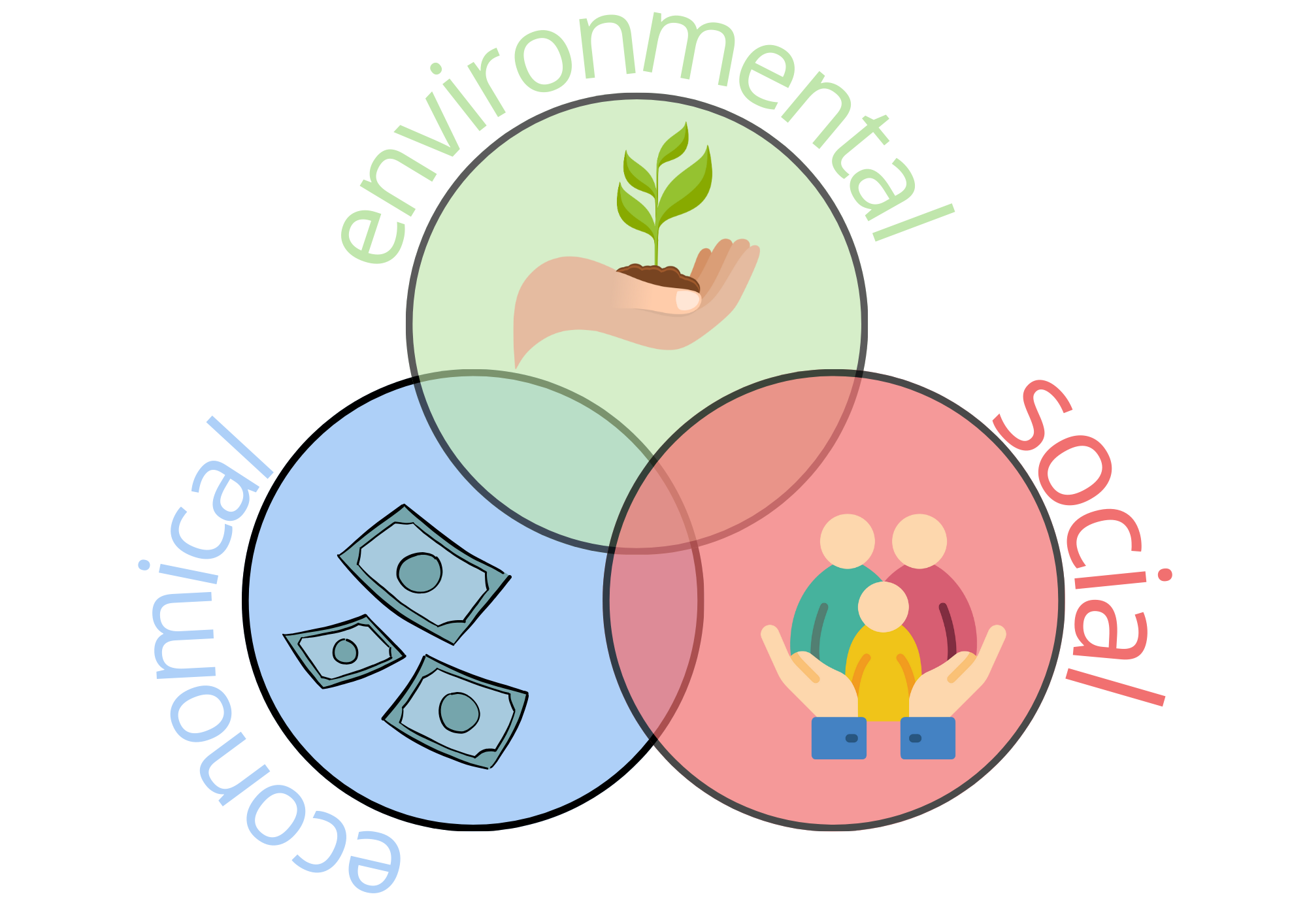
5.2 Environmental
In a world where technology continually evolves, digital art emerges as an innovative avenue for creative expression. The project is part of this dynamic, launching an innovative application while developing and renting outdoor projection boxes to facilitate this artistic experience.
However, the ambition extends beyond simple technological innovation. The understanding of the essentiality of environmental sustainability is clear. From the outset, the question arises: How can the project enhance sustainability?
The aim is to combine creativity, technology, and sustainability to deliver an innovative artistic experience that is both environmentally friendly and inclusive.
5.2.1 Outdoor spotlight housing
- Choice of materials: Opt for durable, recyclable materials with a low carbon footprint for manufacturing the housing to minimise its environmental impact.
- Energy consumption: Select an energy-efficient projector and integrate efficient cooling systems to reduce energy consumption and limit carbon dioxide emissions.
- Transport and logistics: Reduce the carbon footprint of transportation by favouring local suppliers and optimising delivery routes.
- Waste management: Implement a collection and recycling system for end-of-life projector housings to minimise waste and promote material reuse.
- Impact on public spaces: Ensure that artistic projections do not disrupt local ecosystems or generate excessive light pollution. Select appropriate locations to minimise light pollution.
- Environmental awareness: Consider integrating environmental awareness elements into the app platform, encouraging artists and users to reduce their carbon footprint and adopt eco-friendly practices.
5.2.2 ArtSy(nc) Application
- Hosting and Infrastructure: Utilise hosting providers with data centres powered by renewable energy and stringent energy efficiency policies. Optimise resource utilisation through shared servers and cloud computing solutions.
- Code Optimisation: Develop the application with optimised and lightweight code to minimise bandwidth consumption and server load. Avoid unnecessary features that could increase users' device energy demand.
- Efficient User Interface: Design an intuitive user interface to reduce the need for frequent reloads or unnecessary data downloads. Encourage users to disable notifications and automatic updates to conserve power on their devices.
- Encouragement of Ecological Practices: Integrate features into the application that promote environmentally friendly behaviours, such as showcasing artistic works on environmental themes or highlighting artists engaged in sustainable practices.
5.3 Economical
The sustainable economy focuses on the responsible management of economic, social, and environmental resources to support the well-being of current and future generations. Here are some initiatives aligned with the principles of the sustainable economy for the project aimed at propelling digital art:
- Local Sourcing: Opting for local material suppliers aims to reduce carbon emissions associated with material transportation while stimulating the local economy.
- Equipment Rental: Offering a complete rental package, including a protective case for the projector and the projector itself, encourages more responsible consumption. This alternative to purchasing new equipment reduces waste and costs for users.
5.4 Social
The United Nations Global Compact defines social sustainability as follows: “Social sustainability is about identifying and managing business impacts, both positive and negative, on people. The quality of a company's relationships and engagement with its stakeholders is essential. Directly or indirectly, companies affect what happens to employees, value chain workers, customers, and local communities, and it's important to manage impacts proactively.”
“Sustainable sociability” refers to the ability of a project or initiative to foster positive and inclusive social interactions while taking into account the long-term effects on society. As part of a project to promote digital art, here are a few elements to incorporate to promote sustainable sociability:
- Social inclusion: The platform should offer fair and accessible opportunities to local artists from all backgrounds, encouraging the diversity of perspectives and voices represented in the local art community.
- Local partnerships: Collaborate with local organisations, art schools, cultural associations, and other community players to promote digital art and create opportunities for local residents to participate and learn.
- Encouraging intercultural exchange: Encourage intercultural exchange by showcasing works and artists that reflect the cultural diversity of the community. This can help strengthen ties between different communities and foster mutual understanding.
5.5 Life Cycle Analysis
5.5.1 A simple definition of life cycle analysis
Life Cycle Analysis (LCA), is a method for evaluating the environmental impact of a service or product throughout its life cycle, from design to end-of-life management. It makes it possible to identify and quantify the energy and material flows involved, and to draw conclusions based on the objectives that motivated the study. It is therefore an ideal tool for an eco-design approach.
The principles, requirements, and procedures of Life Cycle Analysis are defined by international standards ISO 14040 and ISO 14044.
ISO 14040
Outlines the principles and framework for LCA, including goal and scope definition, inventory analysis, impact assessment, and interpretation. It provides the guidelines for conducting an LCA study but does not dictate specific methods.
ISO 14044
Building on ISO 14040, ISO 14044 provides detailed requirements for conducting an LCA. It includes specifications for choosing impact categories, category indicators, and characterization models. This standard ensures that LCA studies are conducted with rigour and consistency.
Life Cycle Analysis is an approach characterised by 3 objectives:
- Reduce environmental impacts throughout the life cycle (there is no such thing as zero impact).
- Maintain and improve functional qualities, as environmental improvement cannot be achieved by degrading product quality or functions.
- Combat the displacement of pollution (from one stage to another or from one impact to another).
5.5.2 Definition of the product life cycle
The life cycle (Illustrated in Figure 15) of a product is divided into 5 phases:
- Raw materials (extraction, transformation, supply)
- Manufacturing
- Packaging
- Release (distribution, marketing)
- Use
- End-of-life management (recovery, recycling, waste treatment, etc.)
Transport-related environmental impacts are considered for each phase.
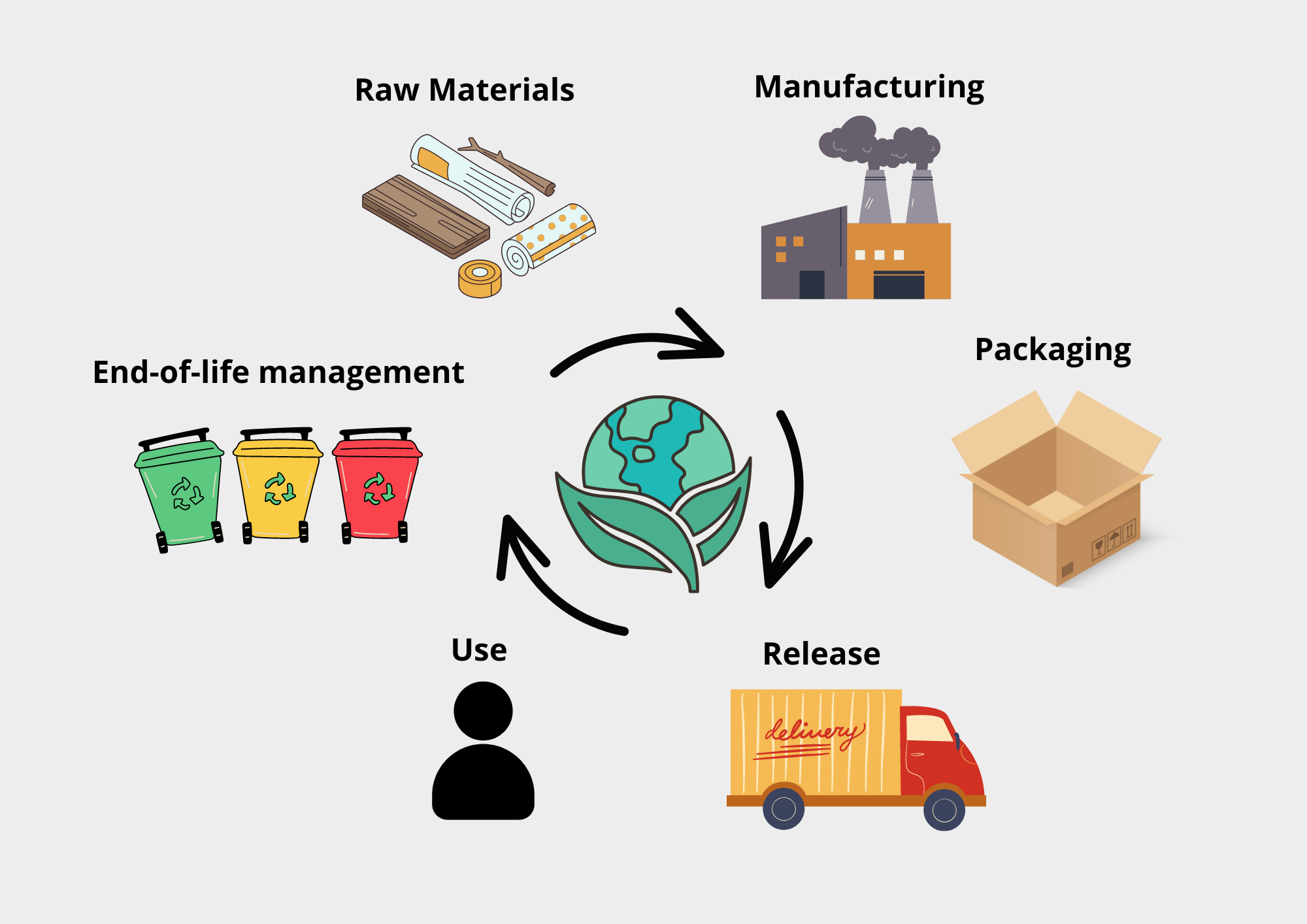
5.5.3 Life cycle analysis of the main materials of the product
Stainless steel
1. Extraction of raw materials:
- Stainless steel is mainly composed of iron, chromium, and nickel, with other elements in smaller quantities. Iron ore mining can involve mining, which can have significant environmental impacts, such as deforestation, biodiversity loss, and soil and water pollution.
- The extraction of chromium and nickel can also cause environmental damage, including water and soil pollution, and health risks to workers.
2. Manufacture:
- The manufacture of stainless steel generally involves the melting of raw materials in an electric arc furnace, followed by casting, rolling, and heat treatment to obtain the desired properties.
- This step can consume a lot of energy and water, which can result in greenhouse gas emissions and air pollutants.
3. Processing and Shaping:
- Once stainless steel is produced, it is often processed into different forms and finished products, such as sheets, bars, tubes, or machined parts.
- This step may also require energy and water, as well as chemical and mechanical treatment processes, which can generate waste and emissions.
4. Use:
- Stainless steel is widely used in many industries, including construction, automotive, aerospace, home appliances, etc.
- Stainless steel is valued for its durability, corrosion resistance, and recyclability, which can extend its life and reduce its environmental impact compared to other less sustainable materials.
5. End of life:
- At the end of its useful life, stainless steel can be recycled almost indefinitely without losing its properties. Recycling stainless steel requires less energy than primary production and helps to save natural resources.
- However, if stainless steel is disposed of inappropriately, it can become a waste that requires special management, although it is less of a concern than other materials containing hazardous substances.
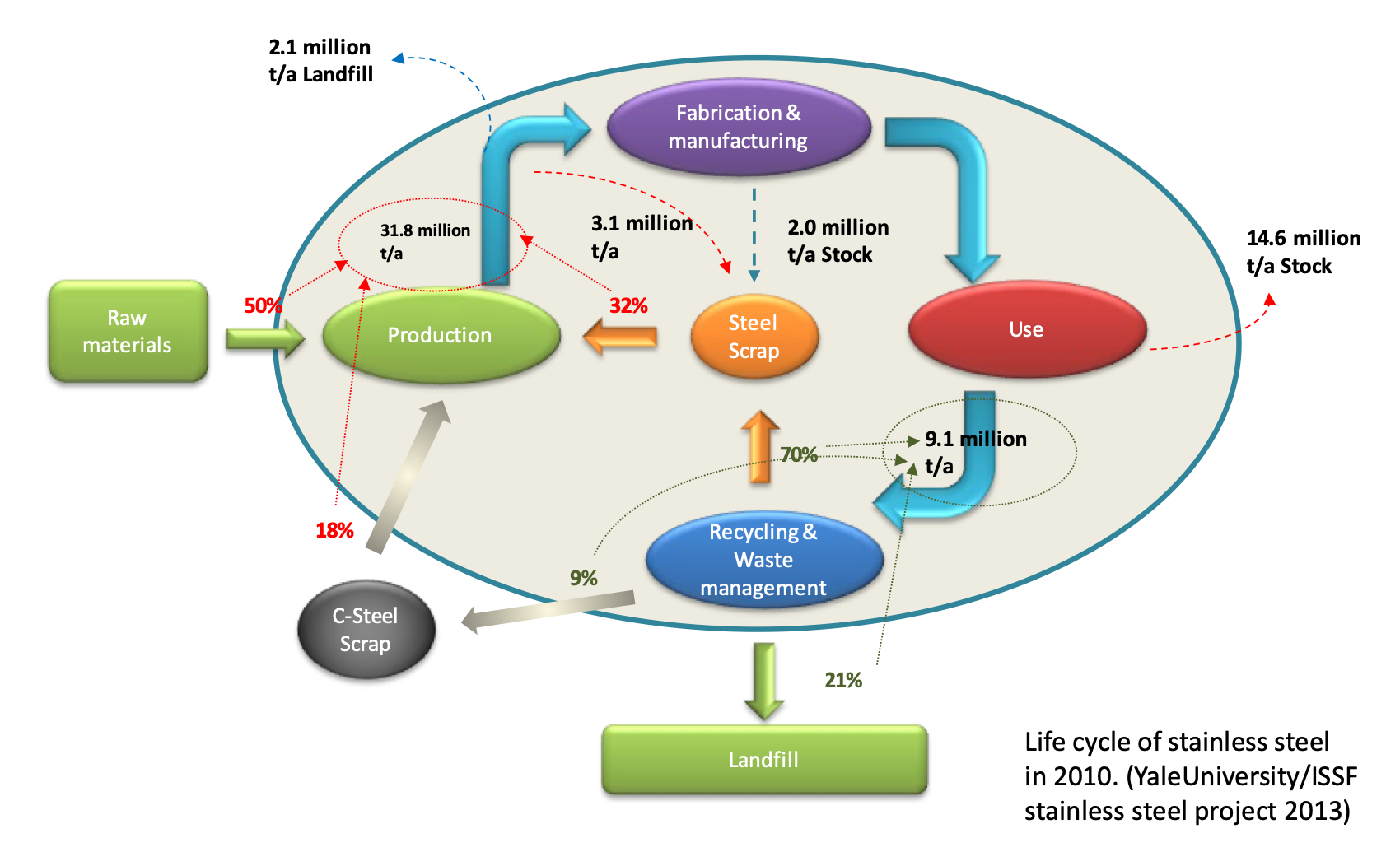
5.5.4 Life cycle analysis of the box
For the life cycle analysis of the external housing for the projector, the team considered the main materials used (stainless steel, plexiglass, aluminium)
1. Extraction of raw materials:
Stainless steel: Stainless steel is mainly composed of iron, chromium, and nickel. The raw materials necessary for its manufacture can be extracted locally in Portugal or imported. The extraction of iron ore, chromium, and nickel can lead to environmental impacts.
Plexiglass: The raw materials needed to make plexiglass, such as methyl methacrylate, can be derived from petroleum products or natural gas, and are often produced abroad. This can result in greenhouse gas emissions associated with the transportation and processing of raw materials.
Aluminium: Aluminium is mainly extracted from bauxite, which is not a resource available in Portugal. Therefore, the aluminium used in the housing must be imported. Bauxite extraction and aluminium production can have significant environmental impacts, including deforestation, biodiversity loss, and water pollution.
2. Manufacture:
The manufacture of stainless steel, plexiglass, and aluminium components may require industrial processes such as melting, moulding, rolling, and heat treatment. These processes consume energy and can generate greenhouse gas emissions, as well as waste and pollutant releases.
It is important to note that greenhouse gas emissions associated with manufacturing depend largely on the energy mix used in production facilities.
3. Assembly and use:
Once the components are manufactured, they will be assembled to form the external housing of the projector. This process may also require energy and resources.
The housing will be used locally in Portugal, which reduces emissions associated with international transport.
4. End of life:
Recycling: At the end of its useful life, the case can be disassembled, and recyclable materials such as stainless steel, plexiglass and aluminium can be recovered for reuse in new products.
Disposal: Non-recyclable components can be disposed of responsibly in accordance with local environmental regulations.
Regarding the packaging, which will be composed mainly of recycled cardboard, this will contribute to reducing the overall environmental footprint of the product by promoting the use of recycled and recyclable materials.
5.6 Conclusion
Digital art opens a new era of creativity and expression, but it also appears in a period of environmental awareness. Recognising the importance of a responsible and sustainable approach to the project is crucial. Aware of the challenges that shape society, there is a commitment to conduct the concept with an environmental and social conscience.
With this in mind, effective methods such as the life cycle analysis of the product have been integrated. This approach allowed for a concrete assessment of the environmental and societal impact of each stage of the product's life, from its design to its end of life, and finding solutions to minimise impacts.
Among these solutions, a sustainable approach has been adopted. This results in the use of sustainable materials in the design of the product, thus promoting a significant reduction in ecological impact. In addition, by opting for monomaterial materials, the recycling process is simplified, reinforcing a commitment to circularity and the preservation of natural resources.
In short, the project aspires to be more than just a showcase for digital art. It aims to be a model of excellence in sustainability and social responsibility, embodying the progressive values of the time while contributing significantly to the evolution of the digital art scene. Continuing the reflection in the ethical part, issues related to equity, diversity, and inclusiveness in the approach to digital art will be addressed.
The next part of this report focuses on ethics and deontology and what ArtSy(nc) needs to consider for aligning with those aspects.
6. Ethical and Deontological Concerns
Ethics and deontology come from the Greek and translate roughly as “the study or science of duty”. It includes duties that people have to fulfil towards others. From a deontological perspective, there are actions that are morally right or wrong. Deontology does not judge actions by their consequences but follows moral rules and standards [openstax, 2024].
6.1 Engineering Ethics
Engineers have a major impact on the lives of all people and the environment. They develop systems and products in all areas: Medicine, bridges, electronics, buildings, and machinery. Engineers have a responsibility to ensure that everything they design is safe for everyone who uses it. In addition, they must pay attention to sustainability in their design in order to act ethically in relation to the environment. To fulfil all this, there are guidelines developed by the NSPE that the team will refer to in this project. These guidelines are used by many companies, which is why the team have decided to work according to them.
The code of ethics developed by the NSPE is divided into fundamental canons, rules of practice, and professional obligations. Engineers have to fulfil their professional duties. The most important duty is to ensure the health, safety, and welfare of the public. As engineers, they should only work in their field of expertise. It is important to be honest and truthful. In situations where their judgement is overridden, posing a risk to life or property, engineers must notify their employer, client, and relevant authorities. They should never disclose information without the permission of the client or employer. Besides that, they shall do everything to the highest standards. Engineers shall not be influenced by conflicting interests, but rather they should act objectively and refrain from making uncertain statements. In addition, they should want to serve the public well. There are many duties engineers have to fulfil, and this entails a lot of responsibility for everybody [National Society of Professional Engineers, 2019].
6.2 Sales and Marketing Ethics
In the business domain, ethics constitute the fundamental foundation. This is particularly pronounced in the realms of marketing and sales, where ethical principles are not only favourable but indispensable for enduring success. In an era marked by heightened consumer consciousness and social awareness, companies that prioritise ethical conduct in their marketing and sales strategies stand to gain not only short-term profits but also enduring customer loyalty and a positive reputation in the long run.
Marketing ethics is an important component of contemporary business because it determines how a company executes its marketing strategies and how it interacts with customers, employees, and other stakeholders in terms of honesty, fairness, transparency, and responsibility [studysmarter, 2024].
Honest companies use marketing communications to provide factual and unexaggerated information about their products and services. They also advertise without attempting to mislead. Additionally, marketing ethics included fair prices, better wages, and sustainable development. Companies have to be transparent to the public about the production of their products, their way of treating employees, and also the sustainability and environmental impact of their products and services [Masterclass, 2022].
6.3 Environmental Ethics
Environmental ethics is a philosophical discipline that examines the intricate relationship between humanity and the natural world. It offers a comprehensive perspective on the team's ethical responsibilities towards safeguarding and conserving the environment. This field aims to reconcile the interests of both humans and nature, recognising their interdependence and inherent worth. Drawing from various ethical frameworks such as consequentialism, utilitarianism, and virtue ethics, environmental ethics provides a theoretical foundation for understanding the moral duties towards the environment and guiding the actions accordingly. Additionally, it incorporates insights from philosophy, economics, ecology, and law, offering a multidisciplinary approach to assessing the ethical dimensions of human conduct in relation to nature. Environmental ethics are very important to protect the environment, species, and resources. Humans depend on nature and natural systems. So they are responsible for their actions and decisions and their consequences for the environment [Geeksforgeeks, 2023].
Environmental ethics remind the team of their duty to care for the planet and its biodiversity. They urge the team to recognise its dependence on nature and advocate for sustainable practices. Despite the team's dominance, it must responsibly steward the environment. Through ethical considerations, the team can address environmental imbalances and promote harmonious coexistence with all elements of nature [Conserve Energy Future, 2024].
6.4 Liability
ArtSy(nc) is committed to ensuring that the content shared on the platform aligns with ethical guidelines and legal requirements. The team has implemented a section for copyright compliance and to prevent the upload of inappropriate material. Additionally, ArtSy(nc) provides users with tools to report any content that may violate the platform policies, enabling change to take quick action when necessary. This involves not only safeguarding against unauthorised reproduction or distribution of copyrighted material but also considering the ethical implications of derivative works within the art community.
Protecting user privacy and data is important to ArtSy(nc). Data protection regulations are followed, such as the General Data Protection Regulation (GDPR). Practices are clearly communicated with users regarding data collection and usage. ArtSy(nc) acknowledges its responsibilities to users, stakeholders, and the wider community. Transparency is prioritised in operations, maintaining open lines of communication with users, and upholding principles of accountability and trustworthiness. Through this, the users will feel more comfortable using the platform and uploading art.
Furthermore, clear guidelines for acceptable behaviour must be defined, addressing instances of harassment or discrimination and providing channels for users to report violations or seek support. By prioritising user safety and accountability, ArtSy(nc) can cultivate a welcoming environment where creativity can be explored without fear.
ArtSy(nc) is committed to managing liability in ethical and deontological concerns through responsible content moderation, privacy protection, and compliance with ethical principles. By maintaining a professional and ethical framework, the team aim to provide a safe and respectful environment for artistic engagement and expression.
6.5 Conclusion
Overall, these chapters underscore the importance of ethics across various sectors, guiding actions towards responsible conduct and societal well-being. They discussed various aspects of ethics within different domains, including deontology, engineering, business, environmental ethics, and the implementation of ethical guidelines.
Deontology emphasises fulfilling duties towards others, focusing on moral rules rather than consequences. Engineers, as pivotal creators impacting society and the environment, have ethical obligations to ensure safety, sustainability, and honesty in their work. This is outlined in guidelines such as those provided by the NSPE, emphasising public welfare, honesty, and conflict avoidance.
In the business realm, ethics are fundamental, particularly in marketing and sales. Companies prioritising ethical conduct not only gain short-term profits but also enduring customer loyalty and reputation. Marketing ethics entail honesty, fairness, transparency, and responsibility, including fair pricing, wages, and sustainable development.
Environmental ethics delve into humanity's responsibilities towards nature, advocating for sustainable practices and recognising the team's dependence on the environment. It emphasises promoting harmonious coexistence with nature through multidisciplinary approaches and ethical considerations.
ArtSy(nc) exemplifies ethical implementation through copyright compliance, content moderation, and user data protection. Upholding principles of transparency, accountability, and user safety, ArtSy(nc) aims to provide a respectful environment for artistic expression while managing liability and adhering to ethical principles.
Chapter 7 will explain the project development of ArtSy(nc), describing the concept behind design and the idea.
7. Project Development
7.1 Introduction
In this chapter, the development of ArtSy(nc) will be explained. It shows the whole process, starting with ideas and sketches and ending with a final product. It is divided into five subchapters.
In the first part, the ideation, the black box diagram, and the first sketches are shown. The second part is the concept. Here the complete product is explained and what it contains: components, technology, and in the app, functions.
The third section is Design. In this part, the choice of materials is explained, and detailed sketches are shown. The hardware that is used is also explained in detail.
As there is only a budget of 100 euros, the product cannot be manufactured in this way, and it is built as a simplified prototype. In the fourth subchapter, the differences between the final product and the prototype are described. The results of the tests carried out are also presented here. Finally, there is a conclusion to summarise the most important points of this chapter.
7.2 Ideation
7.2.1 Choice of subject
After the amphitheatre presentation, the group quickly gathered to discuss the project proposals, conscious of the need to reach a consensus quickly. The approach was to examine each topic individually and conduct an open brainstorming session to explore the first ideas that came to mind. The group also assessed how the skills and knowledge of each member could be applied to each topic. Surprisingly, all members quickly rallied around the first choice of topic: digital art. This unanimous decision was made after carefully examining each proposal and determining that digital art aroused the most interest and passion among the group.
7.2.2 Brainstorming
After selecting the topic of digital art, the group held the first brainstorming session. Since the topic is vast and offers many possibilities, many ideas emerged naturally. To capture and organise these ideas, Miro was used, as shown in the image below in Figure 17, to record all the ideas. This enabled efficient tracking of thoughts and the development of a solid set of concepts and proposals for the digital art project.

7.2.3 Design Thinking
Evaluating each idea with positive and negative points: Visualization in Figure 18
- Competition: Some people could see a competition as not being able to fully express themselves, but it can also generate a possible revenue stream, more visibility, more inspiration, and a challenge to implement skills as an artist.
- Projector/ public spaces: The lights can be a nuisance, but on the contrary, they can also bring more life and beauty to the city, create more awareness for digital art and artists, adding creativity to people and their daily lives.
- Advertisements: more publicity for public spaces and curators, revenue stream, information about the local art scene, finding the balance between ads and displaying art.
- Swiping art: The swipe system can come across as not personal, but it helps with diversifying taste, a possibility to see more art in a short amount of time, it helps lowering the bar for competition, and opens the door for small artists to participate.

7.2.4 The Idea
After in-depth discussions and intensive research, the main idea emerged: The aim is to raise awareness of digital art by introducing an innovative application. This platform will serve as a showcase for local artists, offering them an opportunity to share their creations and gain visibility. At the same time, it will offer museum directors and managers of public spaces the possibility of selecting works for projection, thus renewing the cultural offering and attracting a more diverse audience, while modernising their establishments. This can be done by using projectors that meet particular lumen and resolution requirements, this is already covered partially in chapter 2.3, and will be looked at later in chapter 7.4.1.2. What's more, a complete rental package will be offered, including a protective casing for the projector and a quality projector, guaranteeing a simple and secure installation for an unforgettable immersive art experience.“
This global vision combines technological innovation, the promotion of local creativity, and the modernisation of the cultural experience, with the ultimate aim of enriching the artistic and cultural landscape of the communities.
7.3 Concept
In this section, the visualisation of ArtSy(nc)'s concept is explored through its key components: corporate identity, app design, app development, projector features, and marketing and feedback. Each element contributes to the platform's identity, functionality, and success, shaping ArtSy(nc) into a dynamic hub for artistic expression and community engagement. Figure 19 is visualising the concept. The conceptualisation phase of the project, wherein fundamental elements concerning the identity and functionality of the platform, ArtSy(nc), are described, From the inception of the logo and colour palette to the development of both low-fidelity (LoFi) and high-fidelity (HiFi) prototypes, the process is outlined. Additionally, attention is drawn to the unique design considerations regarding the outdoor spotlight housing feature.

7.3.1 Logo Design
ArtSy(nc) is connecting public spaces with artists, synchronising them. The name also includes the word “artsy”, which stands for creativity and showing artistic talent. The logo of ArtSy(nc) (illustrated in Figure 20) incorporates a sync illustration and displays it by using two paint brushes. Since everyone in the group is really passionate about art, the logo includes a little flame at the top of the paintbrush to showcase this excitement, and orange as a popping colour supports this. The logo should be simple and easily visible in the final solution. It should be easily recognised, be included in possible exhibitions, and be put on the packaging design.

7.3.2 Color Palette
The colour palette (illustrated in Figure 21) for ArtSy(nc) embodies a harmonious blend of professionalism, creativity, and energy. Deep navy blue (#11224D) signifies stability and trustworthiness, reflecting the platform's commitment to providing a solid foundation for artistic expression. Royal blue (#193A6F) and cerulean blue (#5B84C4) are connected with sophistication and clarity, highlighting ArtSy(nc)'s vibrant community engagement. Warm apricot (#FFB375) and dynamic orange (#FB9B50) infuse the palette with creativity and excitement, inviting users to explore and engage with the platform's innovative features. Finally, light taupe (#EBD8C5) provides a neutral backdrop, grounding the palette and giving a taste of the timeless elegance of ArtSy(nc)'s visual identity.

7.3.3 LoFi Wireframes
Furthermore, the concept is further defined through LoFi wireframes, which give an idea of the components and features of the application. Simple sketches visualise the ideas, which will later lead to an improved HiFi prototype. The wireframes were made using Figma, a digital design tool. These sketches show the basic layout and where things go in the app, like buttons and menus. They help to see how the app will work without worrying about details. Figure 22 shows some of the wireframes; the full working file can be viewed here [Figma, 2024]:


7.3.4 HiFi Wireframes
The high-fidelity prototype provides a comprehensive visual representation of the platform's design and functionality. Building upon the foundational elements established in the LoFi prototype, the HiFi prototype refines and enhances the user interface, incorporating detailed design elements, interactive features, and realistic content. Through meticulous attention to aesthetics, usability, and user experience, the HiFi prototype offers stakeholders a tangible preview of the final product, facilitating feedback, validation, and iteration. This stage marks a significant milestone in the iterative design process. Figure 23 shows some of the wireframes; the full working file can be viewed here [Figma, 2024]:


7.3.5 Outdoor spotlight housing
The project aims to create an outdoor projector housing for rental by public venue owners wishing to present digital art. This housing will offer protection against weather and damage, ensure optimal projector operating conditions, enable versatile use, and guarantee projector safety. In short, the concept will provide a turnkey solution for the projection of digital art outdoors, facilitating the creation of immersive artistic experiences in a variety of public spaces.
As shown in Figure 24, the housing will use steel for the exterior and UV-resistant glass for the window. The casing will be secured with a lock. Figures 25 and 26 show a ventilation system at the back of the casing to prevent the projector from overheating. Figure 27 illustrates the placement of a QR code for the ArtSy(nc) app and general information about digital art on the side, aimed at educating individuals who are unfamiliar with the subject.
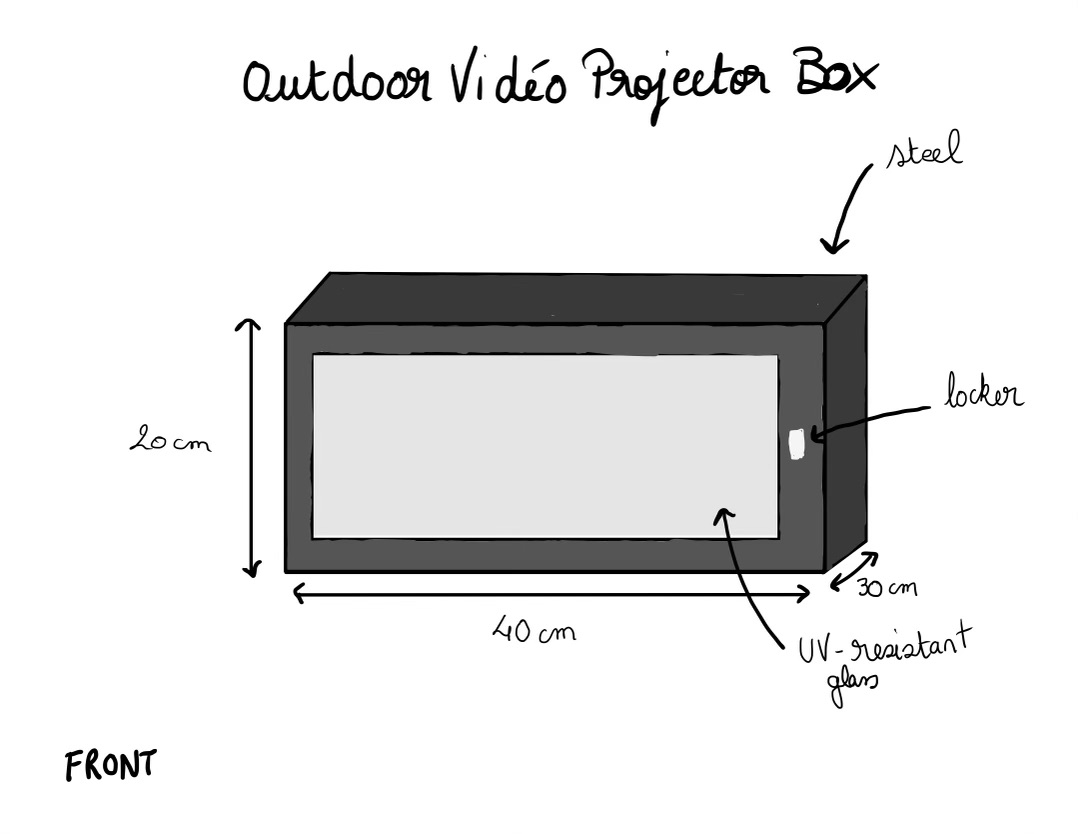
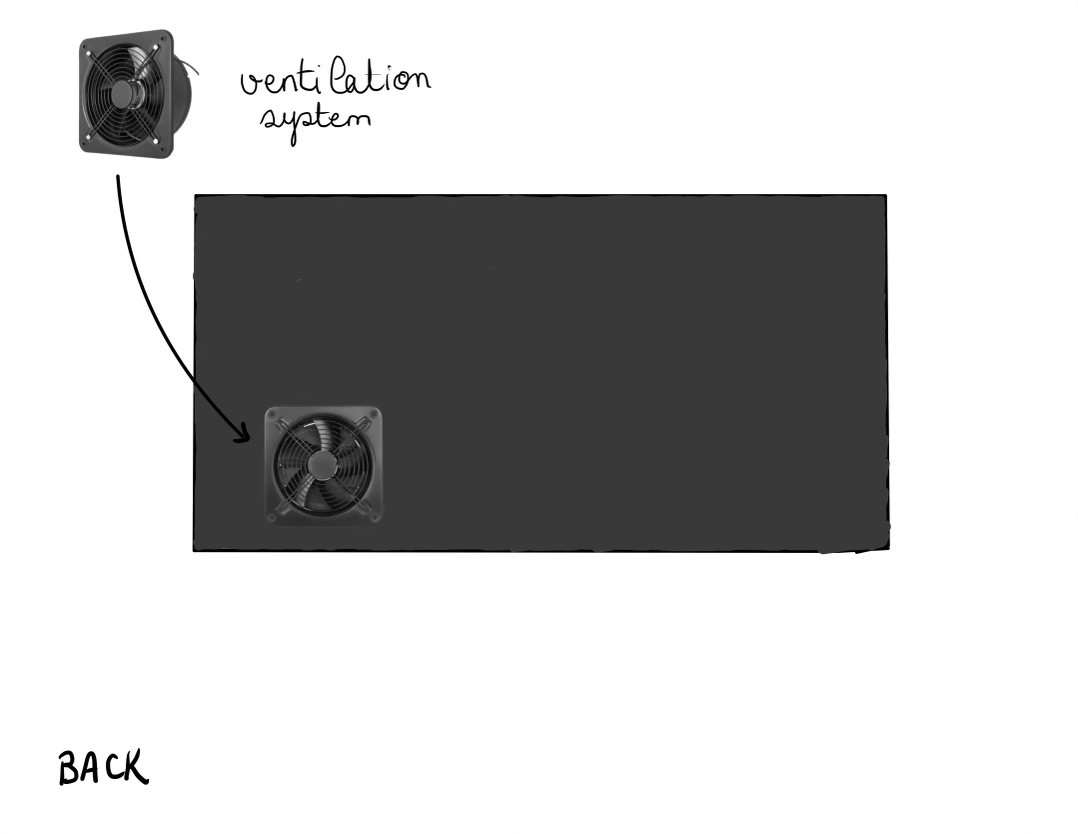
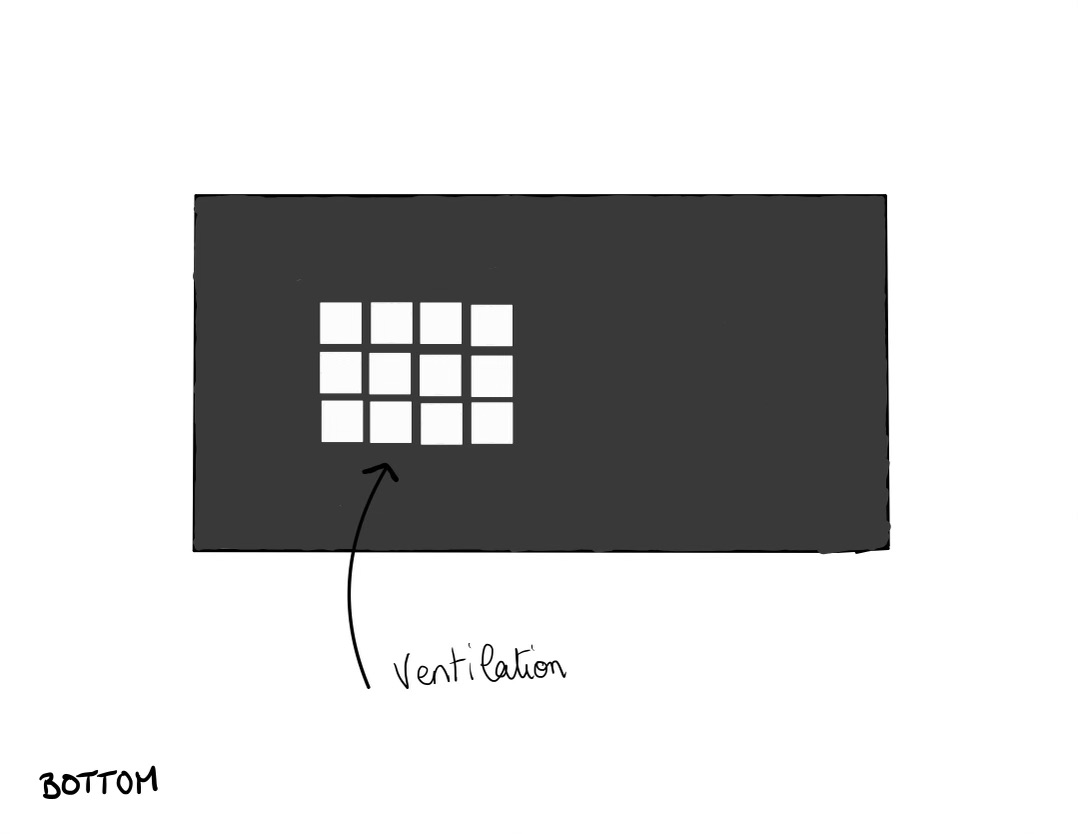
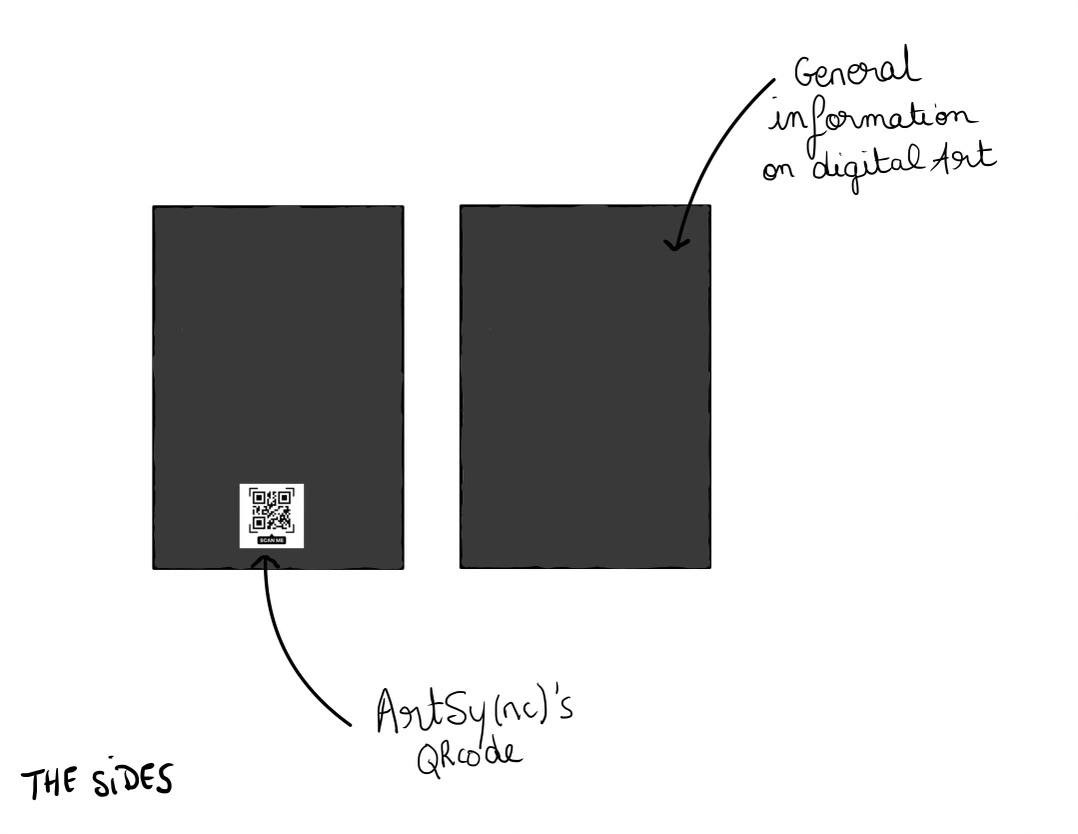
The team improved the casing, as illustrated in Figure 28, according to technical requirements. Now, the casing is divided into three parts. The lowest part of the casing is for cable management. Additionally, space is allocated to create good airflow. This is achieved using two fans: one on the left at the bottom to draw in cold air from outside, and one on the right to expel warm air from the casing. The panels also have holes for easy airflow. The door is now located on the back. The lower panel functions like a drawer, allowing it to be pulled out to use a laptop while displaying art.
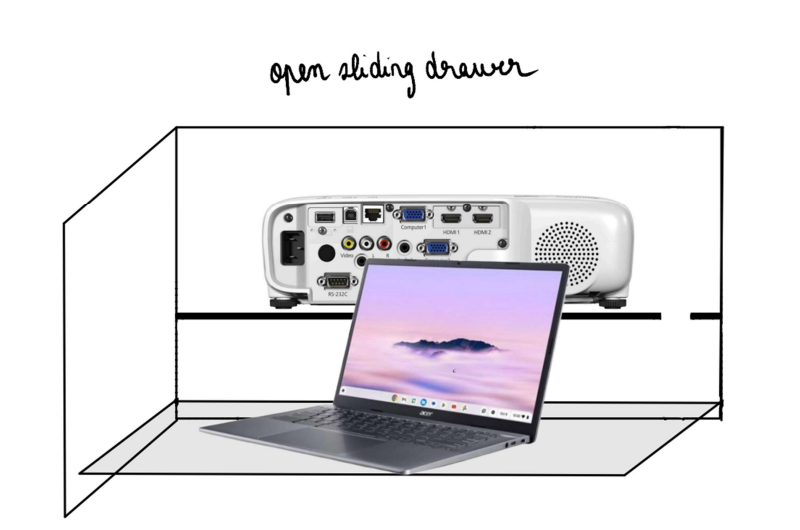
7.4 Design
This section delves into the detailed structure and pivotal decisions that form the backbone of ArtSy(nc). It covers the intuitive design and functionality of the ArtSy(nc) app, which is crafted to enhance user experience through seamless navigation, clear visual hierarchy, and interactive elements. Additionally, it examines the design and material choices for the projector casing, which is engineered to be robust and weather-resistant, ensuring the reliable display of digital art in various public settings. Together, these components illustrate how ArtSy(nc) integrates technology and art to create a dynamic and engaging platform.
7.4.1 Structure
This part of the report examines the structural design of the ArtSy(nc) app. The app is meticulously crafted to provide an intuitive and engaging user experience, featuring a user-friendly navigation system, an optimized layout, and a clear visual hierarchy. Each screen is designed with usability in mind, arranging interactive elements such as buttons, text, and images to guide users effortlessly through the app. Accessibility is a key consideration, with features ensuring inclusivity for all users. Additionally, the app maintains a strong visual identity, incorporating ArtSy(nc)'s branding consistently throughout to create a cohesive and recognizable experience.
7.4.1.1 App
The design structure of the app is designed in a way to provide users with an intuitive and engaging experience.
Navigation: The app features an intuitive navigation system, allowing users to easily navigate between different sections and find the content they're looking for.The bottom navigation is shown in Figure 29.

Layout: Each screen of the app is organised to optimise usability and visual appeal. Elements such as buttons, text, images, and interactive components are strategically arranged to guide users through their journey and facilitate interaction with the app's features. For instance, Figure 30 shows the button design incorporating a drop shadow, which indicates that it should be pressed. Moreover, the darker blue colour hints at the main action.

Visual Hierarchy: The design employs a clear visual hierarchy to emphasise important elements and guide users' attention. Size, colour, typography, and spacing are utilised to create a hierarchy of information, ensuring that users can quickly identify key actions and content.
Interaction Design: Interactive elements are integrated into the app, allowing users to navigate, explore, and engage with ease.
Accessibility: Accessibility features are incorporated into the design to ensure inclusivity for all users. Considerations such as colour contrast, text size, and screen reader compatibility enhance accessibility, allowing users with disabilities to navigate and interact with the app effectively.
Branding and Visual Identity: Throughout the app, ArtSy(nc)'s branding and visual identity are prominently featured. The use of colors, fonts, imagery, and other brand elements creates a cohesive and recognisable experience, reinforcing ArtSy(nc)'s identity as a vibrant place for artistic expression and community engagement. The logo is used in the header, Figure 31 is demonstrating this.

The app works independently from the projector. However, for ArtSy(nc)’s mission to succeed, both are needed. For a seamless working interaction, the app is used for “finding” local talent and gathering the art pieces that are uploaded through the platform. The projector is then used for displaying the art around the city.
7.4.1.2 Projector Casing
Artsy(nc) wants to be able to show art anywhere in the city. But for this, the right technology is needed: a projector and a laptop. The projector should have 6000 ANSI lumens and a image qualitiy of 4K (3840 x 2160 pixels). As it should be shown everywhere, the technology must be protected against everything: sun, rain, and theft. A weather-resistant casing that can be locked is constructed as protection.
However, this casing only has the task of protecting the projector and beamer. It should not draw attention to itself; it should not be noticed at all. The public should be able to concentrate on the digital art. For this reason, the casing is kept very simple. It is also not connected to the app. They are completely independent of each other.
As the digital art is to be projected in all kinds of public spaces, there must be different ways of setting up the casing. In the project, the team has developed three: a stand for simple parks (Figure 32), rubber feet for cafés (Figure 33), for example, and a construction to hang the casing on a pole (Figure 34).
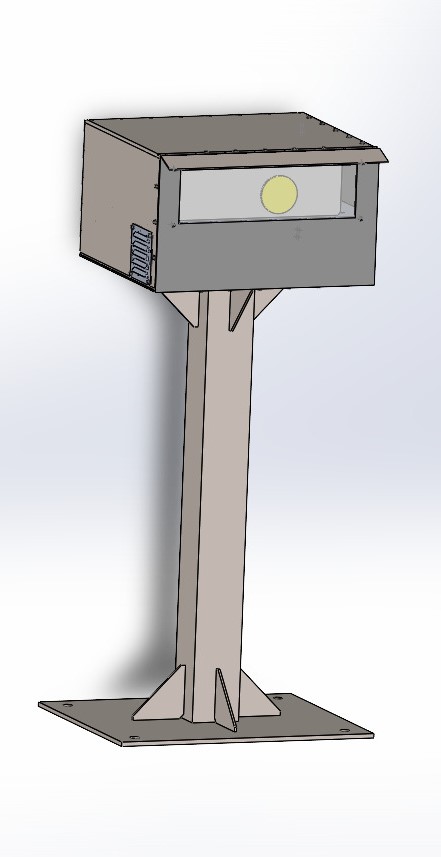
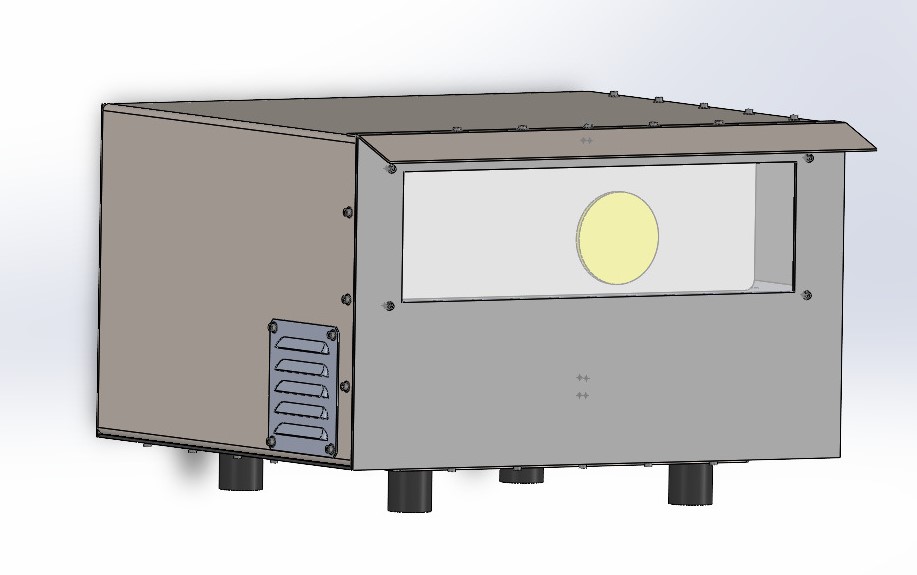
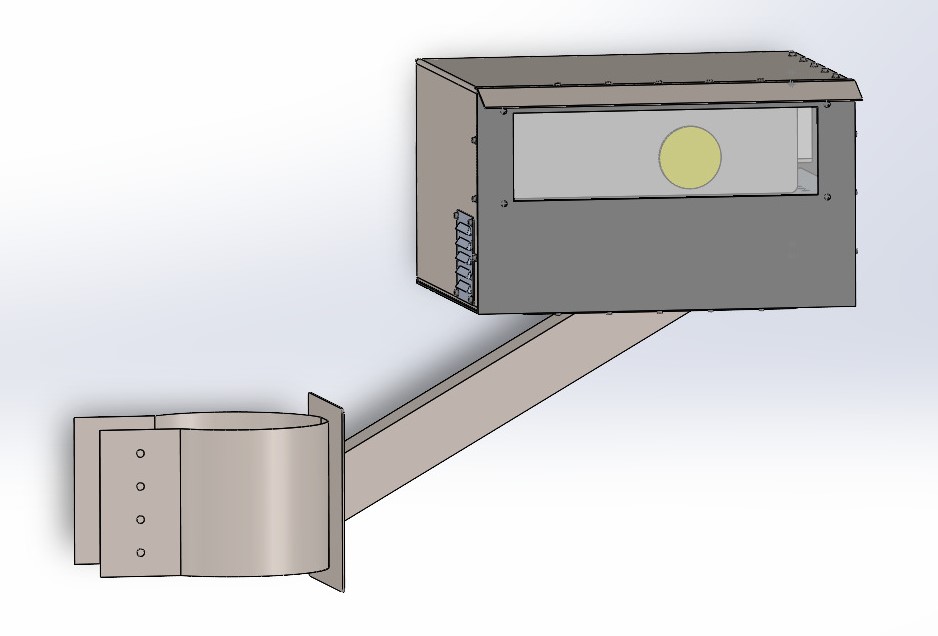
7.4.1.3 Materials & Components
Materials
Plexiglas is a transparent plastic material, also known as polymethyl methacrylate (PMMA). It is often used as an alternative to glass because of its lightness, impact resistance, and transparency. Plexiglas is made from acrylic polymers and is available in a variety of thicknesses and finishes, including transparent, opaque, coloured, and even reflective. It is widely used in applications such as shop windows, illuminated signs, security windows, furniture, vehicle windscreens, aquariums, and many others.
Plexiglas was chosen for the glass in the casing to protect an outdoor video projector for several important reasons. Firstly, Plexiglas is extremely weather-resistant. Its robustness makes it suitable for outdoor use, where it can withstand harsh weather conditions such as hailstorms. Unlike glass, Plexiglas does not break easily on impact, making it a safer choice for protecting the projector from potential impacts caused by objects or adverse weather conditions. Plexiglas also offers high optical transparency. This optical clarity means that the projector will always be able to project effectively through the material. What's more, unlike glass, Plexiglas does not yellow over time, guaranteeing consistent visual quality for video projection. Another key advantage of Plexiglas is its UV resistance. This is particularly crucial when a projector is used outdoors, where it is exposed to the sun. Plexiglas will protect the projector from damage caused by UV rays, extending its life and preserving its image quality. Finally, Plexiglas is lighter than glass, making it easier to transport and install the protective casing. Despite its light weight, Plexiglas is more durable and stronger than glass, offering superior protection to the video projector without adding excessive weight to the structure.
In summary, the choice of Plexiglas for the glass in the outdoor projector protection casing is based on its weather resistance, high optical transparency, UV resistance, and light weight, providing an effective and reliable protection solution for outdoor video equipment.
Stainless steel is a metal alloy composed mainly of iron, chromium, nickel, and possibly other elements such as molybdenum. The material is renowned for its resistance to corrosion and oxidation, making it a popular choice for a variety of applications in the construction, automotive, aerospace, food, and many other industries.
Stainless steel was chosen as the material for the outdoor projector protection casing due to its numerous advantages, including corrosion resistance, durability, modern aesthetics, and environmental sustainability. Firstly, stainless steel offers excellent corrosion resistance, making it an ideal choice for outdoor environments exposed to weather conditions. It can withstand moisture, rain, and temperature changes without corroding or rusting, ensuring reliable and long-lasting protection for the video projector against outdoor elements. Additionally, its exceptional durability allows it to resist impacts, scratches, and daily wear, ensuring a long lifespan for outdoor installations. Stainless steel requires minimal maintenance and retains its new and clean appearance even after prolonged use, thereby reducing long-term maintenance costs. Furthermore, the modern aesthetic appeal of stainless steel complements various decors. Its shiny and clean appearance adds an elegant touch to outdoor installations, creating an attractive and professional environment. Lastly, stainless steel is also a sustainable choice environmentally. It is a recyclable material that can be reused at the end of its useful life, reducing its environmental impact and contributing to the conservation of natural resources.
In summary, the choice of stainless steel for the outdoor video projector casing is based on its corrosion resistance, durability against impacts and scratches, modern aesthetics, and environmental sustainability. These features make stainless steel an ideal material to ensure reliable and aesthetically pleasing protection for the video projector in an outdoor environment while adopting an environmentally conscious approach.
Components
In the following section the components of the final product are described. In table 32 the mechanical components are listed.
| Component | Quantity | Price |
|---|---|---|
| Stainless Steel 2 mm | 1 | 61,51 € |
| Stainless Steel 3 mm | 1 | 232,05 € |
| Stainless Steel 5 mm | 1 | 140,88 € |
| Stainless Steel 10 mm | 1 | 166,58 € |
| Stainless Steel squaretube 80 mm x 80 mm x 3 mm | 1 | 12,58 € |
| Stainless Steel squaretube 110 mm x 110 mm x 5 mm | 1 | 62,48 € |
| Aluminium 5 mm | 1 | 125,9 € |
| Subtotal | 802,25 € | |
| Fan Grille | 2 | 14,78 € |
| Window | 1 | 15,99 € |
| Rail Guide | 1 | 3,99 € |
| Steel Angle | 1 | 4,19 € |
| Hinges | 2 | 4,98 € |
| Caulking Tape | 1 | 8,90 € |
| Lock | 1 | 24,99 € |
| Rubberfeet | 4 | 5,96 € |
| Subtotal | 83,78 € | |
| Bolts | 24,46 € | |
| Washers | 4,89 € | |
| Nuts | 5,48 € | |
| Subtotal | 34,83 € | |
| Total | 920,86 € |
In the following Table 33 the electronical components are listed.
| Component | Quantity | Price |
|---|---|---|
| Fan (24 V) | 2 | 106,74 € |
| Power Supply | 1 | 16,99 € |
| Power Socket | 1 | 3,99 € |
| Clamp | 1 | 1,49 € |
| Temperature sensor GY-BMP280 | 1 | 9,82 € |
| Arduino | 1 | 24 € |
| Total | 163,03 € |
A welded assembly should be constructed first, as this is the best way to protect the technology from rain. In addition, stainless steel is easy to weld. However, this is not ideal for this product. The projector casing will be in public spaces and also outside. The probability of something breaking is relativly high, so it is better to have an assembly where broken parts can be replaced easily, and the entire casing does not have to be replaced. Therefore, individual parts are now bolted together. To keep the number of parts to a minimum, the frame is folded and therefore only consists of two parts (Figure 35). Each of them is screwed together with five screws on the long side and three screws on the short side. A large number of screws are used to close the casing tightly. The metal also overlaps due to the edging, and liquids are prevented from penetrating.
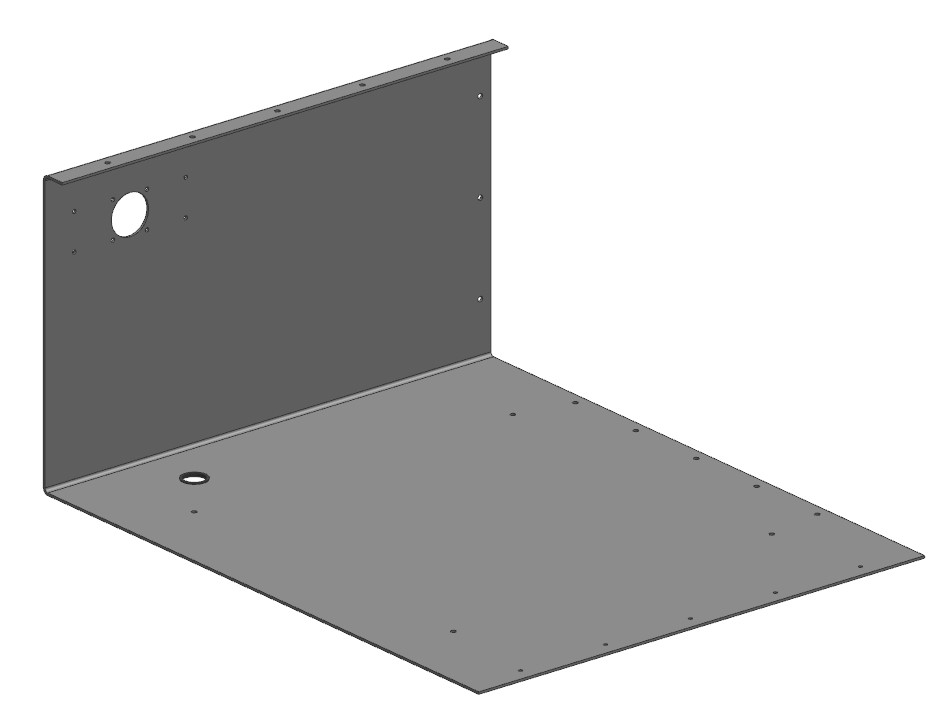
The front consists of a welded assembly and the Plexiglas. The front is fitted with four tabs (Figure 36). They are each welded from the inside. No great force is applied here, so it is sufficient to weld from one side without expecting distortion. Rubber seals are also glued in between the flaps to completely seal the casing. The tabs are exactly the same on the opposite side. This facilitates material procurement and also material processing. The Plexiglas is glued in.
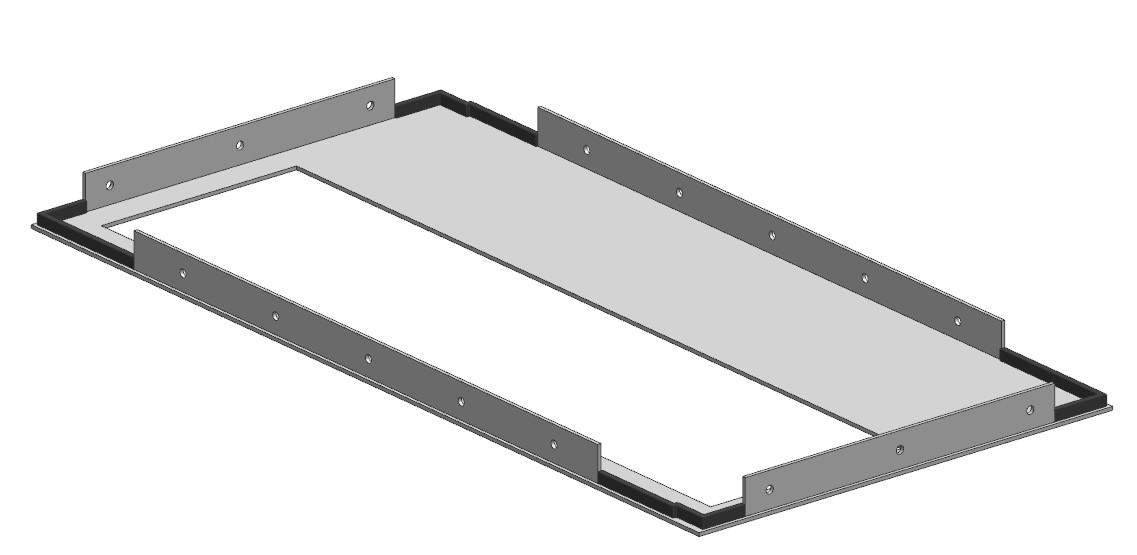
Two panels are installed in the casing. The upper one is for the projector and is simply screwed to angle irons. The lower one is for the laptop and runs on rails, which are also shown in SolidWorks in simplified form as angle irons. The plates are made of aluminium because it is very light. They are also provided with many holes to allow good air circulation. Additionally, there are also two large slots on the right-hand side for the cables.
To prevent the casing from overheating, there are small 24 V fans at the bottom left and top right. They are protected from the outside by a grille.
The bottom part of the casing is for cable management. Three sockets are required here: Beamer, laptop and fans. The cables have been neglected in the 3D model for simplicity. A transformer is also installed at the bottom, as the casing is connected to a 230 V power source and the fans are only designed for 24 V. The transformer and the sockets have been indicated in the 3D model. A hole has been drilled on the underside for the external power supply. As this is laser-cut, edge protection (Figure 37) is used to prevent the cables from being slit.
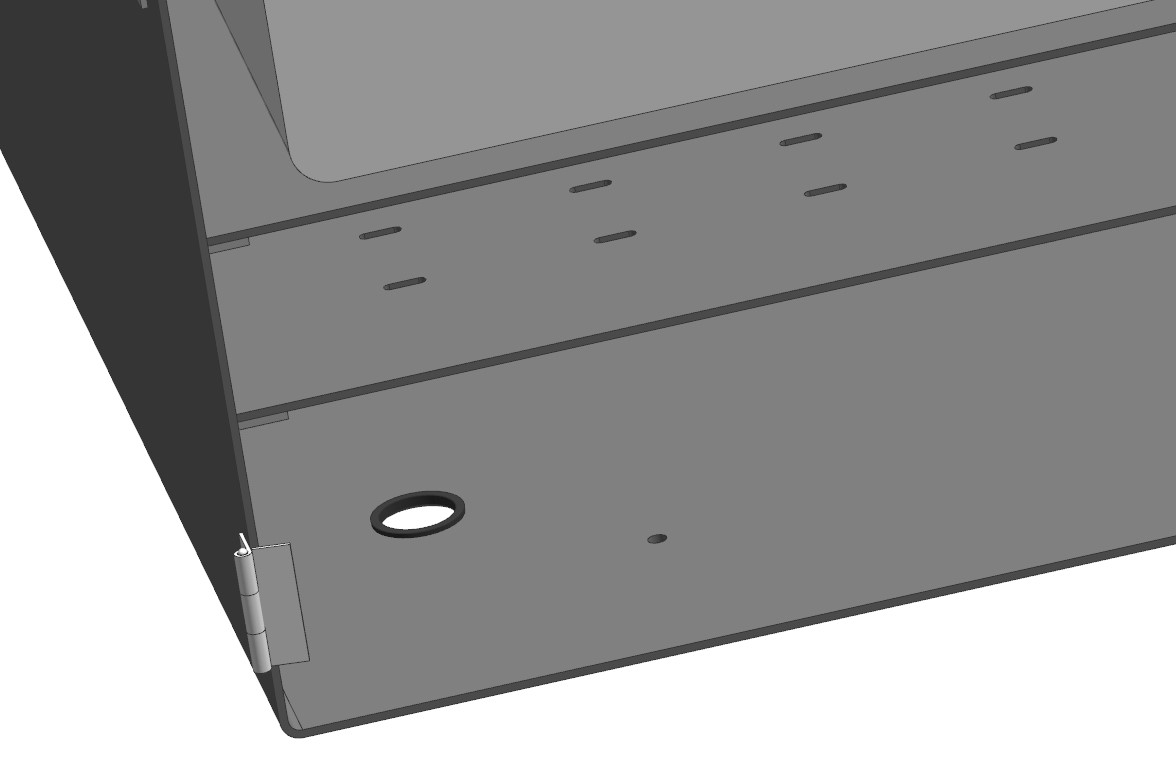
The casing has been designed so that it can quickly switch between the options. There are four holes on the underside of the casing (Figure 38). Either the rubber feet can be screwed on directly or a plate, which is used as a base plate for the other two options. The base plate is square. This has the advantage that the projector can be aligned exactly as it is needed. This is particularly important for the construction of the mast. The projector can project to the front, left, and right and is therefore very flexible in terms of position.
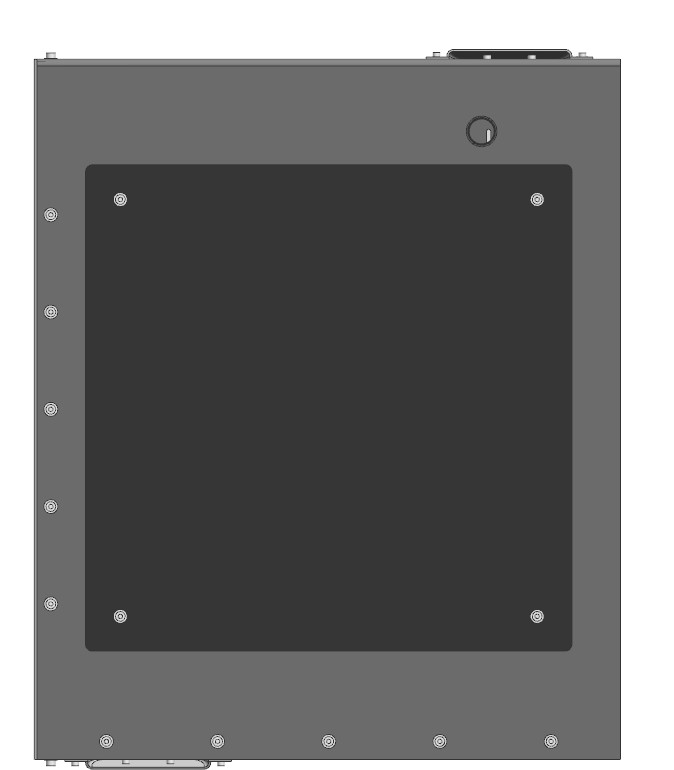
In Figures 39, 40 and 41 the assemblies of the casing and the different construction are shown.
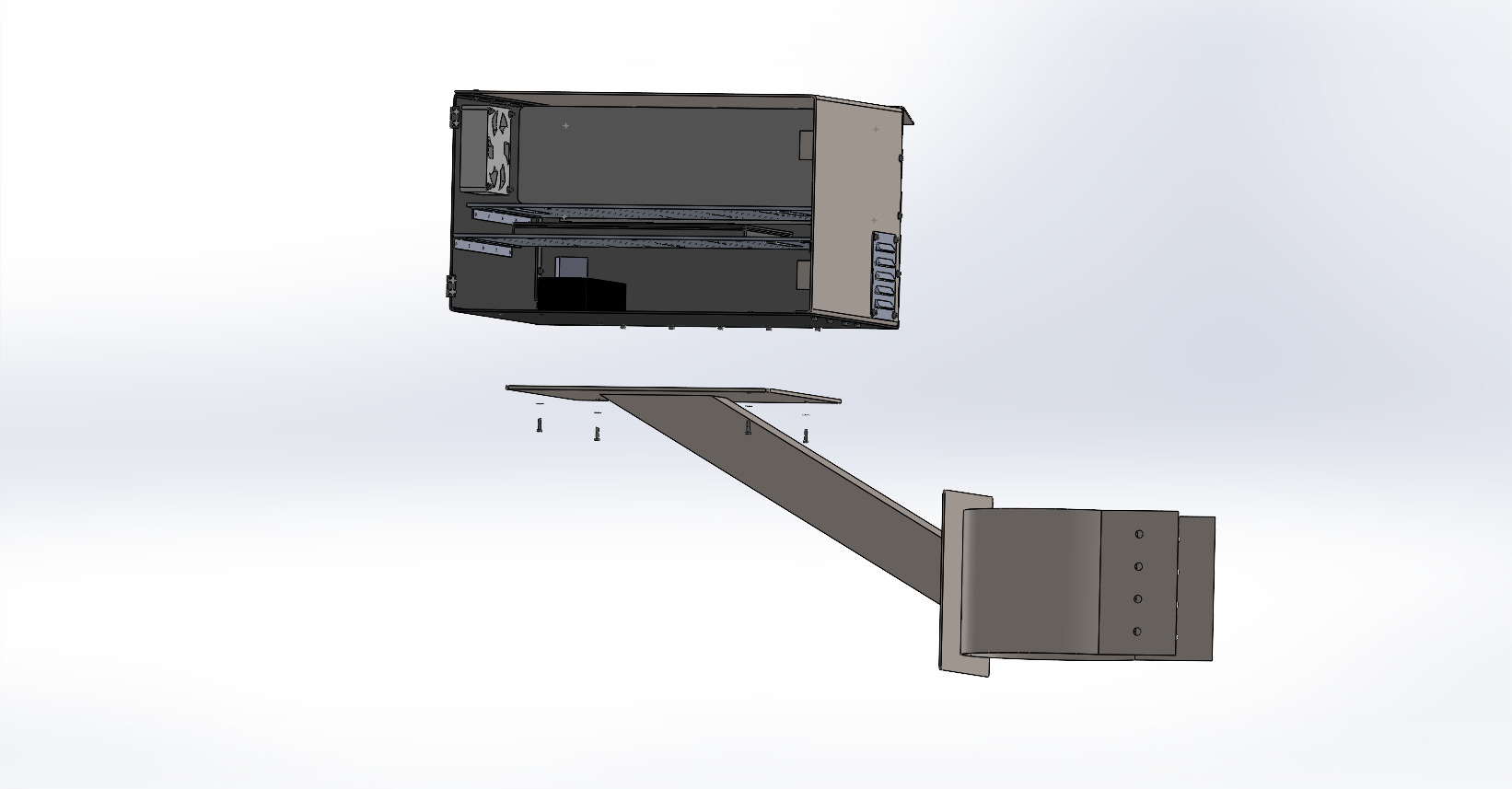
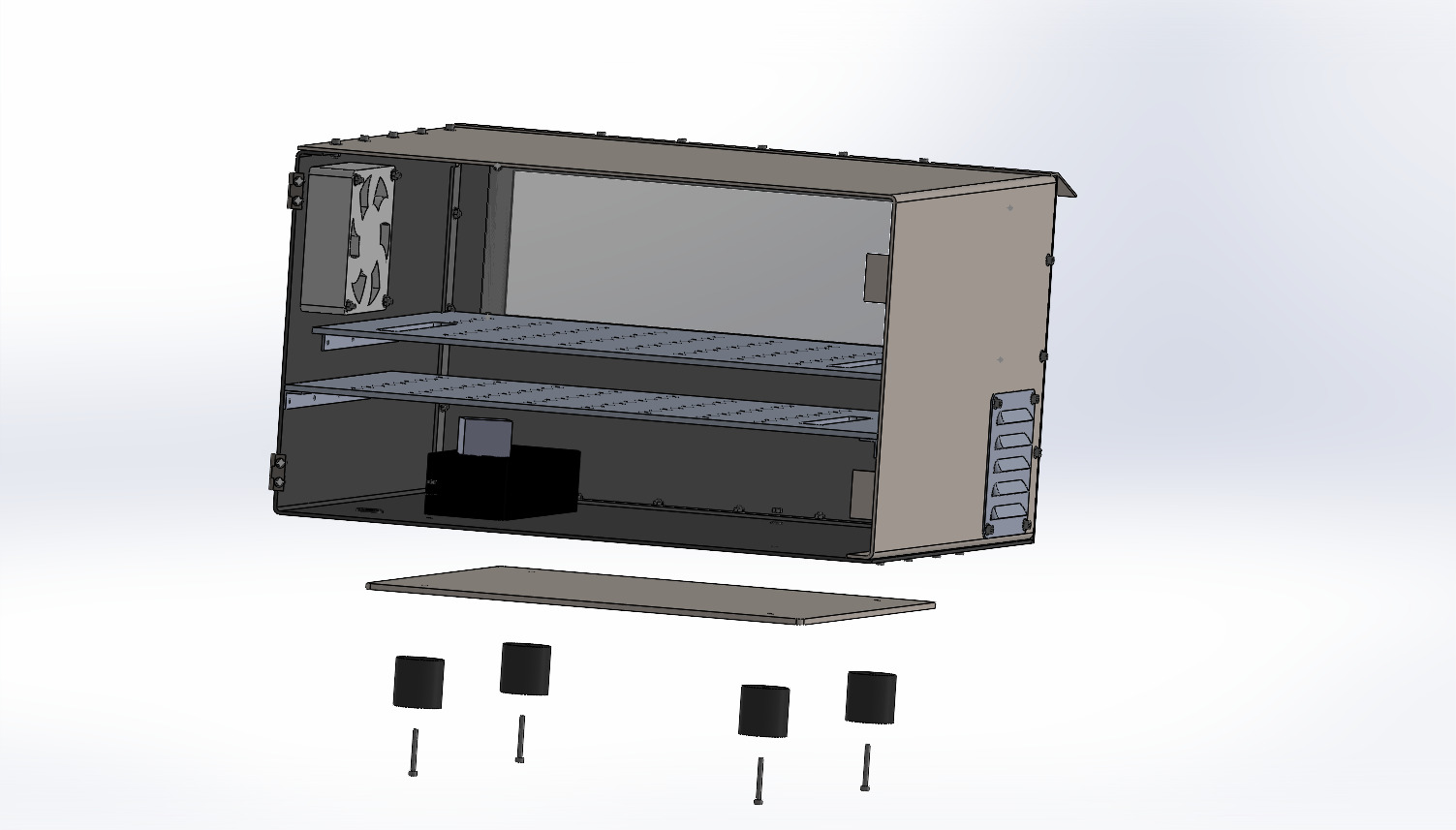
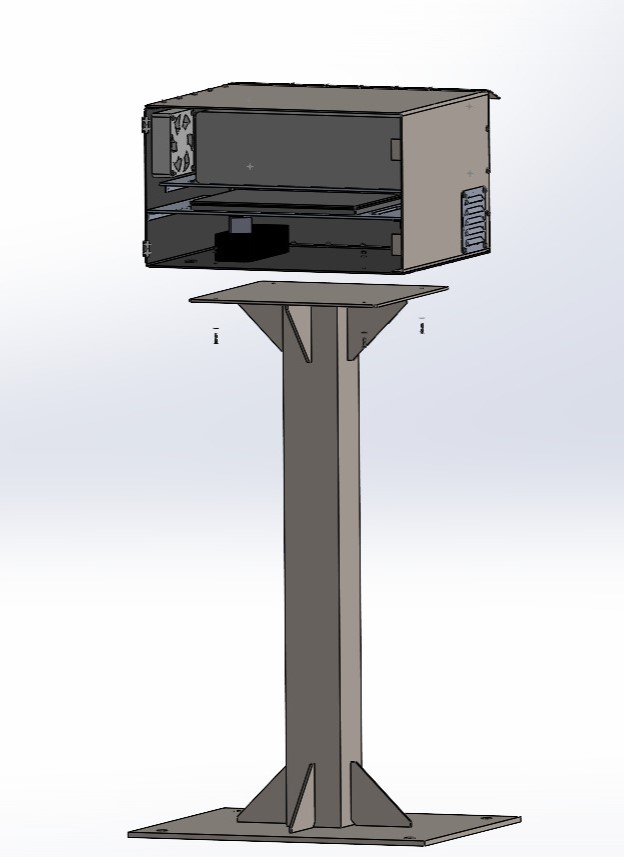
The brackets are both made entirely of stainless steel and are both welded assemblies. This is not a problem here, as everything is made from one material and therefore does not pose an obstacle to recycling. Overall, care was taken in the design to use the same standard parts wherever possible, which makes procurement, production, and assembly much easier. Although the screw lengths vary, M4 screws are almost always used, and the same washers and nuts can always be used regardless of the length. M3 screws are used for the fans due to the holes in the fans. Washers are not used here due to the very low force exerted.
To see it more clearly, detailed drawings were made. In Figure 42 the casing is shown with the three different parts for the electricity: the laptop and in the upper part the beamer. The welded assemblies of the stand are shown in Figures 43 and 44 and for the construction of the pole in Figures 45 and 46. The other drawings of all the parts can be found in the Deliverables.
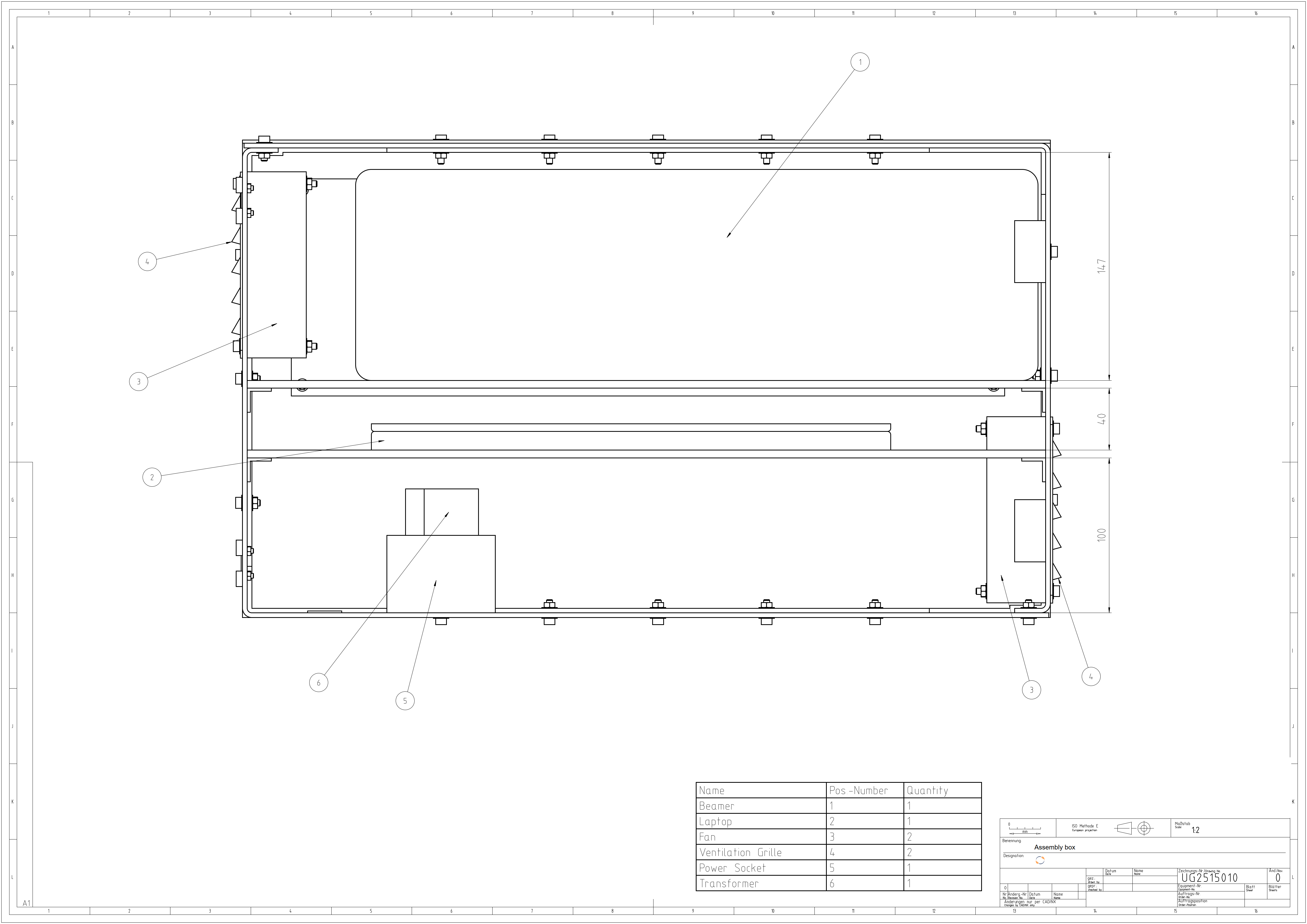
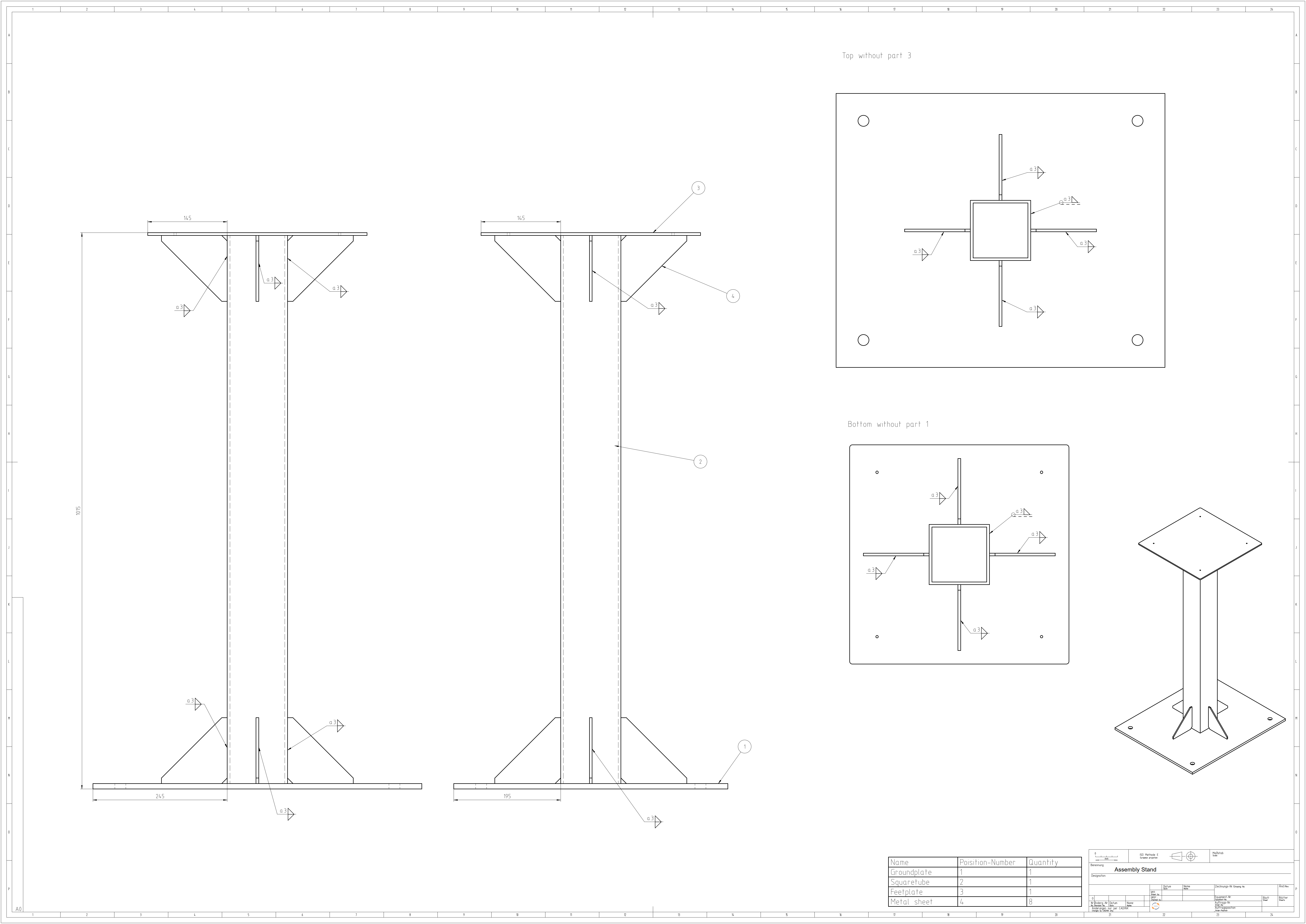
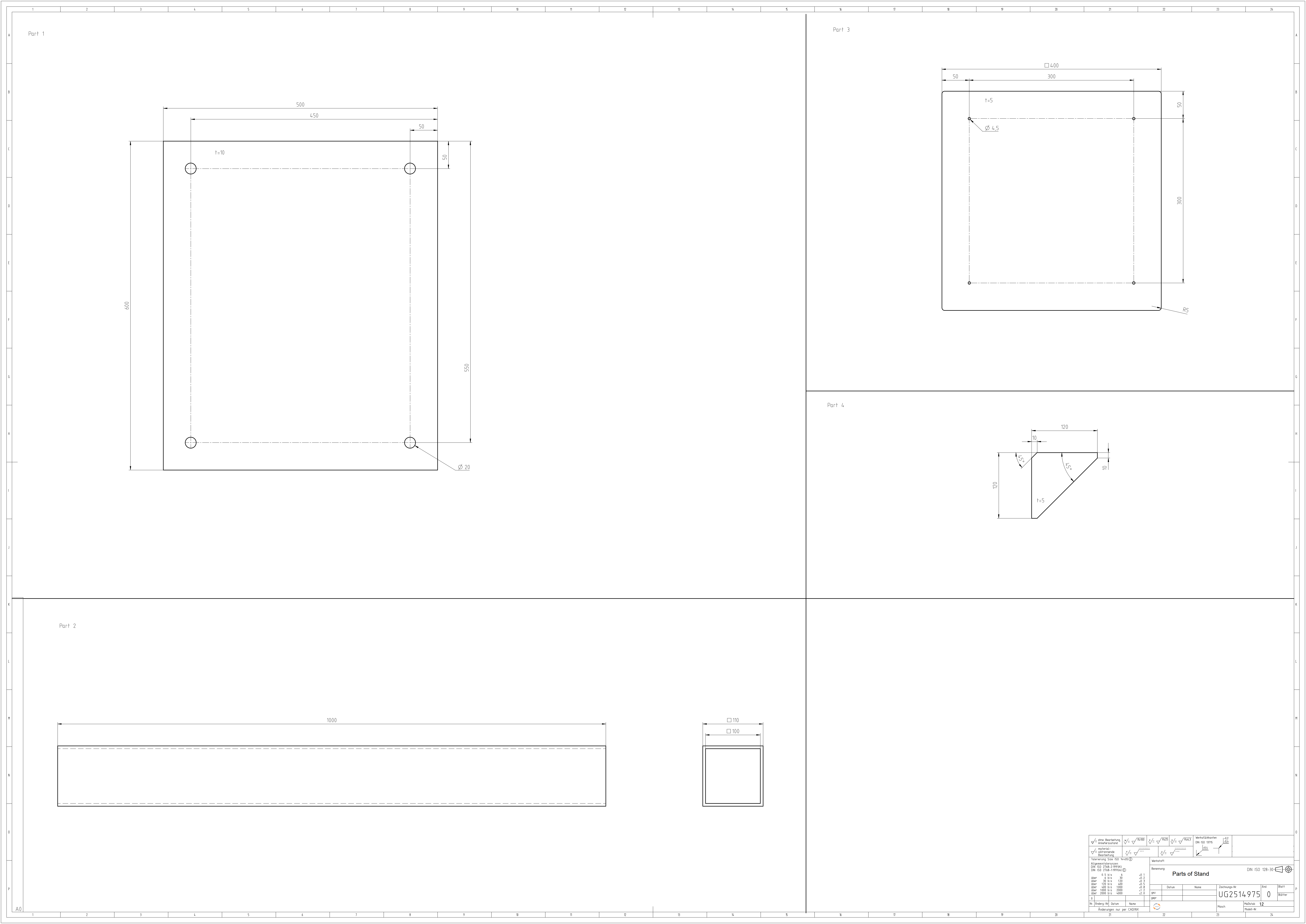
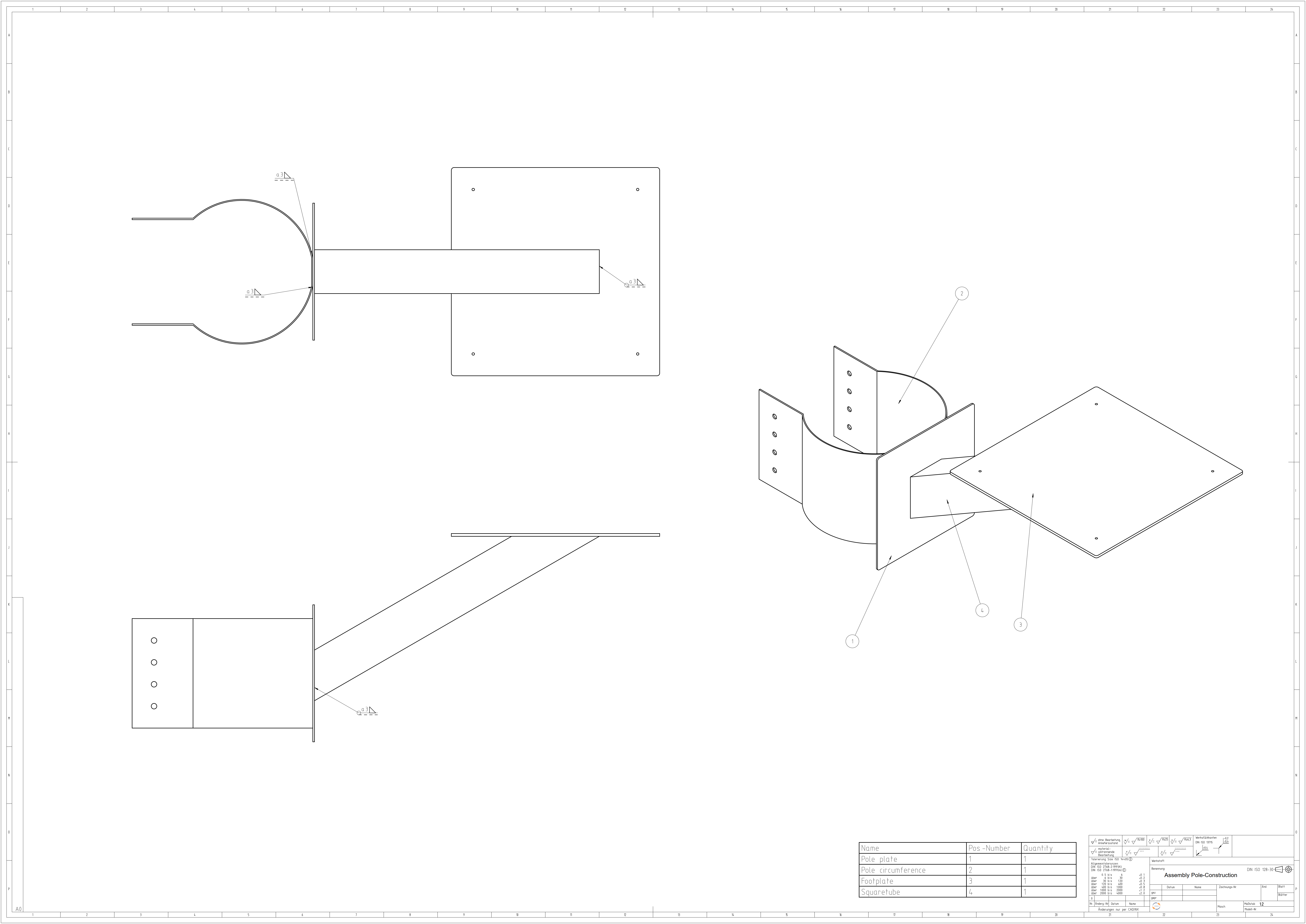
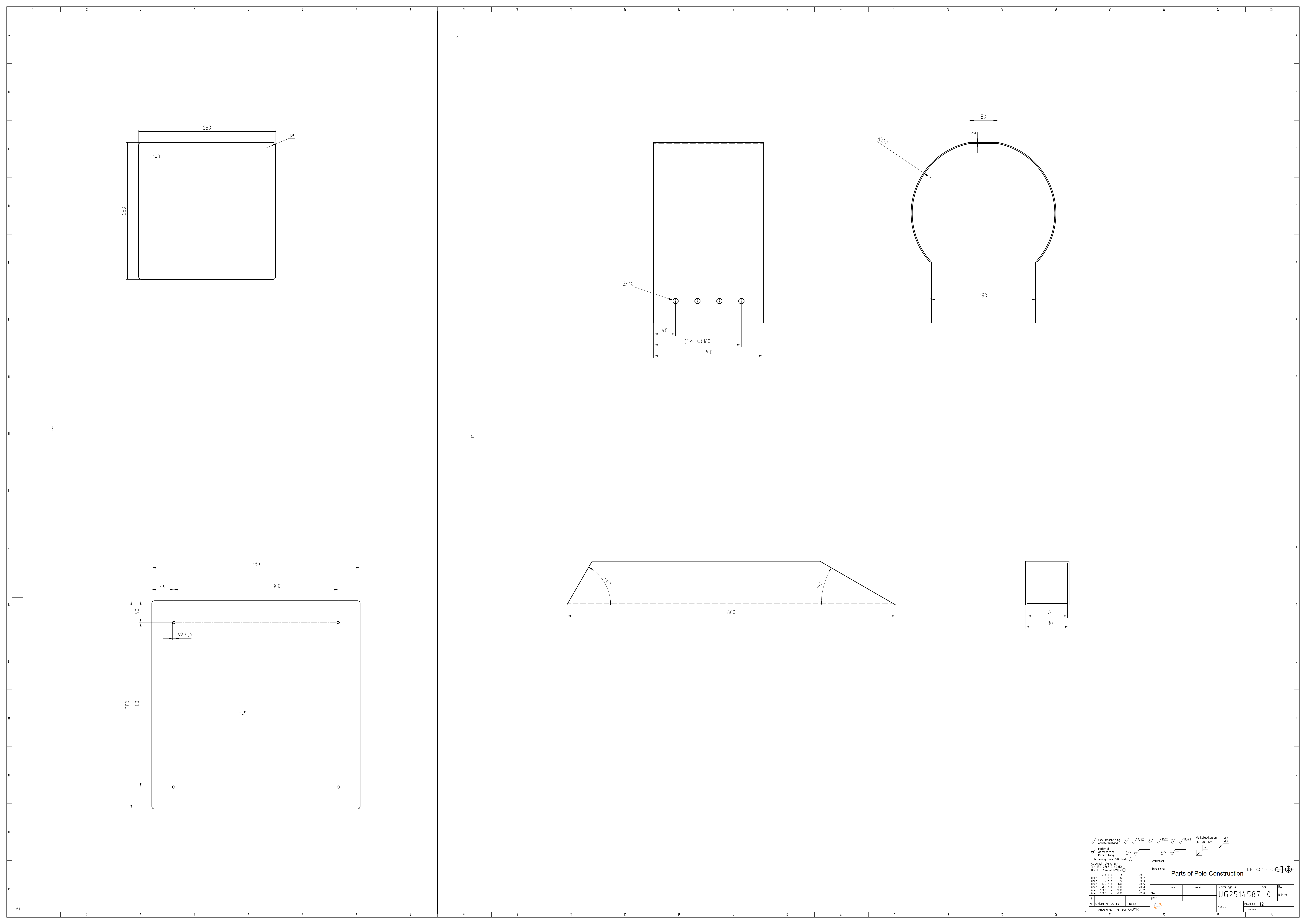
7.4.1.4 Temperature management
To ensure optimal performance and longevity of the projector, maintaining an appropriate internal temperature is crucial. To address potential overheating, there is a temperature management system using two 24 V ventilators controlled by an Arduino Uno. This system activates the ventilators when the internal temperature exceeds a predefined threshold.
The key components of this system include the Arduino Uno, a ULN2003AN Darlington transistor array, a GY-BMP280 temperature and humidity sensor module, two 24 V ventilators, a 24 V power supply, and connecting wires. The GY-BMP280 sensor continuously measures the temperature inside the projector casing. It is connected to the Arduino Uno, which reads the temperature data at regular intervals. The Arduino is programmed with a specific temperature threshold. When the measured temperature exceeds this threshold, the Arduino takes action to cool the casing. The projector user guide [37] states that the projector operates with ambient temperatures up to 35°C. In order to maintain this maximum temperature, the ventilators turn on when the temperature in the casing exceeds 30°C.
The Arduino is provides a 3.3 V to the temperature sensor pin VIN, the GND of the sensor is also connected with the GND of the Arduino. The GY-BMP280 sensor is also connected to the Arduino's pins, with A4 for SDA and A5 for SCL. When the temperature is above 30°C, the Arduino sends a signal from digital pin 2 to input pin 4 of the ULN2003AN. This transistor array handles the higher current required by the 24 V ventilators. Upon receiving the signal from the Arduino, the ULN2003AN activates its output connected to the ventilators, completing the circuit and powering the ventilators from the 24 V power supply. The ventilators start operating, providing airflow to lower the temperature inside the projector casing. Once the temperature falls below the threshold of 25°C, the Arduino stops sending the signal to the ULN2003AN, which then turns off the ventilators.
In terms of system configuration, the Arduino Uno is programmed to read temperature data from the GY-BMP280 sensor and control the ventilators based on the temperature readings. The pin connections are configured as follows: Input 4 of the ULN2003AN is connected to pin 2 of the Arduino, and the corresponding output pin is connected to the 24 V ventilators. The GY-BMP280 sensor is connected to the Arduino pins, with A4 for SDA and A5 for SCL. The 24 V ventilators are connected in parallel to the 24 V power supply and the ULN2003AN output.
A schematic diagram in Figure 47 of the system illustrates the connections and layout, showing the integration of the GY-BMP280 sensor with the Arduino for temperature monitoring and the use of the ULN2003AN transistor array to control the ventilators. This setup ensures that the projector casing remains cool, preventing any thermal-related damage and maintaining optimal operating conditions. The automated control via the Arduino provides a reliable and efficient solution for thermal management.

7.4.1.5 Finite-Element-Analysis and Finite-Element-Method
Finite element analysis (FEA) is the practical application of the finite element method (FEM). It is a virtual analysis of models to identify potential problems. For this analysis, the component is divided into many small parts, also known as finite elements. In the following, the stress, displacement, and strain of the projector casing are analysed. The factor of safety (FOS) is also shown. The minimum FOS should be 1.5. The material of the casing is AISI 347 annealed stainless steel, which has the properties described in Figure 48.
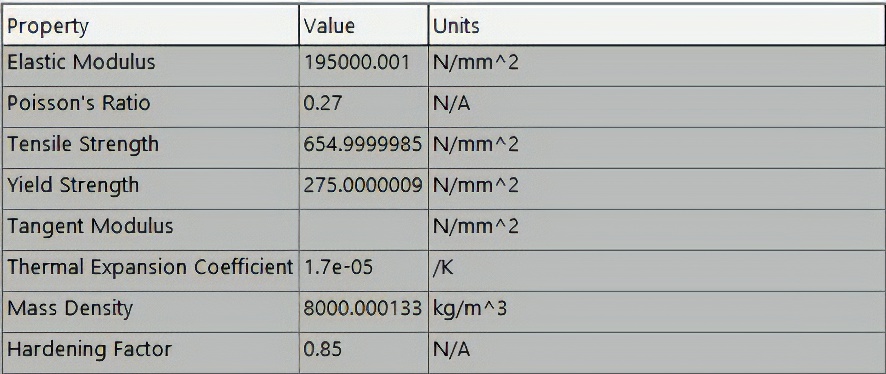
Both plates are out of aluminium (1060 alloy), which has properties shown in Figure 49.
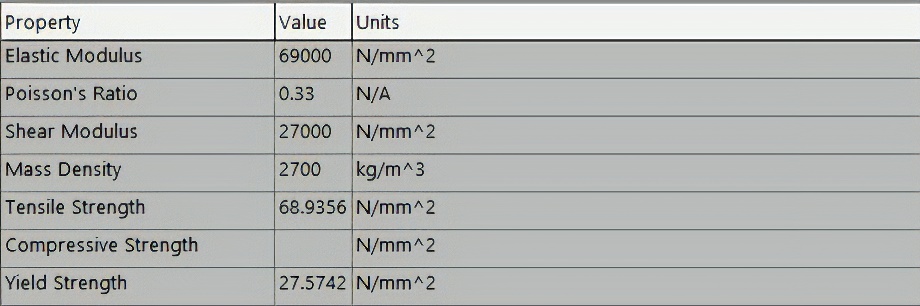
For a FEA, a mesh is used, which shows all the finite elements. For this analysis, the blended curvature-based mesh is used, and the element size is between 1.5 mm and 30 mm. These element sizes are almost three times finer than the ones solid works would use, the default element sizes were between 4 mm and 85 mm. The mesh of the foot with the casing has 409312 nodes and 215475 elements, which means a high mesh quality (Figure 50). In Figure 51 the mesh on the foot is shown.
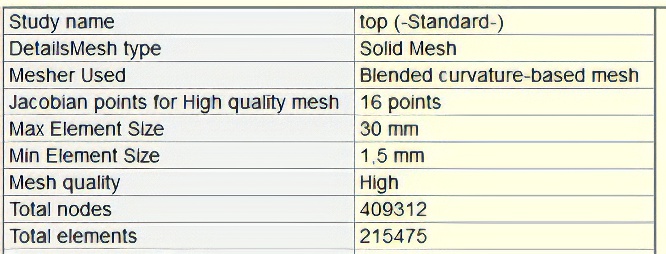
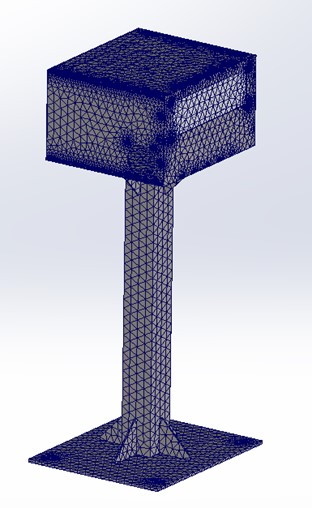
The mesh of the construction for the pole with the casing has 405941 nodes and 213806 elements, which means a high mesh quality (Figure 52). In Figure 53 the mesh on the construction with the casing is shown.
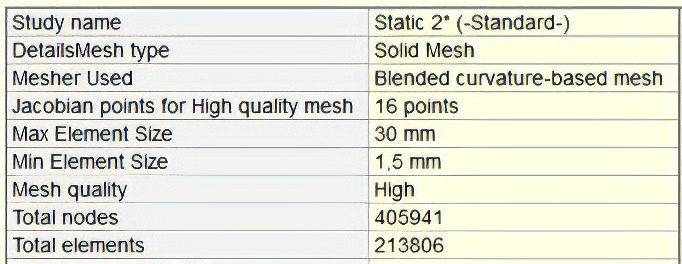
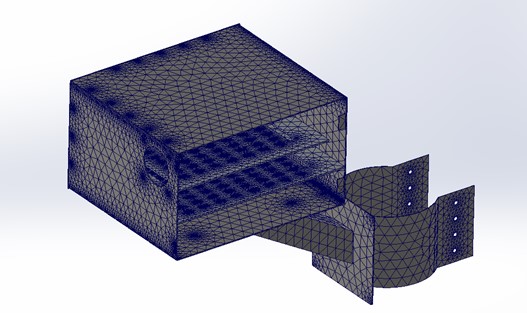
The first consideration was to use a 2 mm stainless steel sheet. First analyses are made only of the casing to see the results for the material. According to the first FEM analysis, deformations had already occurred after a load of 100 N. If the force of the wind is applied, there is already a displacement of 1.75 mm just for the casing. The material was then reinforced to 5 mm. This increased the weight to 50 kg, which is too heavy for the casing. If beams are attached to the ceiling on the 2 mm thick sheet, the deflection can be reduced to 0.5481 mm. However, attaching beams means an increase in weight and labor. These would first have to be manufactured and then welded on. For this reason, the same analysis was carried out again with a 3 mm thick stainless steel sheet. This reduced the displacement by half. The weight increased to 29,5 kg, which is acceptable. Beams were also added to the 3 mm sheet, which only reduced the displacement by 0.032 mm. Compared to the additional work involved, the improvement is too small to implement. After this comparison, it was decided to use a sheet thickness of 3 mm.
Not everything is considered in this analysis. The focus is on the essential components. Therefore, all internal components, such as the fans and electronics, and also the connecting elements, such as screws, washers, nuts, and brackets, have been excluded, and the weight that would act on the part has been calculated:
Fw = m×g
m: mass [kg]
g: gravity [m/s²]
Fw =5 kg×9.81 m/s² ≈50 N
The upper plate is strained with the weight of the projector:
Fwb =8 kg×9.81 m/s² ≈80 N
The bottom plate is strained with the weight of a laptop:
Fwl =3 kg×9.81 m/s² ≈30 N
Those forces act all the time, in every of the three different constructions and cannot be eliminated. The weight of the beamer are shown as green arrows, the laptop as yellow arrows, and the hidden parts as blue arrows (Figure 54). Up to know they are called inner forces.
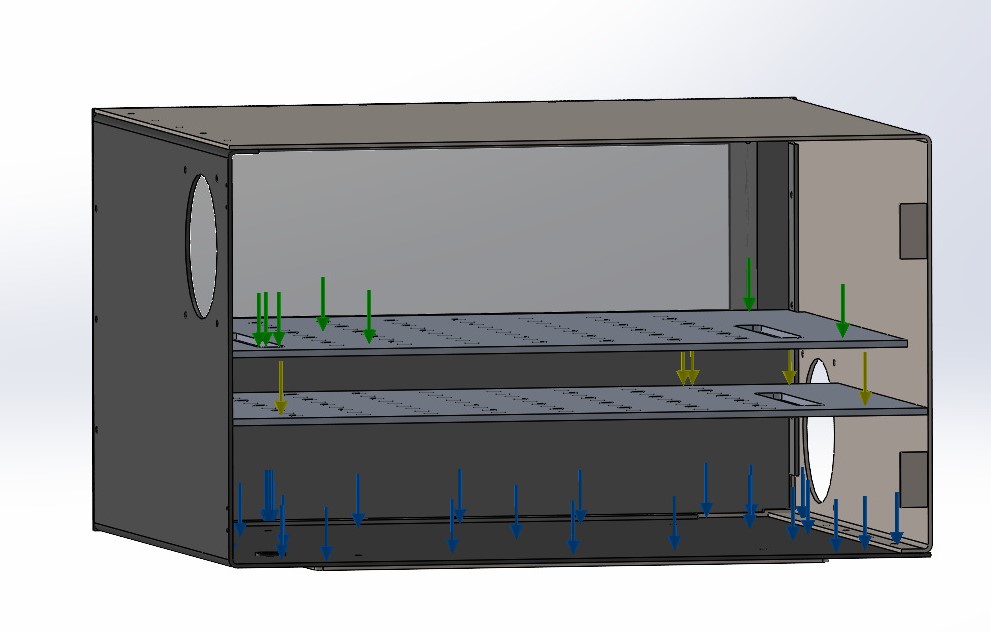
For the unwanted case that a person sits on top of the casing, or something is falling on the casing, a weight force of a person of 100 kg is strained on top:
Fwp=100 kg×9.81 m/s² ≈1000 N
The first analysis is for the casing standing on a foot (Figure 55).
The lower part is fixed for the analysis, as it is fixed to the floor with bolts during use. It is shown by the black arrows in Figure 55.
The red arrows show the force on top (Figure 55)
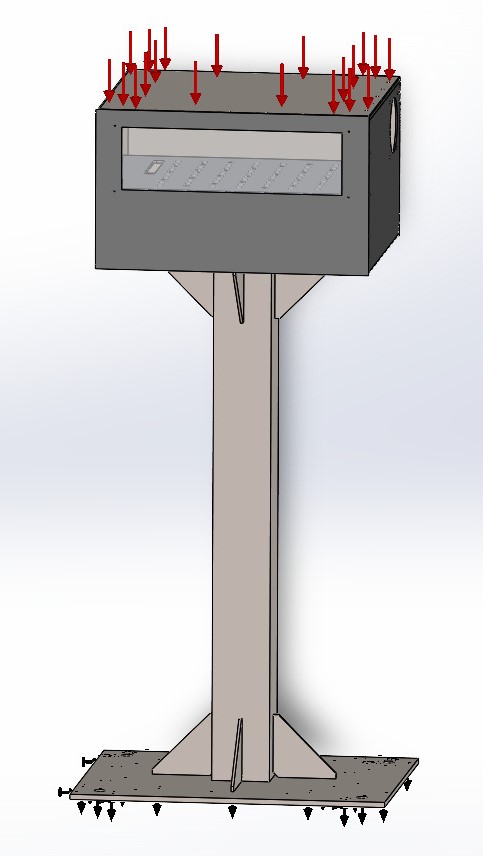
As the projector casing is also used outdoors, a wind force is also applied to two sides of the casing. The wind force was calculated for wind force 9-10 of the Beaufort Scale, which means strong gale or storm [National Weather Service, 2024]. First, the wind pressure is calculated using the formula of Bernoulli's equation for a plate with air flow around both sides [Tec-Science, 2020].
Wp = c×ρ×v²
Wp = wind pressure [N/m²]
c = pressure coefficient [ ]
ρ = air density [kg/m³]
v = velocity [m/s]
Wp =1×1.204 kg/m³×(24.4 m/s)²= 716.81 N/m²
The pressure coefficient is 1 because the velocity of the air will be completely stopped and set to zero when it flows against the plate. The coefficient is always between 0 and 1, and to describe the worst case, the highest coefficient was taken. With the pressure of the wind and the surface area, the wind force Fw can be calculated:
Fw =712.81 N/m²×1.5 m^2=1075.215 N
1.5 m² is the front area and the biggest surface area of this assembly.
The force of the wind acts from two sides. It does not make sense when the wind force acts from all sides because the wind force would equalise each other (Figure 56).
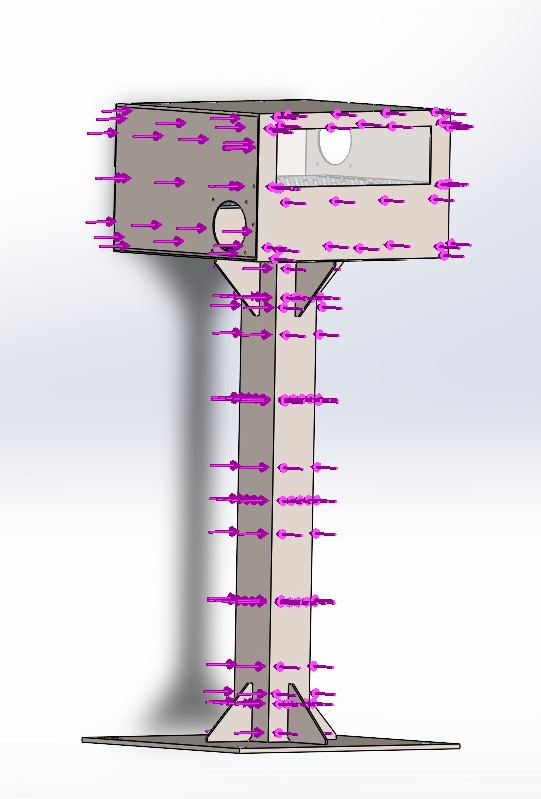
Results:
All possibilities, both simultaneously acting forces and forces acting alone, were analysed. All forces would not act at the same time. That’s why two analyses were done. The first analysis is with the force on top and the inner forces, and the second analysis is with the force of the wind on two sides and the inner forces.
Analysis with the force on top (Figures 57, 58 and 59).
Von Mises stresses:
The maximum stress is 19.60 N/mm² (Figure 57). It is in stainless steel, which has a Yield Strength of 275 N/mm².
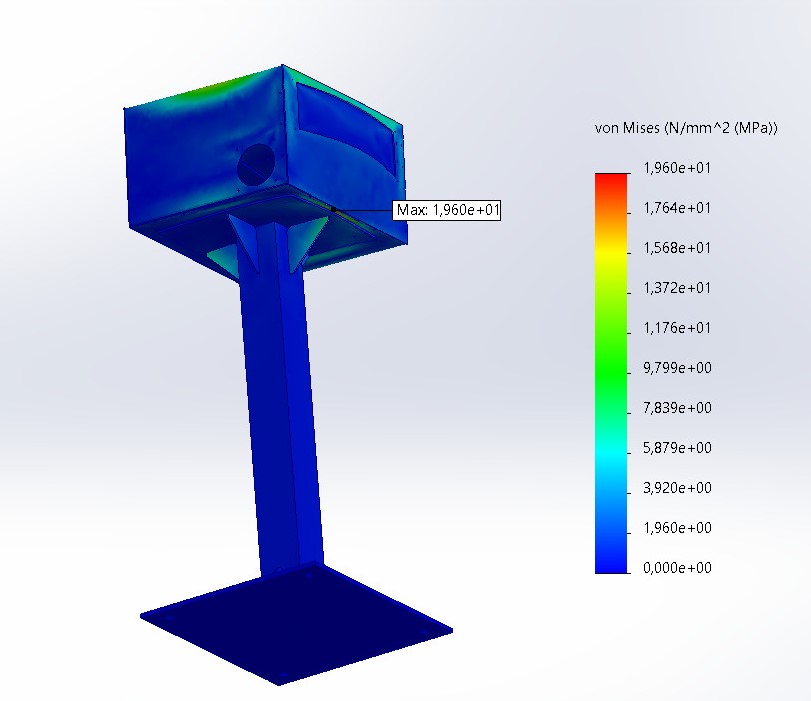
Displacement:
With 1000 N on top of the casing, there is only a maximum displacement of 0.3199 mm (Figure 58).
In this case, there is a force of 1000 N, which is a lot. When the casing does not move a lot with this force, the construction and choice of material is good. The maximum displacement is 0.3199 mm, which is acceptable.
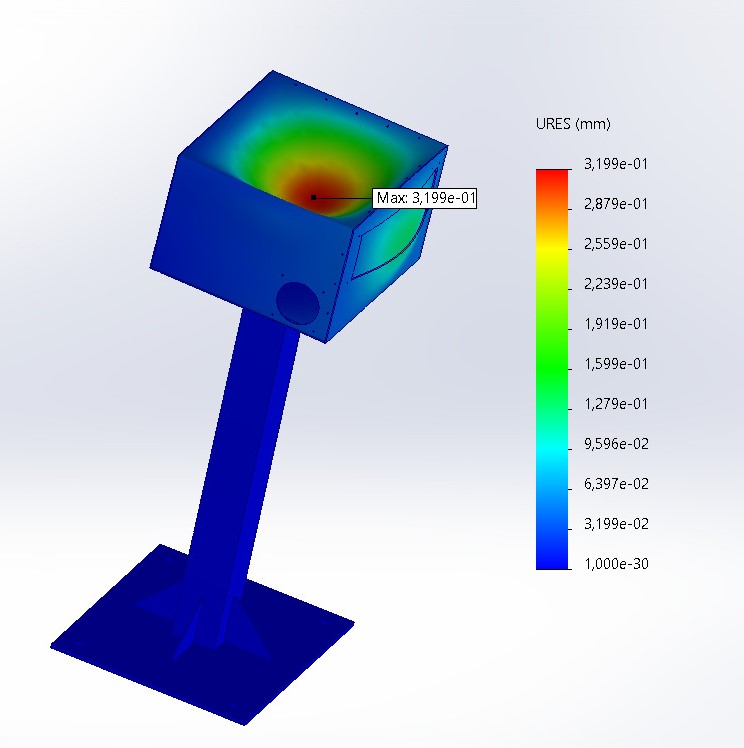
Factor of Safety:
In Figure 59 the FOS is shown and is at least 4.724, which is three times much than the minimum value of 1.5.
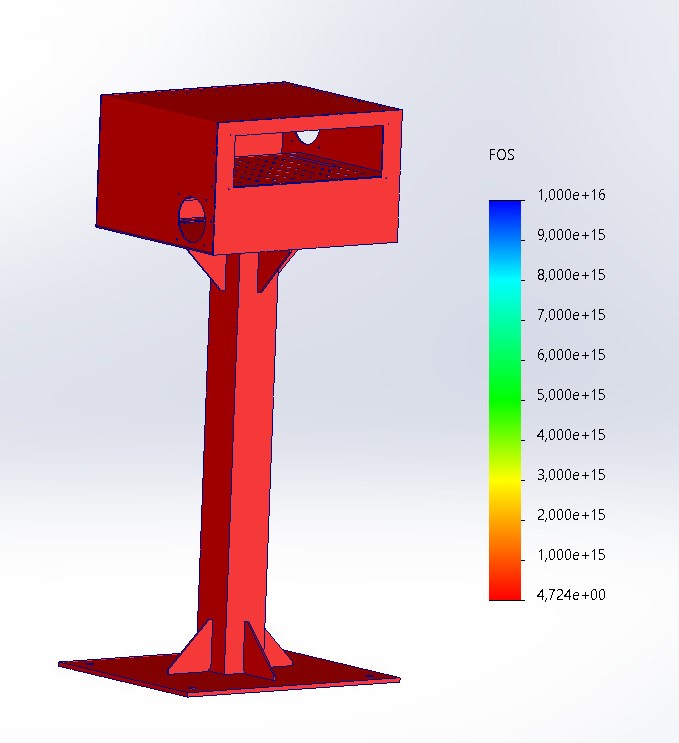
The following analysis is when the inner forces and the wind from two sides are acting (Figures 60, 61, 62).
Von Mises stresses:
The maximum stress is 45.72 N/mm² (Figure 60). This stress is in stainless steel, which has a yield strength of 275 N/mm². So there is no danger of breaking.
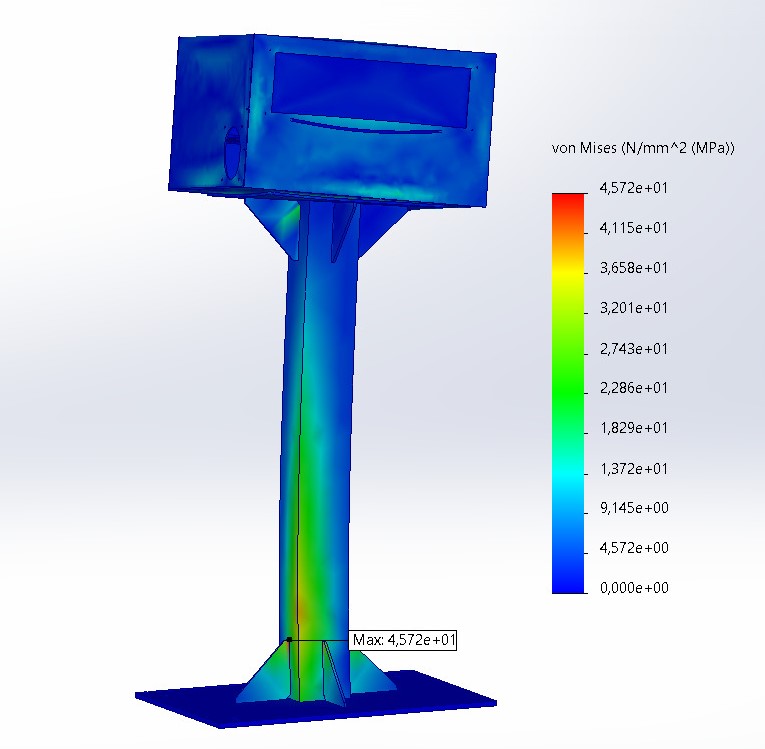
Displacement:
In this case, there is a force of 1000 N, which is a lot. When the casing does not move a lot with this force, the construction and choice of material is good. The maximum displacement is 1.599 mm, which is acceptable (Figure 61).
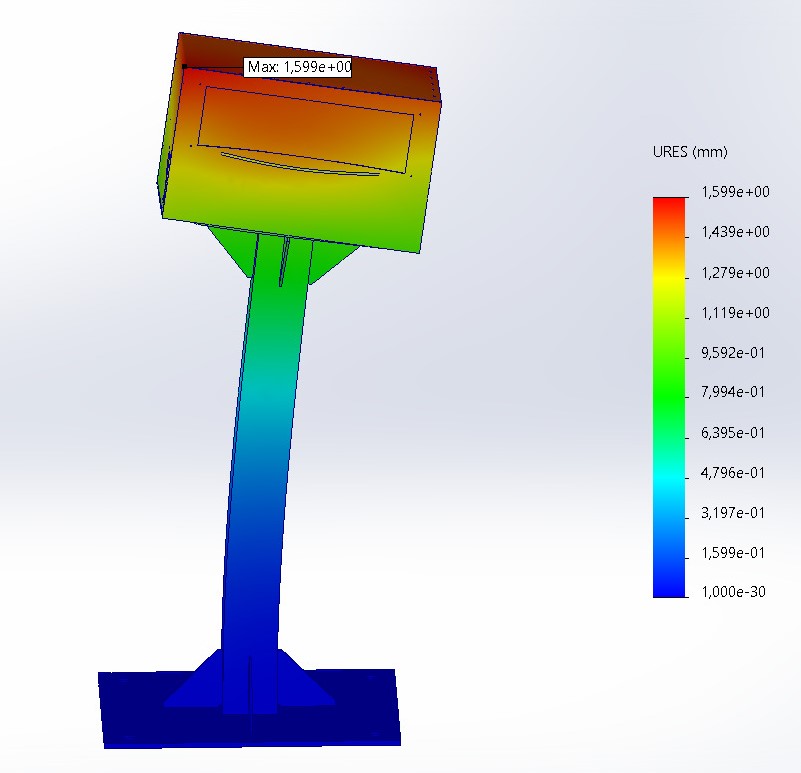
Factor of Safety:
The FOS is at least 3.246, which more than twice of the minimum value 1.5 (Figure 62).
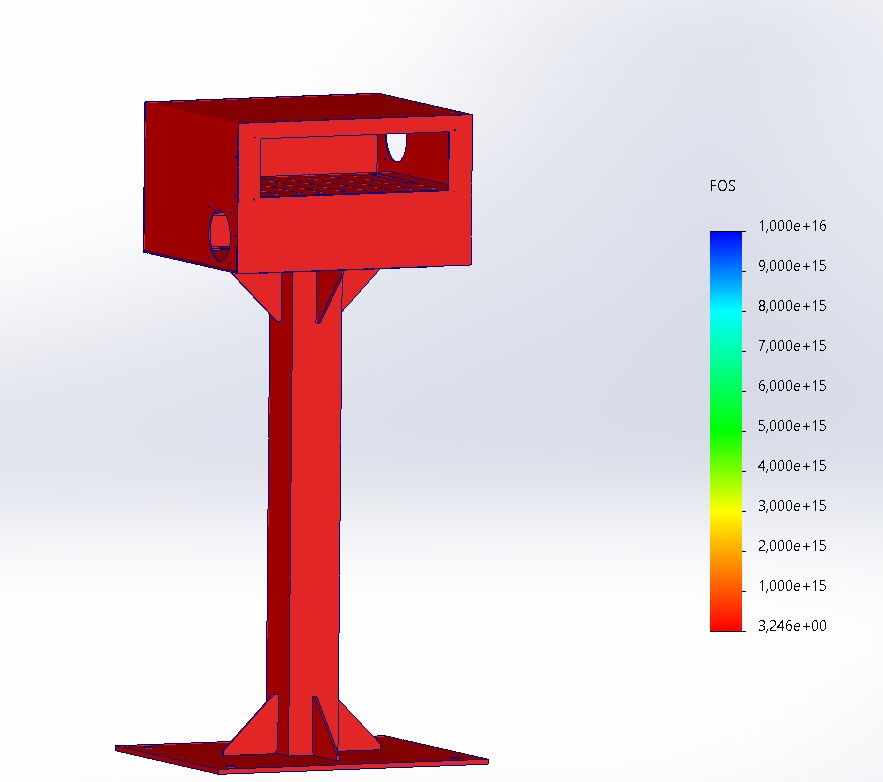
In the following, the construction of the pole will be analysed.
The inner forces also act in the following analyses (Figure 54).
The folded sheet is fixed for this analysis, because, in real life, it is also fixed to the pole. This is shown with the black arrows in Figure 63.
This construction was also analysed in two different ways. One with the force on top and one with a force caused by wind from two sides.
The calculation for the force on the top, caused by a person, is the same as in the previous assembly:
Fwp=100 kg×9.81 m/s² ≈1000 N
The force is shown with red arrows in Figure 63.
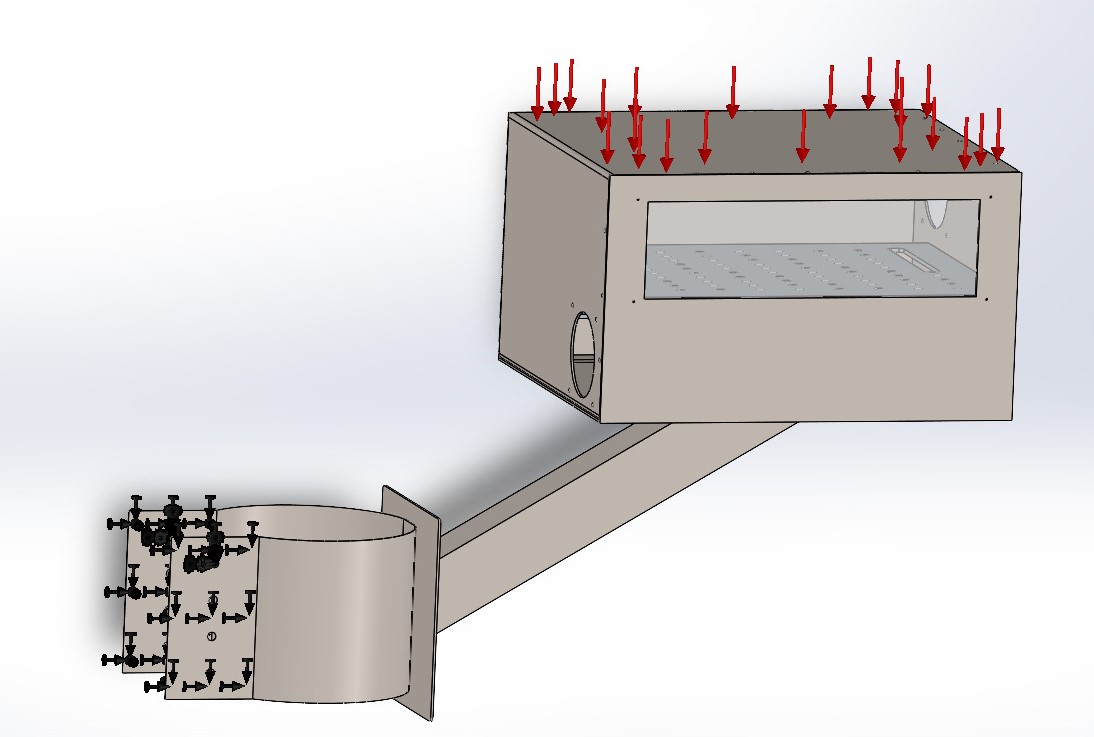
The wind pressure is the same as for the other assembly:
Wp=1×1.204 kg/m³×(24.4 m/s)²= 716.81 N/m²
But in this case the maximum surface area for the wind is 1.2 m². That’s why the calculation for the force of the wind changes:
Fw=712.81 N/m²×1.2 m²=860.172 N
This is less than the weight of a person, which is 1000 N. Because of the possibility that the person leans against the casing, also the side parts are strained with 1000 N (Figure 64).
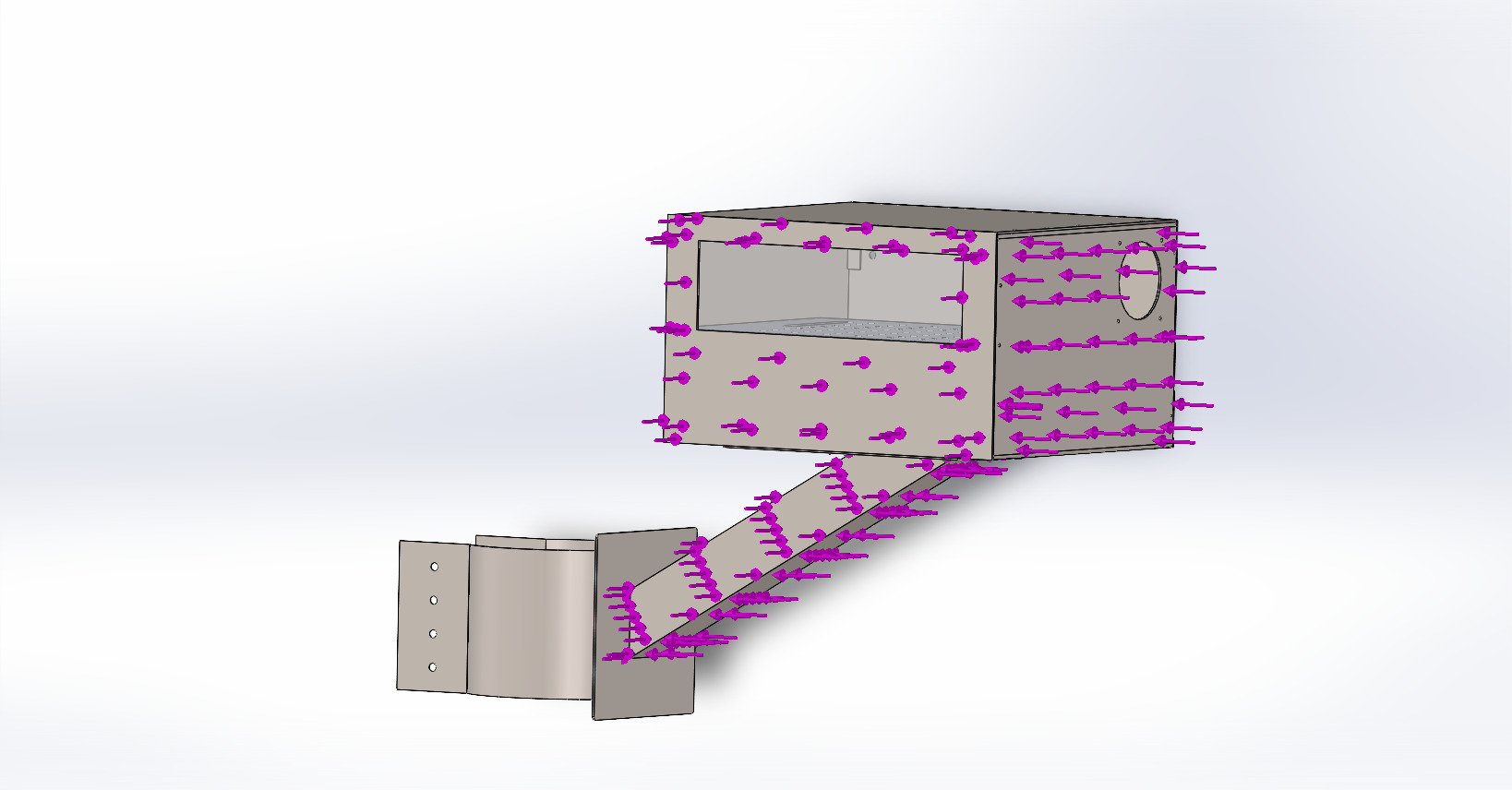
Results:
Like in the first analysis, all possibilities, both simultaneously acting forces and forces acting alone, were analysed. Because not all forces will act at the same time, the first analysis is with the force on top and the inner forces, and the second analysis is with the wind from two sides and the inner forces.
The following is the analysis with the force on top and the inner forces (Figures 65, 66 and 67):
Von Mises stresses:
The highest stress is 20.13 N/mm² which is much lower than the yield strength of 275 N/mm² of stainless steel (Figure 65).
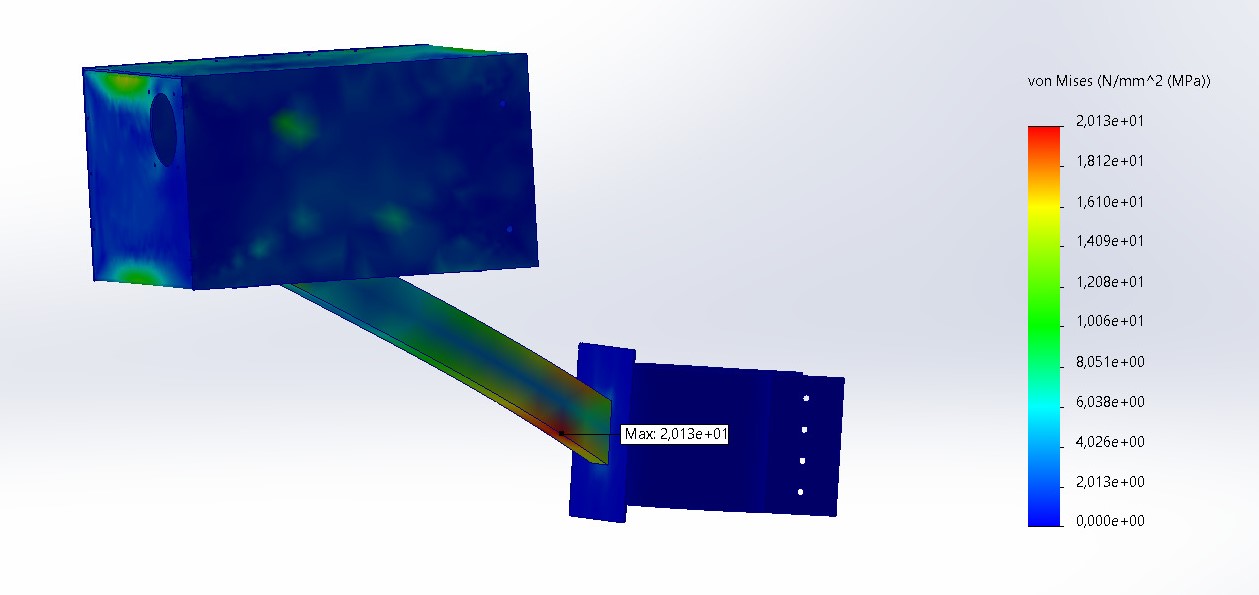
Displacement:
The maximum displacement is 0.6754 mm if there acts a force of 1000 N (Figure 66).
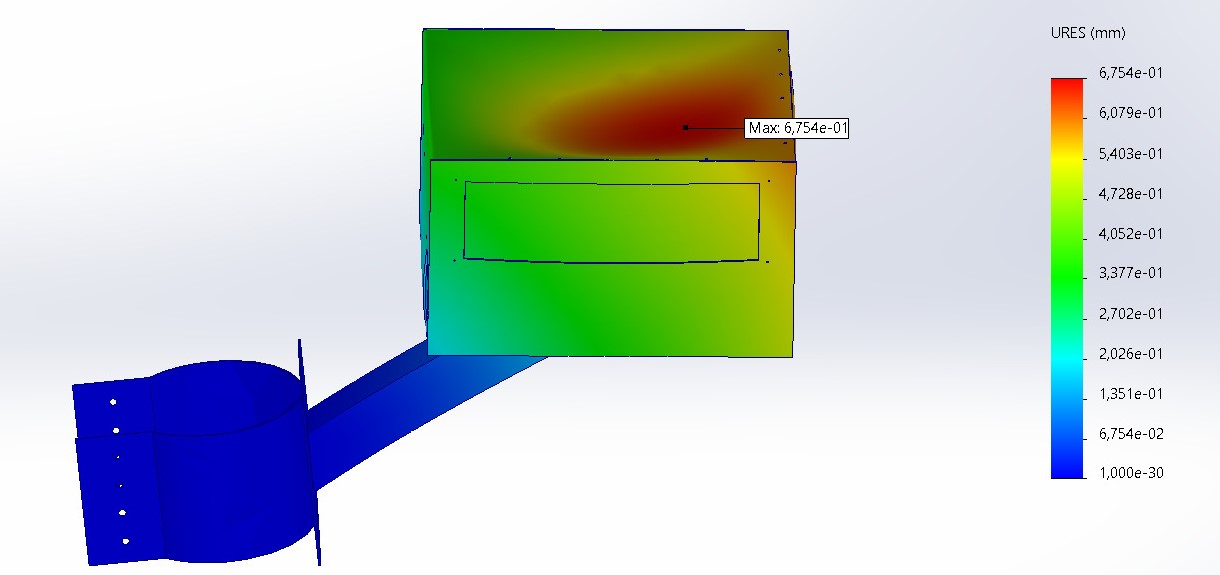
Factor of Safety:
The FOS of this assembly is 5.262, which is more than three times of the minimum value of 1.5 (Figure 67).
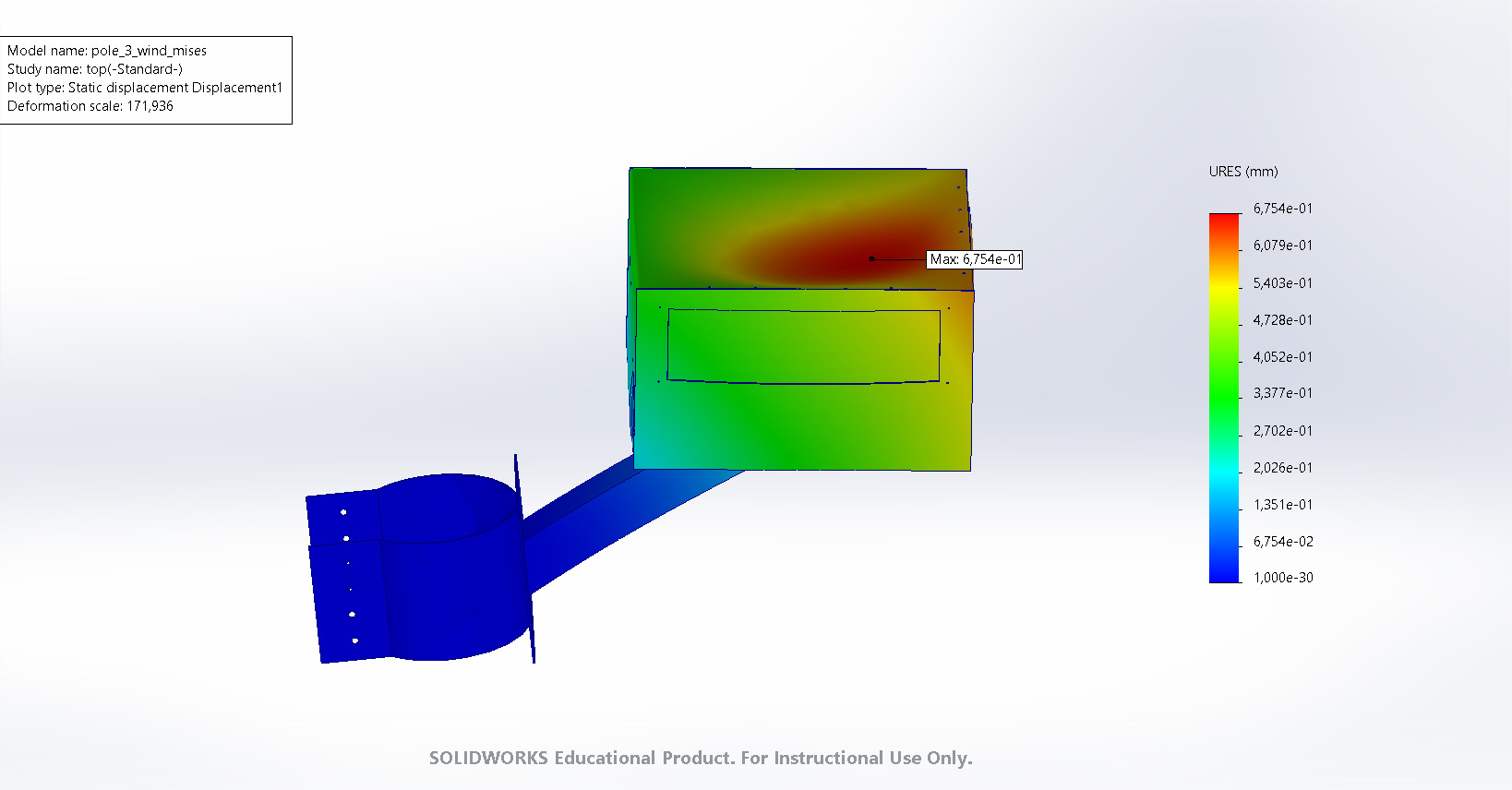
The following analysis is with the wind of two sides and inner forces (Figures 68, 69 and 70).
Von Mises stresses:
The highest stress is 57.44 N/mm² which is much lower than the yield strength of 275 N/mm² of stainless steel (Figure 68).
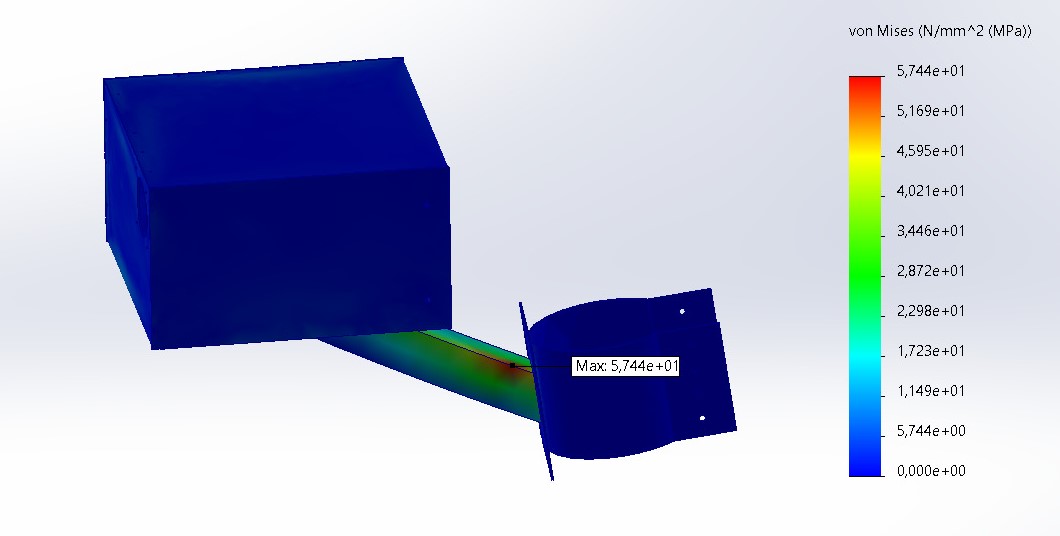
Displacement:
The maximum displacement is 1.257 mm (Figure 69).
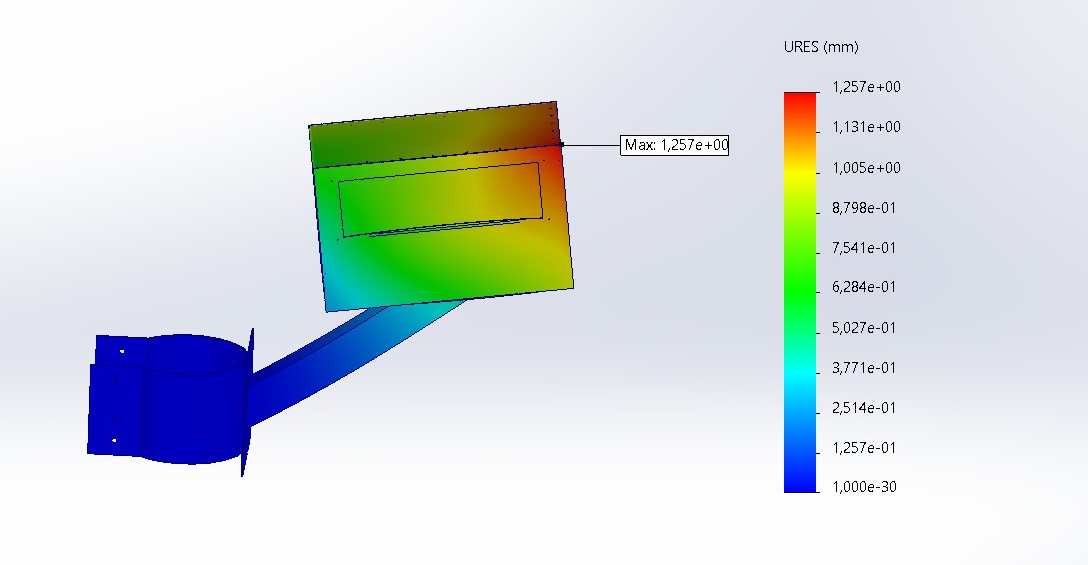
Factor of Safety:
Also in this case the Factor of Safety is more than three times bigger than the minimum value of 1.5 (Figure 70).
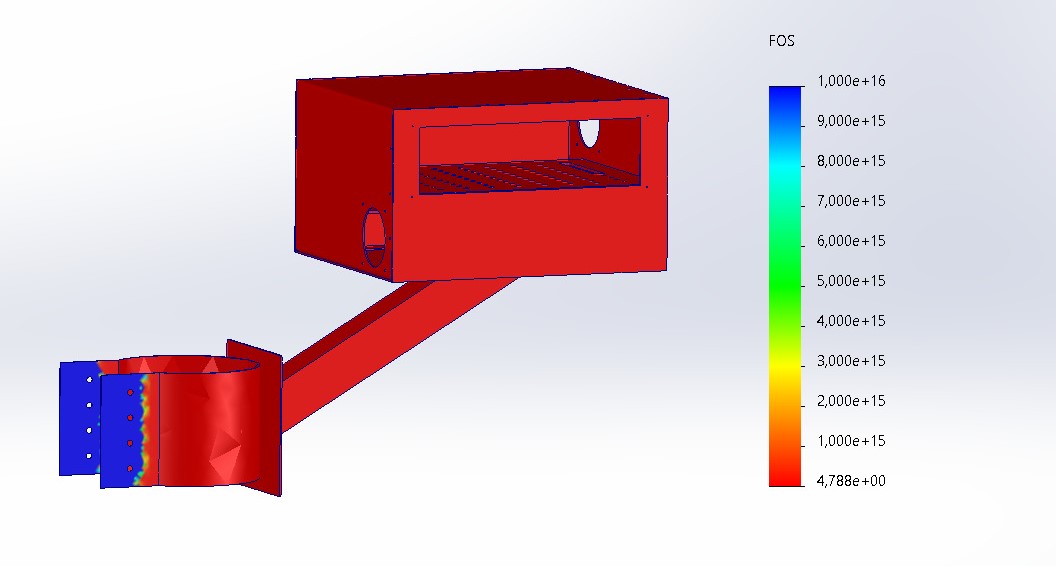
Conclusion:
The first idea of the thickness of the material yielded bad results. After changing the thickness two times, the result of the FEA is good and acceptable. In Table 34 the results with a force on top are shown, and in Table 35 the results with the force of the wind are shown.
| Von Mises Stresses [N/mm²] | Displacement [mm] | FOS [ ] | |
|---|---|---|---|
| Stand | 19.6 | 0.31 | 4.724 |
| Pole | 20.31 | 0.6754 | 5.262 |
| Von Mises Stresses [N/mm²] | Displacement [mm] | FOS [ ] | |
|---|---|---|---|
| Stand | 45.72 | 1.599 | 3.246 |
| Pole | 57.44 | 1.257 | 4.788 |
In both constructions, the stresses and displacements are bigger in the analysis with the wind. But this is so low that it is acceptable because it is at wind strengths from 9 to 10 on the Beaufort scale. Normally, there are no shows outside at higher wind strengths.
The minimum FOS is 3.246; this is more than twice the minimum value. This also shows that there is no point with too much stress because the FOS is calculated with the yield strength of the material and the stress at the worst point. The biggest displacement of 1.6 mm is also good.
The mesh is not that fine, but SolidWorks failed with a finer mesh, and it should be fine enough to give reliable results for a good product.
7.4.2 Smart System
7.4.2.1 Hardware
The black box diagram Figure 71 gives a schematic overview of the inputs and outputs of the hardware and software systems that will be used in the construction of the product.
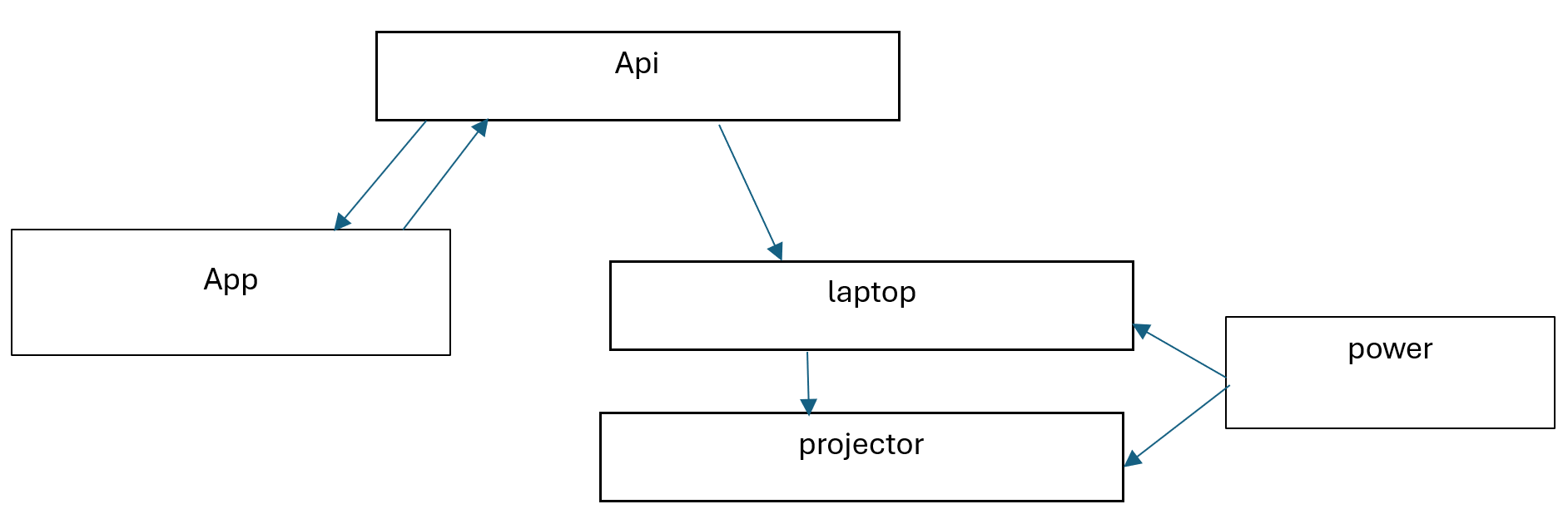
7.4.2.2 Software
In the following Table 36 the user stories are described
| As A(n) | I Want | So That |
|---|---|---|
| Artist | A way to upload art | It can be displayed by a Museum |
| Exhibitor | A way to show the art | I can get more integration with local artists |
| Artist | A way to register an artist account | I have the right credentials to upload art |
| Admin | To register a projector | I can link a public space to a projector |
| Exhibitor | A rental agreement | The details of the lease are clear |
| Exhibitor | A quick way to check the classical art on the platform | I can see if I'm interested |
The architecture of the web service system, depicted in Figure 72, is supported by a variety of design technologies. For an in-depth analysis of the comparative features and capabilities of different design technologies utilised within the system, please refer to the comprehensive comparison tables provided below [Tom Greenwood, 2024]. Additionally, the database design is illustrated in Figure 73.
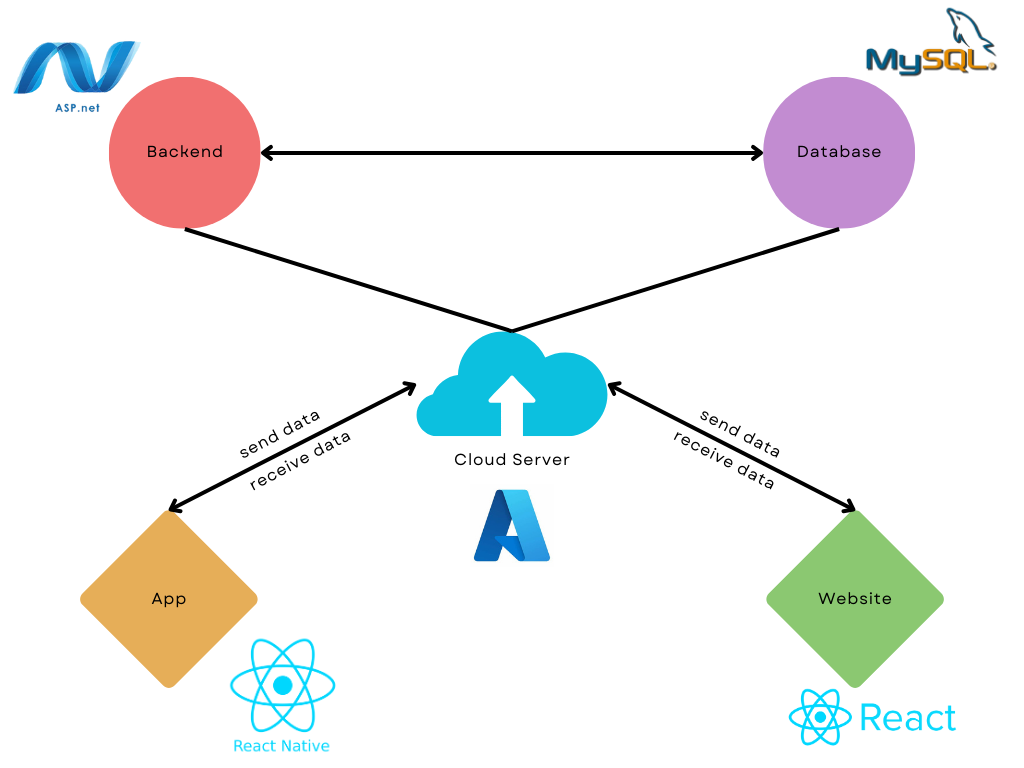
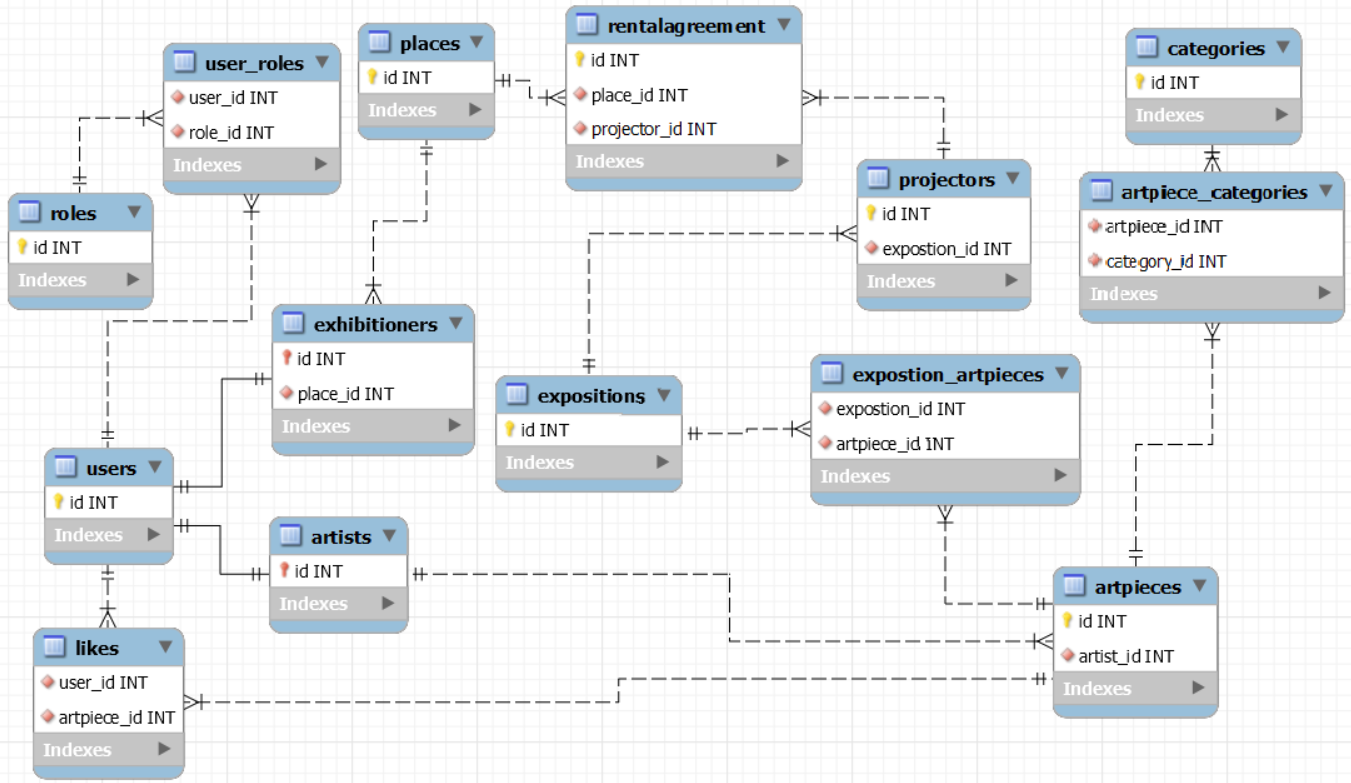
ASP.NET was chosen as the backend framework over other alternatives for several compelling reasons. ASP.NET is known for its high performance and scalability, which are essential for handling large volumes of data and complex transactions. Its built-in security features protect against common vulnerabilities such as SQL injection, cross-site scripting (XSS), and cross-site request forgery (CSRF). The framework supports robust authentication and authorisation mechanisms through .NET Identity, ensuring that user data is secure. Additionally, ASP.NET integrates seamlessly with the entire .NET ecosystem, including libraries, tools, and other frameworks, allowing for more efficient development processes and easier maintenance of the application. The framework supports a wide range of development tools, like Visual Studio, boosting developer productivity with features such as IntelliSense, debugging, and profiling tools. Extensive documentation and a large, active community provide valuable resources for troubleshooting, learning, and staying updated with the latest best practices. ASP.NET's flexibility with modular development and cross-platform compatibility via .NET Core make it versatile for diverse deployment needs. Designed for enterprise-grade applications, it offers features like dependency injection and asynchronous programming, ensuring robustness and reliability. Microsoft's long-term support and regular updates keep ASP.NET current with the latest technologies and security standards, guaranteeing the longevity and relevance of the application. Other backend options are found in Table 37.
| Name | Language | Performance | Ease of use | Scalability | Flexibility | Cost | Security | Compatibility | Community Support |
|---|---|---|---|---|---|---|---|---|---|
| Django | Python | Fast and efficient, optimised for high-level abstraction and rapid development | Easy to use with a user-friendly interface and robust documentation | Can scale horizontally and vertically with built-in support for caching, load balancing, and clustering | Flexible, with support for many libraries and frameworks | Free and open source, with no additional costs | Strong security features, including automatic protection against common vulnerabilities | Compatible with many programming languages and platforms, with a focus on Python | Large and active community support, with many resources available online |
| Flask | Python | Fast and efficient, optimised for small to medium-sized applications and micro services | Easy to use with a simple and intuitive syntax and structure | Can scale horizontally and vertically with support for extensions and plugins | Highly flexible, with support for many libraries and frameworks | Free and open source, with no additional costs | Strong security features, including protection against common vulnerabilities | Compatible with many programming languages and platforms, with a focus on Python | Active and growing community support, with many resources available online |
| Express | Node.js, JavaScript | Fast and efficient, optimised for Node.js applications and micro services | Easy to use with a simple and intuitive syntax and structure | Can scale horizontally and vertically with support for middleware and plugins | Highly flexible, with support for many libraries and frameworks | Free and open source, with no additional costs | Strong security features, including protection against common vulnerabilities | Compatible with many programming languages and platforms, with a focus on JavaScript | Large and active community support, with many resources available online |
| .NET Identity | C#, .NET | Offers robust authentication and identity management features with high performance | Well-integrated with the .NET ecosystem and provides extensive documentation | Scales effectively for large-scale applications with support for distributed architecture | Provides flexibility through customisation and integration with other .NET components | Free and part of the .NET ecosystem | Provides comprehensive security features, including protection against common security threats | Compatible with the .NET ecosystem and integrates seamlessly with other .NET components | Strong community support within the .NET development community and Microsoft resources available online |
| Laravel | PHP | Provides efficient performance with features optimised for PHP development | Offers a well-structured and intuitive framework with comprehensive documentation | Scales efficiently for projects of various sizes with support for caching and queuing systems | Offers high flexibility through a modular architecture and extensive ecosystem of packages | Free and open-source, with optional premium features available through Laravel Forge | Implements robust security measures including protection against common web vulnerabilities | Compatible with PHP-based applications and integrates seamlessly with other PHP frameworks | Large and active community support within the PHP development community, with extensive online resources |
Although SQL Server offers superior performance and scalability when paired with .NET, MySQL was chosen as the database solution. This decision was driven by the requirement to use open-source software, ensuring cost-effectiveness while still maintaining strong security and compatibility with various platforms. MySQL's open-source nature allows for flexibility and scalability, making it a suitable choice for the system's needs. Other database options are found in Table 38.
| Name | Type | Performance | Ease of use | Scalability | Flexibility | Cost | Security | Compatibility | Community Support |
|---|---|---|---|---|---|---|---|---|---|
| MySQL | SQL | Fast and efficient, optimised for relational databases | Relatively easy to use for basic tasks, but can be complex for advanced features | Can scale horizontally with sharding, but limited vertical scalability | Good for structured data, but limited flexibility for unstructured data | Open source with community and enterprise editions available, can be costly for large-scale use | Strong security features, but may require additional configuration for optimal protection | Compatible with many programming languages and platforms | Large and active community support |
| MariaDB | SQL | Similar performance to MySQL, with added features and optimisations | Easy to use with similar syntax and structure to MySQL | Can scale horizontally with sharding, but limited vertical scalability | Good for structured data, but limited flexibility for unstructured data | Open source with community and enterprise editions available, can be costly for large-scale use | Strong security features, but may require additional configuration for optimal protection | Compatible with many programming languages and platforms, with additional features and optimisations over MySQL | Large and active community support |
| PostgreSQL | SQL | Very strong performance and scalability, optimised for complex queries and large datasets | Can be complex and difficult to use for beginners, but offers advanced features and customisation options | Can scale horizontally and vertically, with support for clustering and replication | Very flexible, supports both structured and unstructured data | Open source with enterprise support available, can be costly for large-scale use | Very strong security features, with options for encryption and advanced access control | Compatible with many programming languages and platforms | Large and active community support |
| SQL Server | SQL | High performance and scalability, particularly optimised for Windows environments | Integrates seamlessly with ASP.NET Identity, providing built-in support for authentication and authorisation | Can scale horizontally and vertically, with options for clustering and replication | Offers flexibility and extensive features for managing structured data | Proprietary software with various licensing options, including free Express edition and enterprise editions | Provides robust security features, including encryption, auditing, and access control | Compatible with .NET ecosystem, primarily used in Windows environments | Supported by a large community and Microsoft resources |
| MongoDB | NoSQL | Very fast and efficient for unstructured data, optimised for horizontal scalability | Easy to use for basic tasks, but may require more advanced skills for complex queries and optimisation | Can scale horizontally with sharding, but limited vertical scalability | Very flexible, supports unstructured and semi-structured data | Open source with enterprise editions available, can be costly for large-scale use | Strong security features, but may require additional configuration for optimal protection | Compatible with many programming languages and platforms | Large and active community support |
| Firebase | NoSQL | Fast and efficient, optimised for real-time data synchronisation and mobile applications | Very easy to use, with a user-friendly interface and streamlined development process | Can scale horizontally and vertically with cloud functions and real-time database | Flexible, supports both structured and unstructured data | Free for basic usage, with pricing plans available for larger scale use | Strong security features, with automatic SSL encryption and access control | Compatible with many programming languages and platforms, with added features for mobile development | Large and active community support, with a focus on mobile development |
For the frontend and mobile application development, React Native was selected to create a unified and cohesive user experience across both app and website platforms. React Native's capability to develop iOS and Android apps with a single codebase allows for delivering a consistent look and feel, enhancing user engagement and satisfaction. This approach not only streamlines the development process but also ensures that users have a seamless and interactive experience across different devices. Other frontend and app development options are found in Tables 39 and 40.
| Technology | Language | Performance | Ease of use | Community support | Cost | UX |
|---|---|---|---|---|---|---|
| AJAX | JavaScript, HTML, CSS, XML | Can be fast and efficient for basic data retrieval, but can become slow with larger datasets and complex queries | Relatively easy to use for basic tasks, but may require more advanced skills for complex interactions and optimisation | Large and active community support, with many resources available online | Free and open source, with no additional costs | Can provide a good user experience, but may require additional effort for complex interactions and data manipulation |
| React | JavaScript, HTML | Very strong performance and scalability, optimised for complex applications with large datasets | Can be complex and difficult to use for beginners, but offers advanced features and customisation options | Large and active community support, with many resources available online | Free and open source, with no additional costs | Can provide a highly interactive and dynamic user experience, but may require more development time and effort |
| Angular | TypeScript, JavaScript | Fast and efficient, with a virtual DOM for optimised rendering | Relatively easy to use for basic tasks, but may require more advanced skills for complex interactions and optimisation | Large and active community support, with many resources available online | Free and open source, with no additional costs | Can provide a highly responsive and interactive user experience, with a focus on component-based architecture |
| VueJS | JavaScript,HTML,CSS | Very fast and efficient, with a virtual DOM for optimised rendering | Easy to use, with a simple and intuitive syntax and structure | Large and active community support, with many resources available online | Free and open source, with no additional costs | Can provide a highly interactive and dynamic user experience, with a focus on simplicity and flexibility |
| Bootstrap | CSS | Fast and efficient, optimised for mobile and responsive design | Very easy to use, with a user-friendly interface and streamlined development process | Large and active community support, with many resources available online | Free and open source, with no additional costs | Can provide a good user experience, with a focus on design consistency and flexibility |
| Technology | Language | Performance | Ease of use | Community Support | Cost | Cross-platform Development | UX |
|---|---|---|---|---|---|---|---|
| React Native | JavaScript | Offers native performance on mobile devices, comparable to native development | Can be complex due to its bridge architecture, but provides extensive documentation and community resources | Large and active community support from both React and mobile development communities | Free and open source, with no additional costs | Yes, allows for development of iOS and Android apps with a single codebase | Can provide a highly interactive and dynamic user experience, with access to native device features |
| Flutter | Dart | Very fast and efficient, with performance comparable to native apps | Provides a simple and intuitive framework with a declarative UI approach | Large and growing community support from Google and the developer community | Free and open source, with no additional costs | Yes, allows for development of iOS and Android apps with a single codebase | Offers customisable and smooth UI experience, with a focus on Material Design principles |
| Xamarin | C#, .NET | Offers native-like performance and access to native APIs | Familiar for developers with C# and .NET experience, but may have a learning curve for others | Large community support from Microsoft and .NET developers | Free and open source, with options for enterprise licensing | Yes, allows for development of iOS and Android apps with shared C# code | Provides a native-like user experience with access to platform-specific APIs and UI components |
| NativeScript | JavaScript, TypeScript | Offers native performance with direct access to native APIs | Easy to use for web developers familiar with JavaScript or TypeScript | Active community support from Progress and JavaScript communities | Free and open source, with enterprise licensing options | Yes, allows for development of iOS and Android apps with shared code | Provides a truly native user experience with direct access to native APIs and UI components |
| Kotlin | Kotlin | Offers high performance and compatibility with Java ecosystem | Easy to learn for developers with Java experience, with modern language features | Growing community support from Kotlin and Android developer communities | Free and open source, with no additional costs | Yes, allows for development of Android apps, with interoperability with Java | Provides a modern and concise syntax for improved developer productivity and maintainability |
| Swift | Swift | Offers high performance and compatibility with Apple's ecosystem | Designed to be easy to learn and use, with modern language features | Large and active community support from Apple and Swift developer communities | Free and open source, with no additional costs | Primarily for iOS and macOS development, with limited cross-platform capabilities | Provides a highly interactive and native user experience tailored for iOS and macOS devices |
7.4.3 Packaging
ArtSy(nc) is delighted to present the innovative packaging designed for the outer casing to protect digital art projectors in Porto. This packaging has been carefully developed to meet several crucial needs.
Firstly, strength is at the heart of the design. As the casings are intended to be hired out and used frequently, the team has selected fairly sturdy materials, such as corrugated cardboard, to provide optimum protection against impact and damage during transport. This ensures the projectors remain in perfect condition, ready to spread digital art across the city. In terms of practicality, the packaging is easy to transport. The team has incorporated ergonomic handles and intelligent carrying systems to simplify loading and unloading. This feature reduces the risk of accidents and allows the products to be used efficiently, even in demanding rental environments.
Sustainability is another key feature of the packaging. ArtSy(nc) has opted for environmentally friendly and durable materials, which reduces the ecological impact while ensuring a long life for the packaging. This is part of the commitment to sustainability and environmental responsibility. Finally, the design of the packaging represents the brand. The team has created a modern, professional look that reflects the visual identity. The colours, finishes, and graphic details are all designed to reinforce the image of quality and innovation.
In short, the packaging is much more than just protection; it's an essential part of the overall offering. It guarantees the safety of the products, makes them easy to use, and conveys the brand values. ArtSy(nc) is proud to offer durable, resistant, and representative packaging that contributes to the success of the digital art projects in Porto.
7.4.3.1 Draw
At ArtSy(nc), designing innovative and practical packaging starts with a methodical process that combines creativity, research, and a deep understanding of the specific needs of products. The team started with brainstorming sessions with all the team members to explore new ideas and develop innovative concepts that capture the unique essence of ArtSync through the packaging. Next, ArtSy(nc) focuses on understanding the specific packaging requirements for ArtSync products, with an emphasis on protection and transportation. The team moves on to the hand-drawing stage, as illustrated in Figure 74: to translate the ideas into detailed sketches that capture the creative vision for the packaging. This initial process is the starting point for creating distinctive and effective packaging that embodies the vision of ArtSy(nc) while meeting the practical requirements of the products.
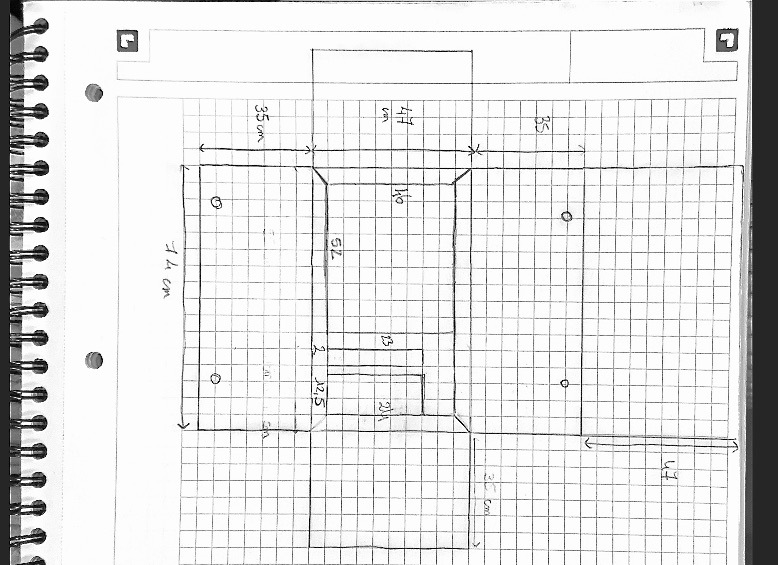
7.4.3.2 Packaging plans on Artios
Artios is a computer-aided design (CAD) software package specially designed for the design and production of packaging. It is developed by Esko, a company that provides software and hardware solutions for the packaging, printing, and labelling industries.
ArtiosCAD, Esko's flagship product in the Artios family, is widely used by packaging professionals to create designs for boxes, displays, and other types of packaging. The software enables packaging to be designed accurately in 3D, taking into account technical specifications.
The second stage was to design the plans in Figure 75 for the outside of the packaging and the cardboard insert.
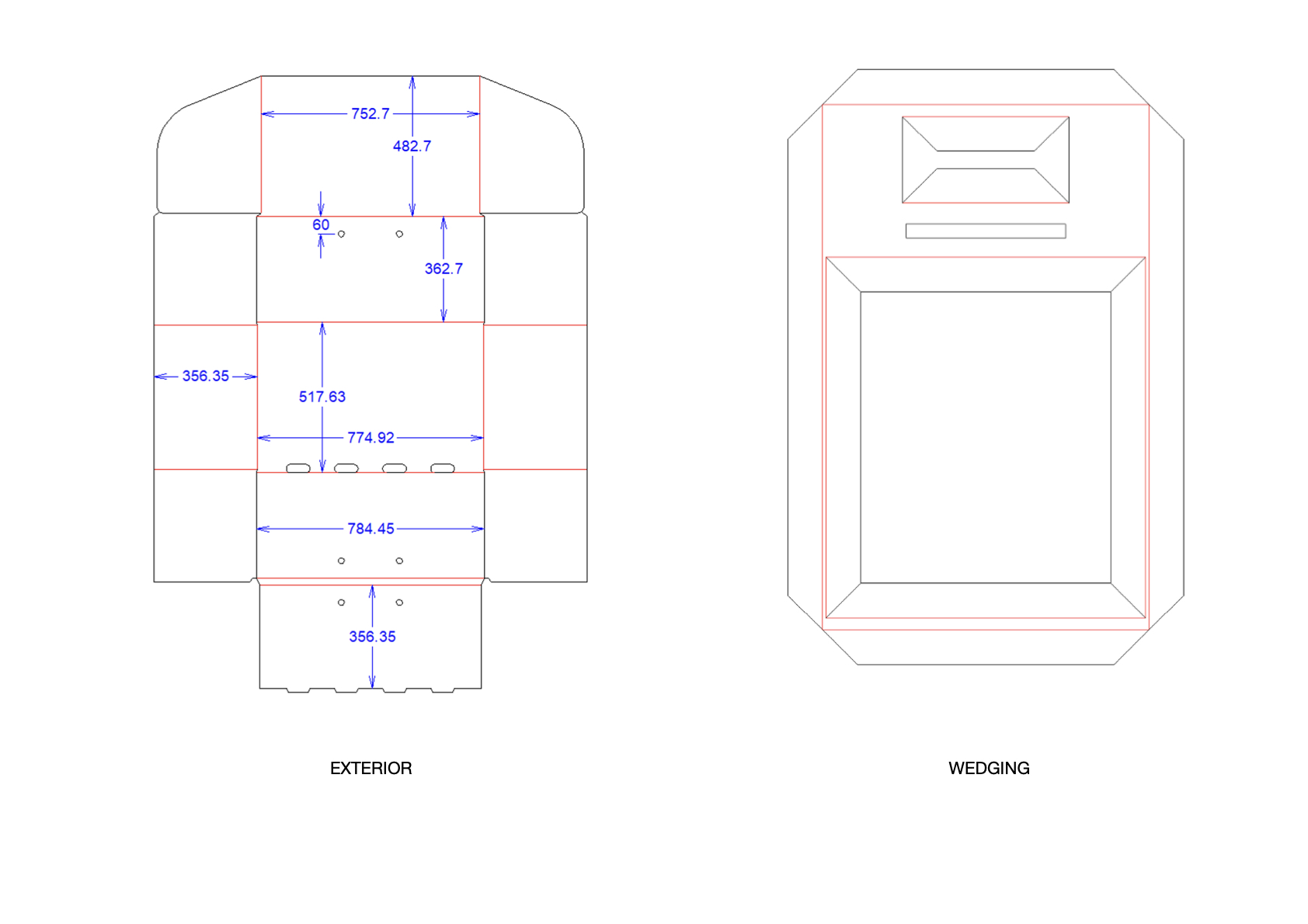
7.4.3.3 3D Model Packaging
For the packaging, ArtSy(nc)'s team opted for a compact box capable of accommodating the casing, the video projector, and the computer. To ensure the safety of the various components during transport, the team added cushioning to the bottom of the box, keeping them separate and protected from impact.
It's also important to note that the packaging closes without glue or tape, thanks solely to a clever folding system. Not only is this an economical choice, but it's also environmentally friendly and allows the box to be easily reused.
The following Figure 76 shows different viewpoints:
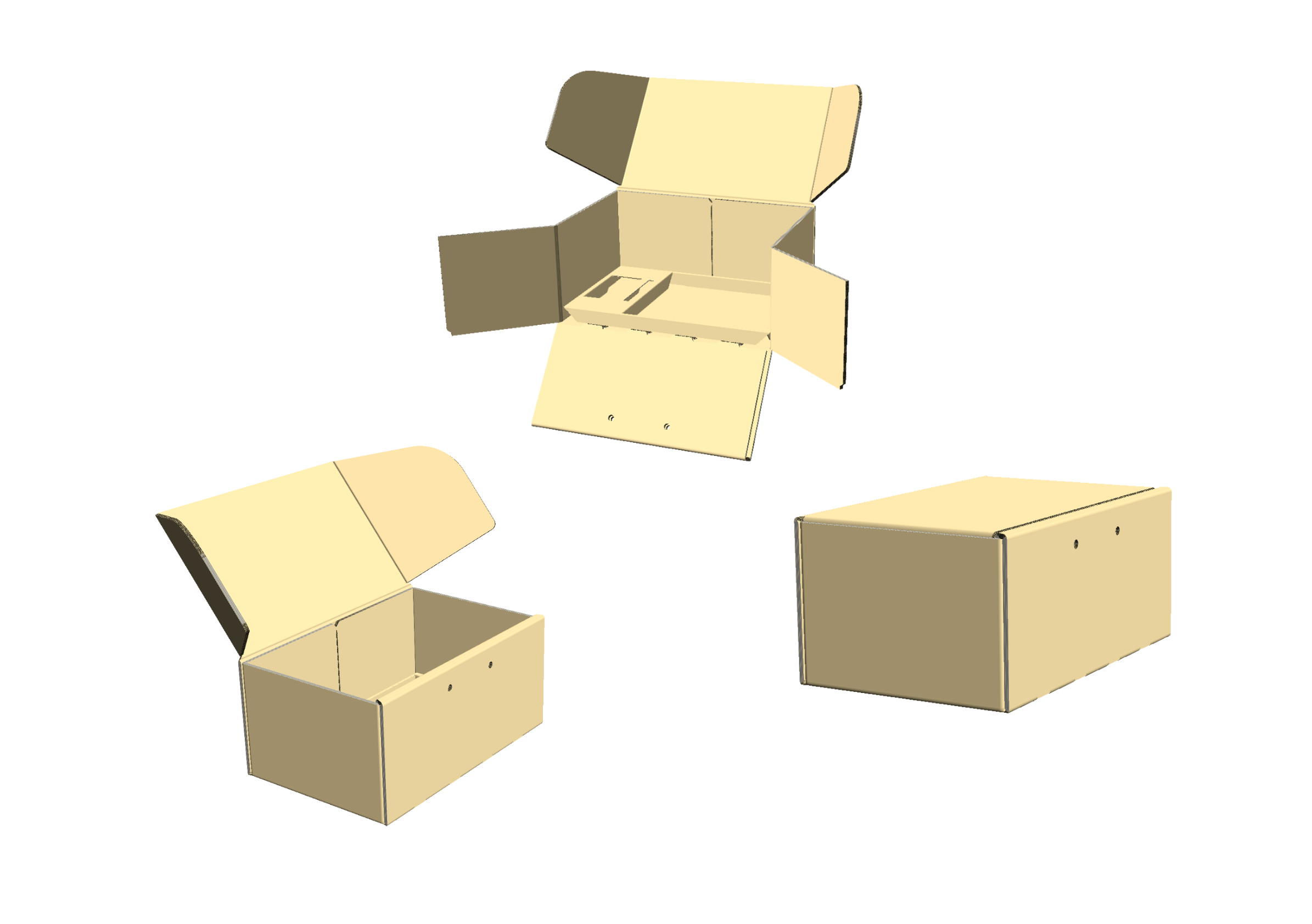
7.4.3.4 Packaging Materials
ArtSy(nc) chooses corrugated board for the packaging for several reasons:
- Product protection:
Cardboard offers excellent protection for the products it contains. Depending on the thickness and type of board used (such as corrugated), it can absorb shocks, prevent damage, and maintain the integrity of products during transport and storage.
- Versatility:
Cardboard can be easily adapted to different shapes, sizes, and design requirements. It can be cut, folded and shaped to create a variety of bespoke packaging to meet specific product needs.
- Lightweight:
Paperboard is lightweight compared to other packaging materials, such as wood or metal, reducing transport costs and minimising the carbon footprint associated with logistics.
- Customisation:
Paperboard is a highly adaptable material for printing and personalisation. It offers an ideal medium for creative designs, logos, product information, and attractive graphics that can reinforce the brand image and attract customers.
- Sustainability and recyclability:
Paperboard is made from renewable cellulose fibres and is highly recyclable. This makes it an environmentally friendly choice compared to other non-sustainable packaging materials. In addition, many consumers appreciate cardboard packaging because of its ability to be recycled or composted.
- Cost effective:
Cardboard is more affordable than other packaging materials such as plastic, metal, or glass. It therefore offers a cost-effective solution for businesses, while providing good protection and an attractive product presentation.
In short, cardboard is a versatile, effective, and environmentally friendly choice for packaging. It combines features such as product protection, creative customisation, lightweight, and recyclability, making it an attractive option that respects ArtSy(cn)'s values of quality and environmental impact.
7.4.3.5 ArtSy(nc)'s Packaging
For the packaging, the team was keen to incorporate the following values: ease of transport, protection, reuse, sustainable materials, and a faithful representation of ArtSync's identity. Integrity, innovation, and commitment are the pillars of the approach.
For ease of transport, ArtSy(nc) has added straps to make the box easier to carry. The box is designed to be reused, which is essential in the rental context. The team chose cardboard, a durable and easily recyclable material, and eliminated the use of glue and tape.
For the design, ArtSy(nc) opted for a simple, uncluttered approach, reflecting the ArtSync aesthetic.
This is the final packaging illustred in Figure 77 design:
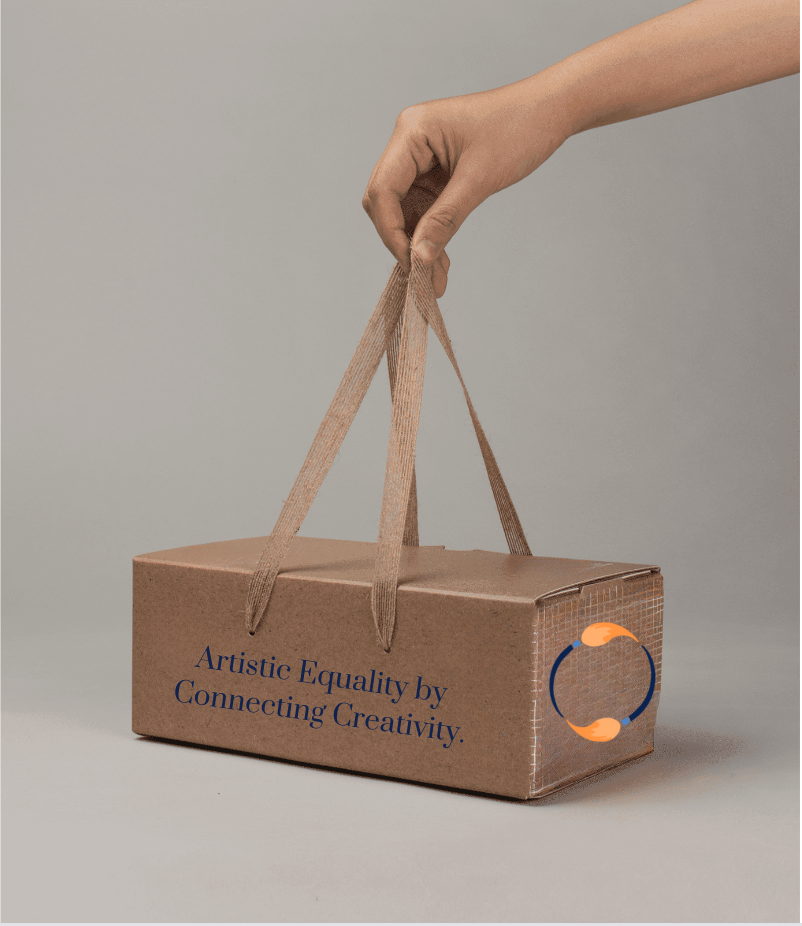
In conclusion, the new packaging perfectly embodies ArtSync's values: ease of transport, protection, reuse, and durability. Thanks to innovative solutions such as the addition of straps and the use of recyclable materials without glue or adhesive tape, the team has created a practical and environmentally friendly box. This packaging not only effectively protects products during transport, but is also designed to be reused, meeting the needs of the rental customers. Combining simplicity and functionality, the design reflects ArtSync's commitment to integrity and innovation. ArtSy(nc) is confident that this packaging will add significant value to the products and enhance customer satisfaction.
For even more information on packaging, take a look at the folder in the deliverables section.
7.5 Prototype
This chapter focuses on the creation of the product prototype. This chapter delves in the realisation of the prototype allowed for the exploration and validation of concepts, the testing of intended functionalities, and the identification of necessary improvements before the production of the final product.
The prototyping process starts with an in-depth design phase, during which ideas and requirements get transformed into a tangible model. Each step of this phase, from material selection to component assembly, guided by the objectives of sustainability and performance.
The techniques and tools to manufacture the prototype will be detailed, along with the challenges encountered and the solutions implemented to overcome them. This iterative approach enables refinement of the product by integrating feedback and adjusting technical and aesthetic elements.
Finally, this chapter will highlight the differences between the prototype and the final product. Adjustments made are based on performance tests and feedback obtained during the prototyping phase. These changes include improvements in material selection, simplification of manufacturing processes, and optimisation of functionalities to better meet user needs.
Through this exploration of prototyping, the evolution of the product is illustrated, demonstrating a commitment to innovation, quality, and sustainability.
7.5.1 Structure
For the prototype, a maximum of materials available at the school (those found in the attic) will be used. As a result, the design will be very different from the final product but will offer a more environmentally friendly approach. The materials, size, and shape of the prototype will be very different from the original design. The main objective is to materialise the concept using available resources while minimising purchasing. Although the design will be very different from the final design, the intention is to remain true to environmental values by modelling the concept with as few resources as possible. The only materials purchased are wooden plates and two hinges; the rest of the prototype's materials are second-hand.
In the remainder of this paragraph, the main steps involved in building the prototype illustrated in Figures 78 and 79 are described.
- Step 1: Remove unwanted parts from the prototype structure
- Step 2: Test the structure and video projector
- Step 3: Take all measurements: to cover the structure, holes for the ventilation system, etc.
- Step 4: Make all cut-outs and holes in the wooden panels
- Step 5: Assemble the entire prototype
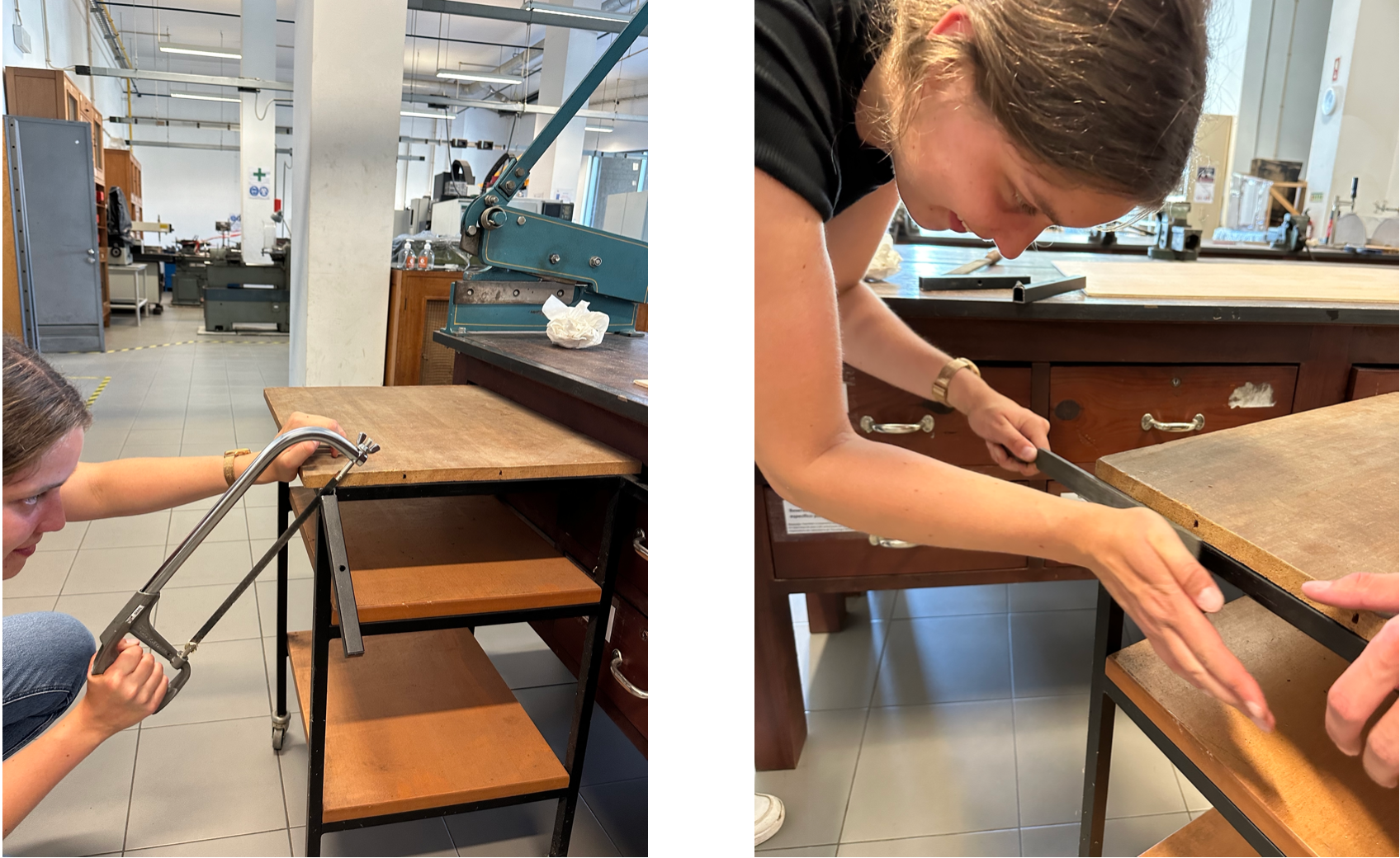
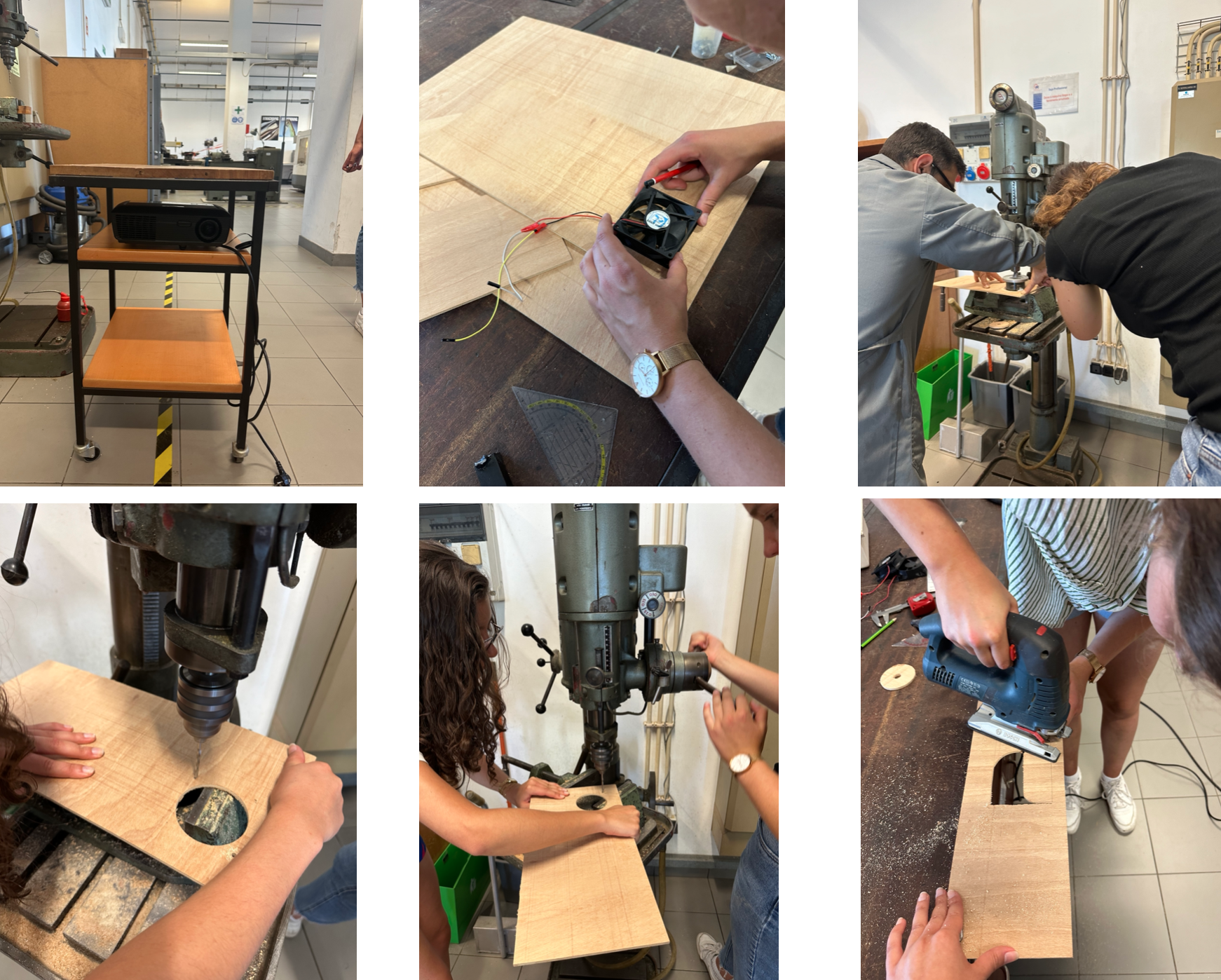
In conclusion, the creation of this prototype, illustrated in Figure 80 initially focused on finding the necessary materials and minimising purchasing. The aim was to design a project using mainly what was already available. Once an idea for the structure had been identified, it was necessary to determine how it could be improved and to implement the concept from this base.
As far as materials were concerned, only a few specific purchases were made: wooden planks were bought to cover the video projector, and hinges were needed to create a door. The actual construction then took place in the ISEP workshop. The manufacturing stages involved assembling the basic structure, integrating the planned improvements, and finalising the prototype according to the established plan.
Each stage, from the initial search for materials to the final assembly, was carefully planned and executed to optimise available resources and produce a functional, efficient prototype.
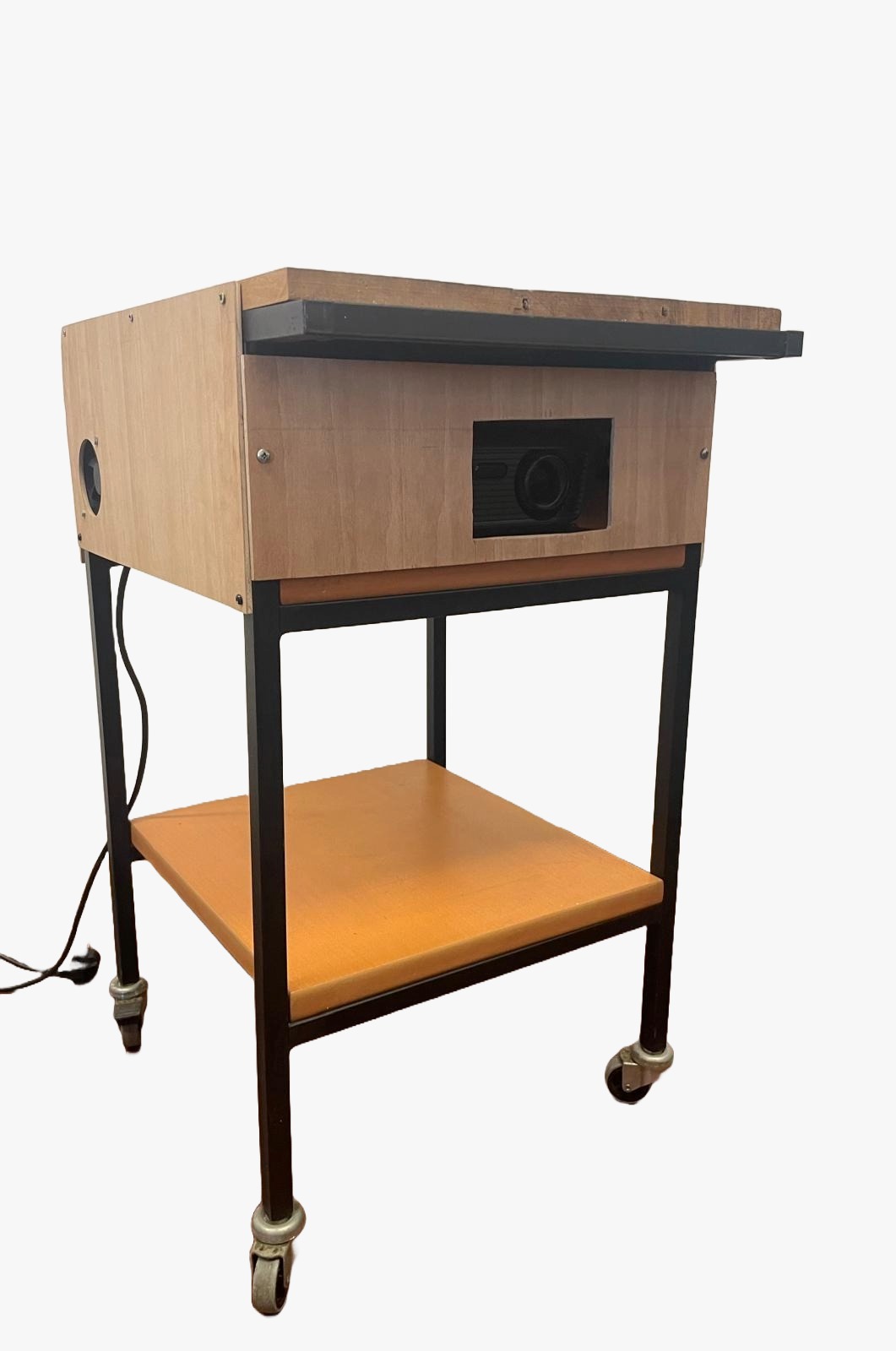
7.5.2 Temperature management
The prototype utilised 12 V ventilators and a 12 V power source instead of the originally planned 24 V components. This decision was made to reuse existing materials and minimise costs. Additionally, the GY-21 was employed as a temperature sensor instead of the GYB-MP280 due to the latter being broken. The GY-21 sensor provided reliable temperature readings necessary for the prototype's operation, ensuring the ventilators activated at the correct threshold.
7.5.3 Software
During the development of the software prototype, there were minimal deviations from the original concept. However, two notable changes were made to the database structure, as seen in Figure 81. These changes were necessary due to an oversight regarding the relationship between expositions and categories and to allow places to accommodate multiple exhibitors, which was essential for the correct functioning of the frontend.
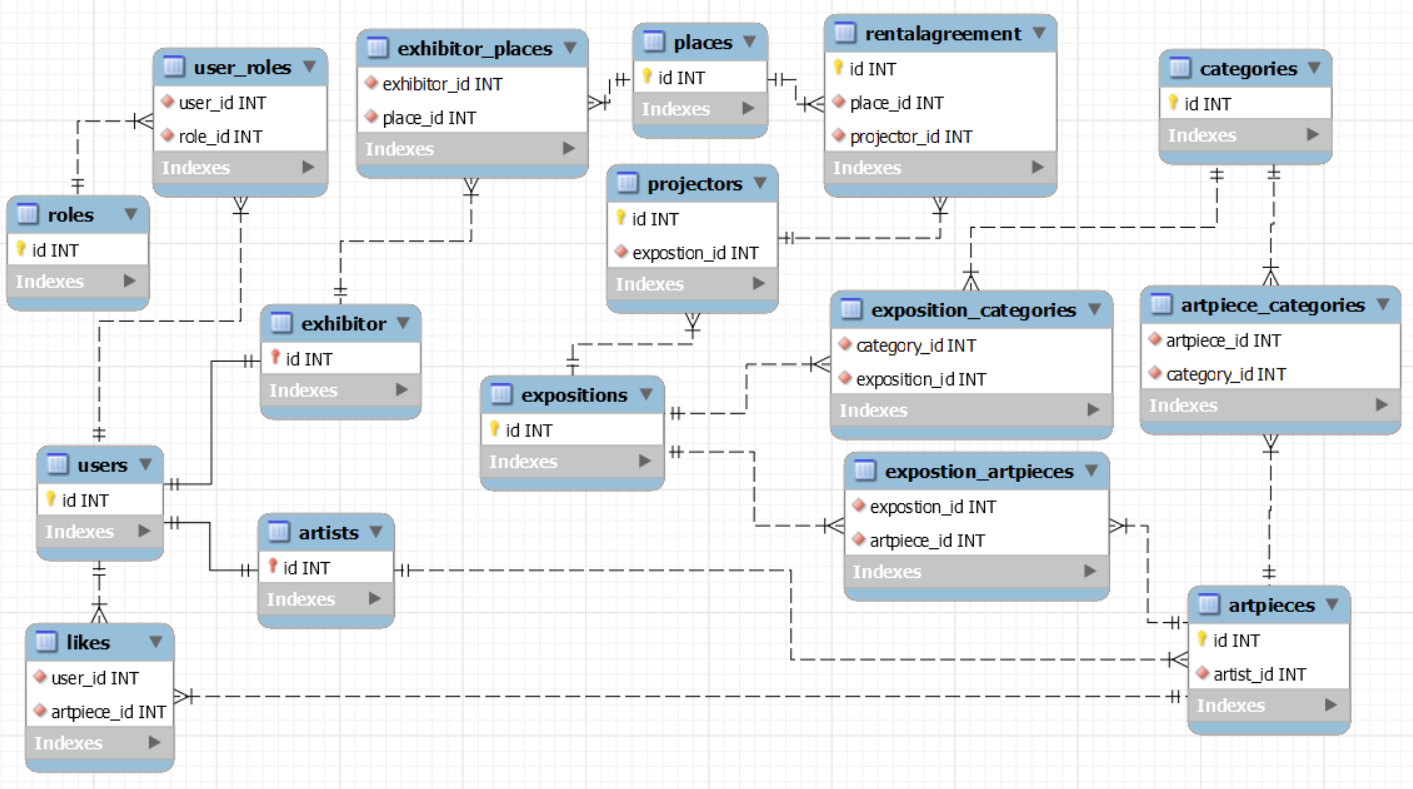
Additionally, limitations were encountered with the official MySQL connector in ASP.NET, specifically regarding the transmission of bit arrays larger than 5000. To overcome this issue, the decision was made to switch to the Pomelo MySQL connector, which provided better support for the requirements.
Once these minor issues were addressed, the code operated as intended. The functionality of the code can be illustrated through the block diagrams shown in Figures 82, 83, 84, and 85. These block diagrams provide a detailed and structured representation of how the application should respond to different actors.
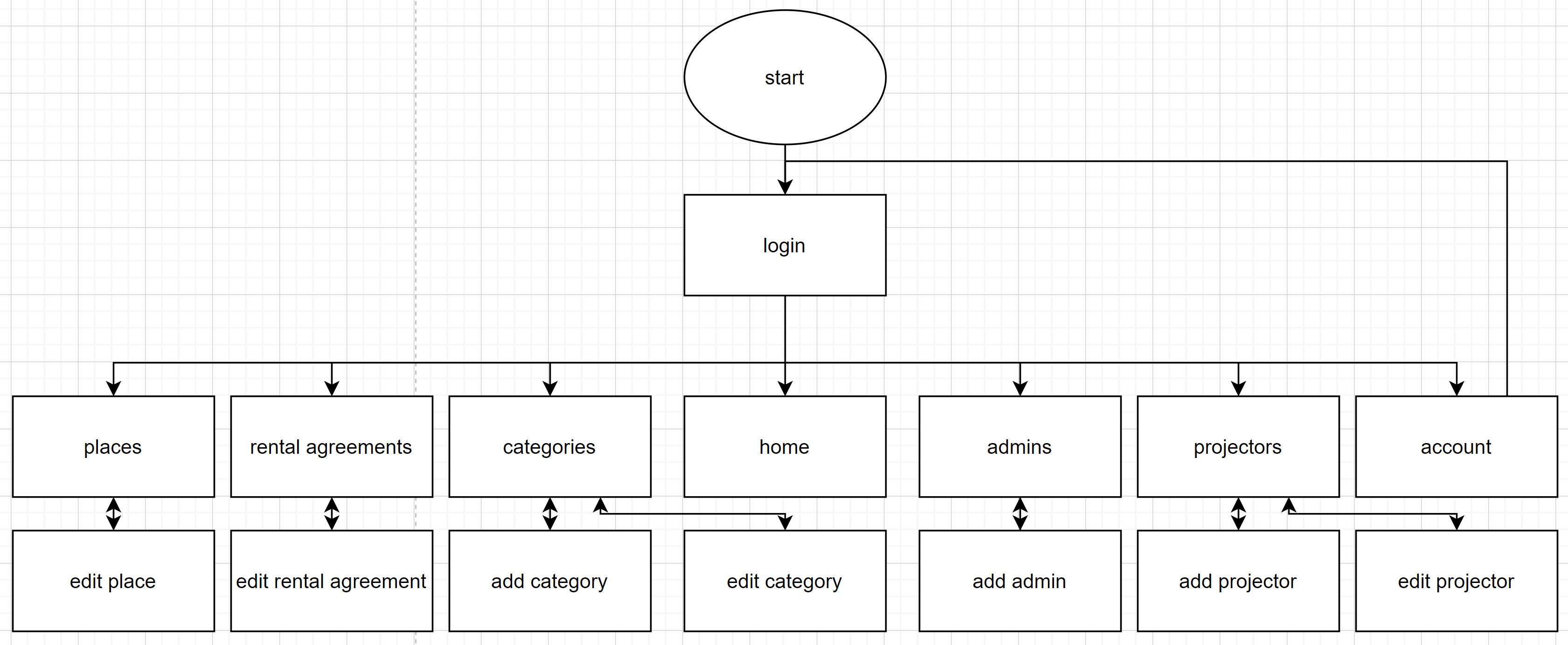
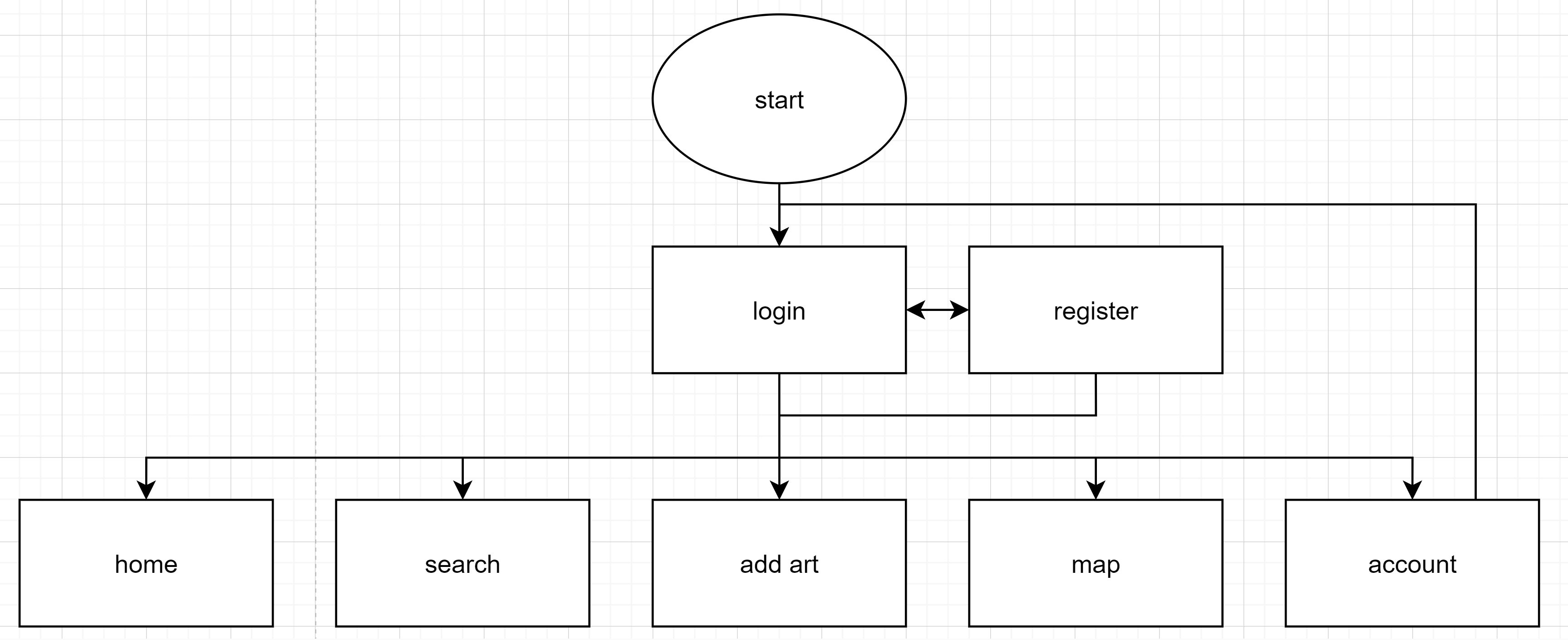
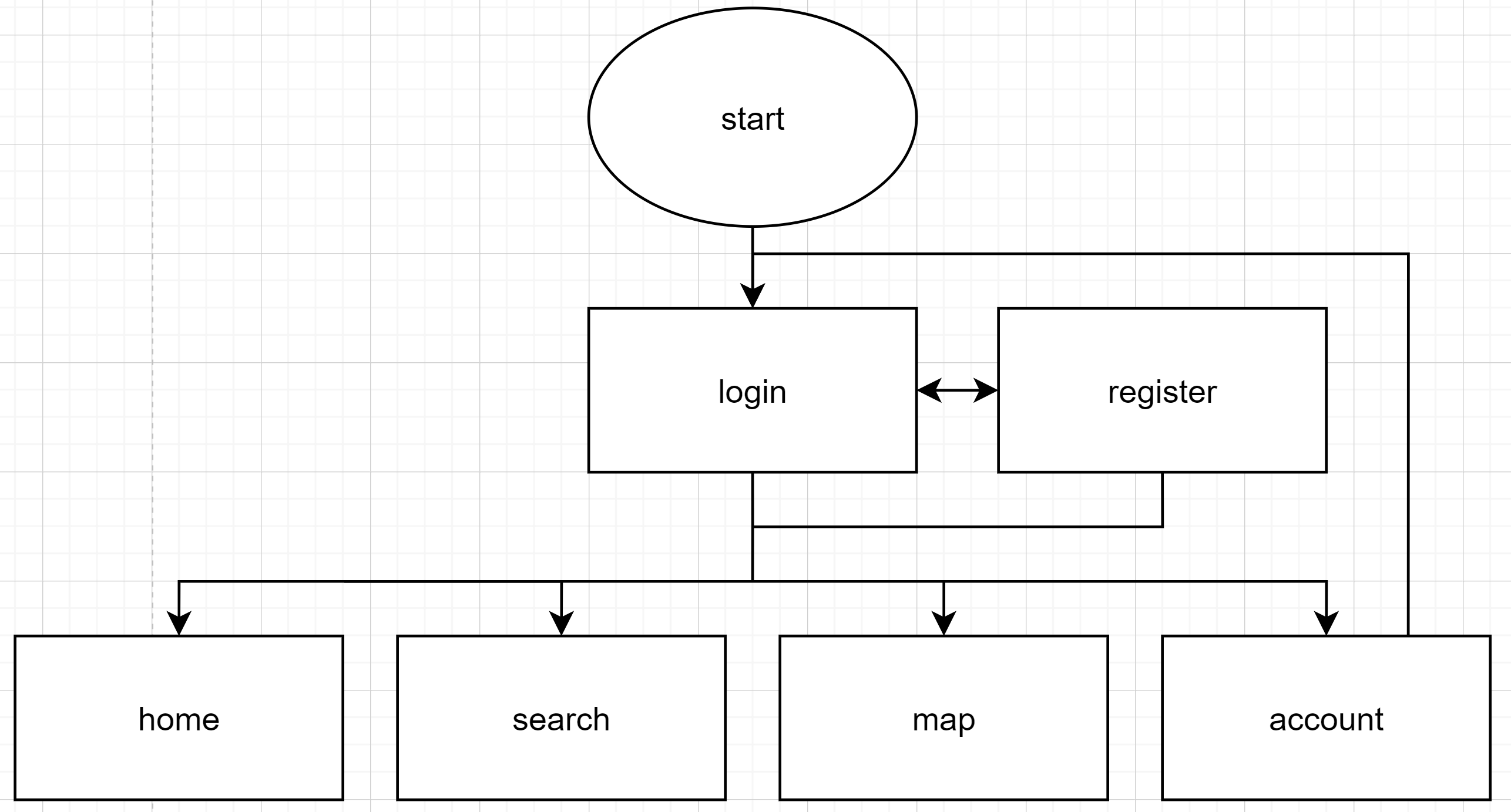
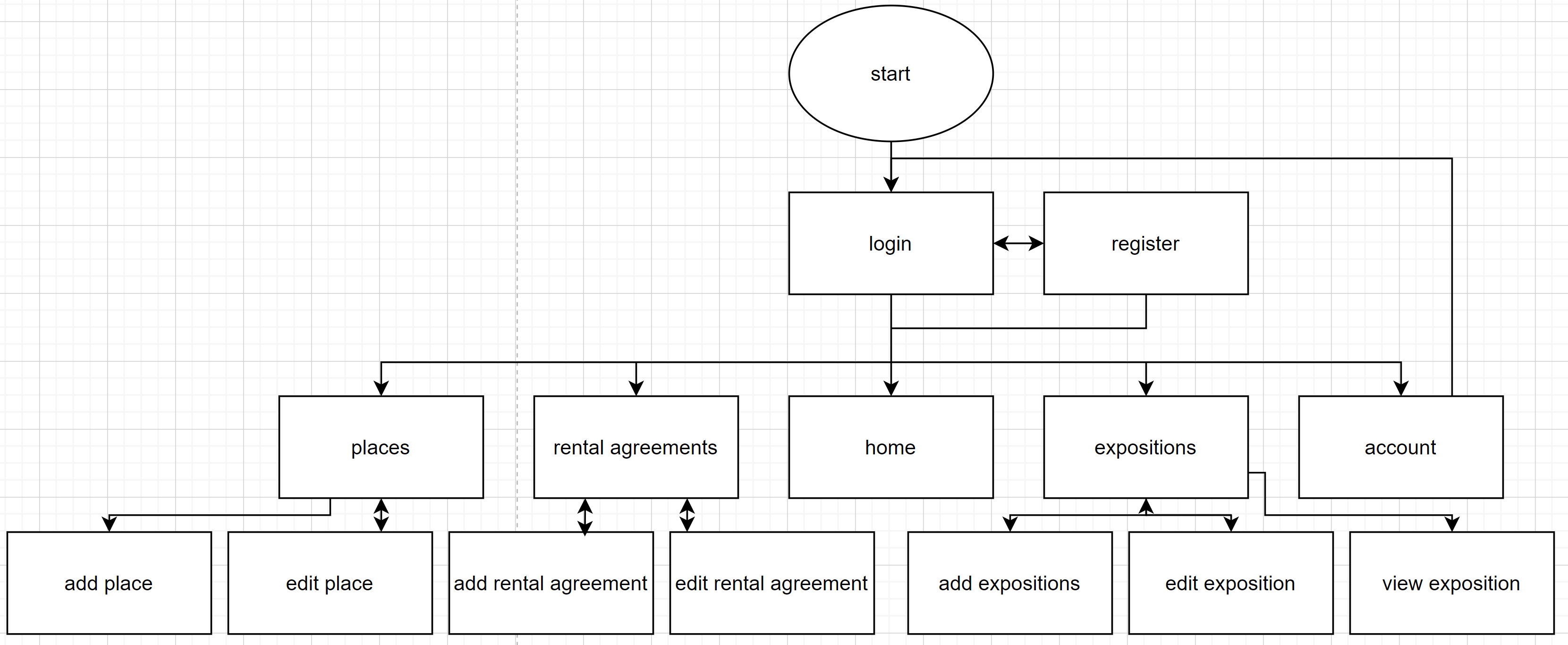
In summary, the adjustments to the database and the switch to the Pomelo MySQL connector ensured the seamless integration of the backend with the frontend, thereby maintaining the integrity of the original design while enhancing the application's overall functionality.
The code for this project is published on Gitlab Pages and can be accessed at API, web platform, app.
7.5.4 Tests & Results
7.5.4.1 Temperature management
To test if the ventilators function correctly, the team has conducted a series of tests. These tests verify that the ventilators activate when the internal temperature exceeds a 30°C threshold and deactivate once the temperature falls below 25°C.
The test procedure is as follows: The sensor will be heated to temperatures of 30°C, 32°C, 34°C, and 36°C. The ventilators should activate at each of these temperatures and remain on until the temperature drops to 22°C, 24°C, 26°C, and 28°C, respectively. Using different temperature settings allows to verify that the system can be adjusted as needed and works under various conditions. The results are shown in Table 41.
| Top Temperature | Cool down Temperature | Pass/Fail |
|---|---|---|
| 30°C | 22°C | Pass |
| 32°C | 24°C | Pass |
| 34°C | 26°C | Pass |
| 36°C | 28°C | Pass |
The second test is for durability, to ensure the ventilators are capable of running for extended periods. This involves running the ventilators for 1 hour, 2 hours, 3 hours, and 4 hours, repeating each run time five times. This will help confirm that the ventilators can handle prolonged operation without failure. The results are shown in Table 42.
| Active run time Ventilator | Pass/Fail |
|---|---|
| 2 Hour | Pass |
| 3 Hour | Pass |
| 4 Hour | Pass |
| 5 Hour | Pass |
The results of both the temperature management and durability tests indicate that the ventilators perform as expected under varying conditions. The ventilators successfully activated and cooled the system when the temperature thresholds were exceeded and consistently managed the internal temperature even during prolonged operation. These tests confirm that the temperature management system is reliable and effective, even with the prototype adjustments. This provides confidence that the system will maintain optimal performance and protect the projector from overheating during extended use.
7.5.4.2 Software tests
To conduct the software testing, several standard approaches were employed. These approaches included testing the functionality for the different actors as detailed in Tables 43, 44, 45, 46, and measuring the response time for various API calls.
| Functionality | Pass/Fail |
|---|---|
| Login | Pass |
| Register Admin | Pass |
| View Admins | Pass |
| View Categories | Pass |
| Add Category | Pass |
| Edit Category | Pass |
| View Places | Pass |
| Edit Place | Pass |
| View Rental Agreements | Pass |
| Edit Rental Agreement | Pass |
| View Projectors | Pass |
| Make Projector Unavailable | Pass |
| Add Projector | Pass |
| Edit Projector | Pass |
| View Account Info | Pass |
| Logout | Pass |
| Functionality | Pass/Fail |
|---|---|
| Login | Pass |
| Register | Pass |
| Swipe Art | Pass |
| View Liked Art | Pass |
| View Like Art on Artist Name | Pass |
| Upload Art | Pass |
| View Current Active Expositions on Map | Pass |
| View Account Info | Pass |
| Logout | Pass |
| Functionality | Pass/Fail |
|---|---|
| Login | Pass |
| Register | Pass |
| Swipe Art | Pass |
| View Liked Art | Pass |
| View Like Art on Artist Name | Pass |
| View Current Active Expositions on Map | Pass |
| View Account Info | Pass |
| Logout | Pass |
| Functionality | Pass/Fail |
|---|---|
| Login | Pass |
| Register | Pass |
| View Places | Pass |
| Edit Place | Pass |
| Add Place | Pass |
| View Rental Agreements | Pass |
| Edit Rental Agreement | Pass |
| Add Rental Agreement | Pass |
| View Expositions | Pass |
| Add Exposition | Pass |
| Edit Exposition | Pass |
| View Art In Exposition | Pass |
| Start/Stop Exposition | Pass |
| View Account Info | Pass |
| Logout | Pass |
After conducting these tests, it can be concluded that the current prototype implementation is functioning correctly. Detailed documentation of the API routes and test results done on free tier of azure can be found on the Swagger page, which is hosted at Open Api Docs.
In Table 47 below, results of the fastest and slowest route in average can be found. These are done on a free tier of azure.
| Endpoint | Methode | Initial Avg (ms) | Std (Initial) | 10 Simultaneous Requests Avg (ms) | Std (10 req) | 100 Simultaneous Requests Avg (ms) | Std (100 req) | 1000 Simultaneous Requests Avg (ms) | Std (1000 req) |
|---|---|---|---|---|---|---|---|---|---|
| /api/users | Get | 117 | 7 | 138 | 9 | 249 | 30 | 803 (request failures and timeouts) | 97 |
| /api/exhibitor/expositions | Post | 175 | 11 | 211 | 14 | 376 | 47 | 1198 (request failures and timeouts) | 151 |
These comprehensive tests ensure that the application meets the necessary requirements, and performs efficiently across different scenarios.
7.6 Conclusion
The creation of the prototype marked a significant step in the development of the ArtSy(nc) project, allowing for the practical realisation and validation of initial design concepts. This chapter detailed the entire prototyping process, from material selection and structural assembly to the implementation of temperature management and software integration. The iterative development and testing of the prototype provided valuable insights and facilitated crucial adjustments that informed the final product design.
By utilising available materials and minimising new purchases, the project demonstrated a strong commitment to sustainability. The choice to use local and second-hand resources not only reduced environmental impact but also underscored the project’s dedication to eco-friendly practices.
Through extensive testing, including temperature management and software functionality, the prototype proved to be reliable and efficient. These tests ensured that the product met performance expectations and could operate effectively under various conditions, laying a solid foundation for the final product.
In conclusion, the prototype phase was instrumental in refining the product and aligning it with the project's goals of innovation, quality, and sustainability. The insights gained during this phase will guide the transition to the final product, ensuring that it meets the highest standards of excellence.
The next chapter will delve into the overall conclusions of the project, summarising the key achievements and lessons learned, and outlining the future directions for ArtSy(nc).
8. Conclusions
ArtSy(nc) presents a compelling solution to the lack of digital artist visibility and recognition. It tackles the challenges faced by digital artists in gaining exposure and recognition while fostering a more democratic and inclusive art scene. It is a unique platform that empowers both artists and art lovers. Artists benefit from a space to showcase their work to a wider audience, while art lovers gain the opportunity to actively participate in curating the artistic landscape of their city through the mobile app.
The potential impact of ArtSy(nc) extends beyond the art world itself. By enhancing public spaces with captivating digital art installations, it has the potential to revitalise cityscapes, attract visitors, and stimulate local economies. Additionally, ArtSy(nc) encourages a fresh perspective on artistic expression and fosters a sense of community around digital art.
The application component of ArtSy(nc) has demonstrated robust functionality across various user roles, including admins, artists, art lovers, and exhibitors. Through rigorous testing, it has been confirmed that the application meets the necessary requirements and performs efficiently in different scenarios. The platform facilitates a seamless experience for artists to upload their artwork and for users to view and interact with these digital art pieces. This interaction is crucial in fostering a community around digital art, enhancing user engagement, and ensuring a dynamic and interactive art scene.
The casing's design incorporates versatility, allowing it to be adapted for different public settings, including parks, coffee shops, and city streets. This flexibility is achieved through various mounting options—stands for parks, rubber feet for cafes, and pole mounts for urban areas. The simplicity of the casing design ensures that it remains unobtrusive, focusing the public’s attention on the projected art rather than the equipment itself.
Functionality and durability were key considerations in the prototype development. The use of a repurposed drawer and plywood for cost-effective construction demonstrates the feasibility of the design concept. Despite the use of low-grade materials, the prototype successfully integrates essential features such as ventilation to prevent overheating, a secure door for easy access to the projector, and a stable structure to house the electronic components. This initial prototype proves the viability of the concept, although it acknowledges the need for improvements in materials and construction quality for the final product.
The projector casing effectively meets the basic requirements for protecting and displaying digital art in various public settings. While the prototype serves as a functional proof of concept, future developments should focus on material upgrades and structural refinements to enhance durability and sustainability. This will ensure the long-term success of the installations and contribute to the project's goal of enriching public spaces with innovative digital art.
Overall, ArtSy(nc) demonstrates the potential of technology to bridge the gap between artists and the public, fostering a more vibrant and inclusive art scene. The project holds significant promise for enriching the cultural fabric of the cities and redefining the way art is experienced in public spaces.
8.1 Discussion
The software prototype is really good and meets all requirements. There is room for professionalisation, but that will be noted in future work. The prototype does everything the full application should also be doing.
The casing prototype either needs improvement or is a very low version of the original box casing. The vantilators work, the monitors work, and the casing is a closed system. But it uses low-grade, non-sustainable materials and has no level planks for the monitor and computer. And it is not built for strong weather conditions. There is a lot of room for improvement. But the general casing concept works: if it is too hot, the ventilators go on, the box has a door that can open and close, and the monitor is able to shine on the walls.
In general, the prototype works: the artist can upload art, the app user can vote on the art, and the art can be displayed with the projector in a relatively primitive casing. It works, but there is room for improvement, especially for the projector casing.
8.2 Future Development
The current platform could be more than just a platform for showcasing digital art. It could become a thriving ecosystem that empowers artists, engages art lovers, and fosters a global movement. Here can be found ideas for potential future endeavours:
NFTs for sale
In the digital art scene, there is a big growth in NFTs. For ArtSy(nc), there are possibilities to be explored by using NFTs on the platform. There is a potential that NFTs will revolutionise the art scene, and if that revolution is truly happening, ArtSy(nc) needs to be at the forefront of this revolution in order to become a digital art leader. There are two key areas to explore: NFT mining and the marketplace.
Their are possibility’s in empowering artists by transforming their uploaded artwork into NFTs while uploading the art. This results in creating a secure and verifiable ownership record on the blockchain. This opens a new revenue stream for artists and allows collectors to own a unique piece of digital art. ArtSy(nc) can then facilitate NFT sales within the app, creating a dedicated marketplace for digital art. Delivering these services could create a new revenue stream by asking for a commission for every sale or an interest percentage on the artwork. Should this work, the dependency on sponsors would also lower or completely disappear.
Expanding the Canvas by going global
ArtSy(nc) isn't limited by geographical boundaries. There is a vision for a global expansion plan that allows artists worldwide to showcase their work and art lovers everywhere to show the art scene. This requires the involvement of multilingual support, adapting to regional regulations, and forging partnerships with international cultural institutions.
ArtSy(nc) Academy, Cultivating the Next Generation There are aspirations to establish a premier online academy dedicated to digital art. This platform could offer comprehensive learning modules, workshops, and masterclasses led by renowned digital artists. The academy could provide collaboration and knowledge exchange within the artistic community while nurturing the next generation of digital art pioneers.
ArtSy(nc) Clinics, Sparking Creativity at the Grassroots To cultivate a wider interest in digital art, ArtSy(nc) plans to launch “Clinics.” These interactive workshops will be conducted at schools and universities, introducing participants to the fundamentals of digital art creation. Clinics can spark a passion for digital art in young minds, potentially leading them to explore this creative avenue further.
Improving the projecting system
The vision for ArtSy(nc) could extend far beyond simply showcasing digital art. It aspires to create a comprehensive ecosystem that fosters creativity, education, and a global appreciation for this evolving art form. In order to achieve this, there needs to be a focus in the near future on three things: new revenue streams, education, and becoming the cultural centre for digital arts. The above-mentioned concept ideas could lead ArtSy(nc) in this direction and let ArtSy(nc) evolve into a thriving digital art ecosystem. This ecosystem will empower artists, educate enthusiasts, and foster a global community united by digital arts.